





APIC Japan Journalism Fellowship 2024

◆Tokyo Visit: Tour of Anime Industry & Traditional Entertainment Experience
The group first visited the APIC office on the morning of the 21st, met with a greeting from APIC President Toshinori Shigeie, followed by a briefing on Japanese domestic affairs, economy, etc., succeeded by a short explanation of the program from APIC Director and Secretary-General Megumi Araki. This was the first time to set foot in Japan for all nine participants, and they commented on how they were looking forward to their time in Japan learning about its culture.
Following the visit to the APIC office, the group visited Professor Mitsuteru Takahashi, Dean of Faculty of Digital Hollywood University. Based on a survey filled out prior to their meeting regarding the participants’ areas of interest, Professor Takahashi gave a briefing on Japan’s anime industry followed by a Q&A session. 2024 marks 30 years since the university’s establishment, and the participants were each handed a commemorative pamphlet listing alumni who are active in the Hollywood movie sector, as well as other graduates who have become presidents of anime-related companies in Japan. Participants were awed by the influence and the technical skills of anime when Professor Takahashi mentioned the fact that the first Japanese to receive the Silver Award at the Student Academy Awards for his movie “Origami” was a current student at the university. There was also talk of how cooperation between the anime industry and educational institutions helped contribute to the development of the industry overall. Professor Takahashi commented that anime is popular all over the Caribbean and that he is interested in helping the Caribbean anime industry; however, there is not enough data to analyze compared to other countries, such as number of imported items, viewership ratings, etc. Thus, in order to help expand the anime industry in the Caribbean, cooperation between data collection and Japan is imperative. Dr. Livingston White of UWI commented that he would consider sending exchange students to Hollywood University Graduate School after honing their Japanese language skills in Jamaica.
The group next moved to Asakusa, with free time to walk around the Senso-ji Temple. In the evening, they went to the Kabuki-za Theater where they watched Izumi Kyoka’s “Onna Keizu” and “Genji Monogatari: Rokujo-no Miyayasu Dokoro”. They were handed tablets with English subtitles, enabling them to understand and enjoy the deep meaning behind the performance and the beautiful costumes, albeit being their first time watching a Kabuki play.
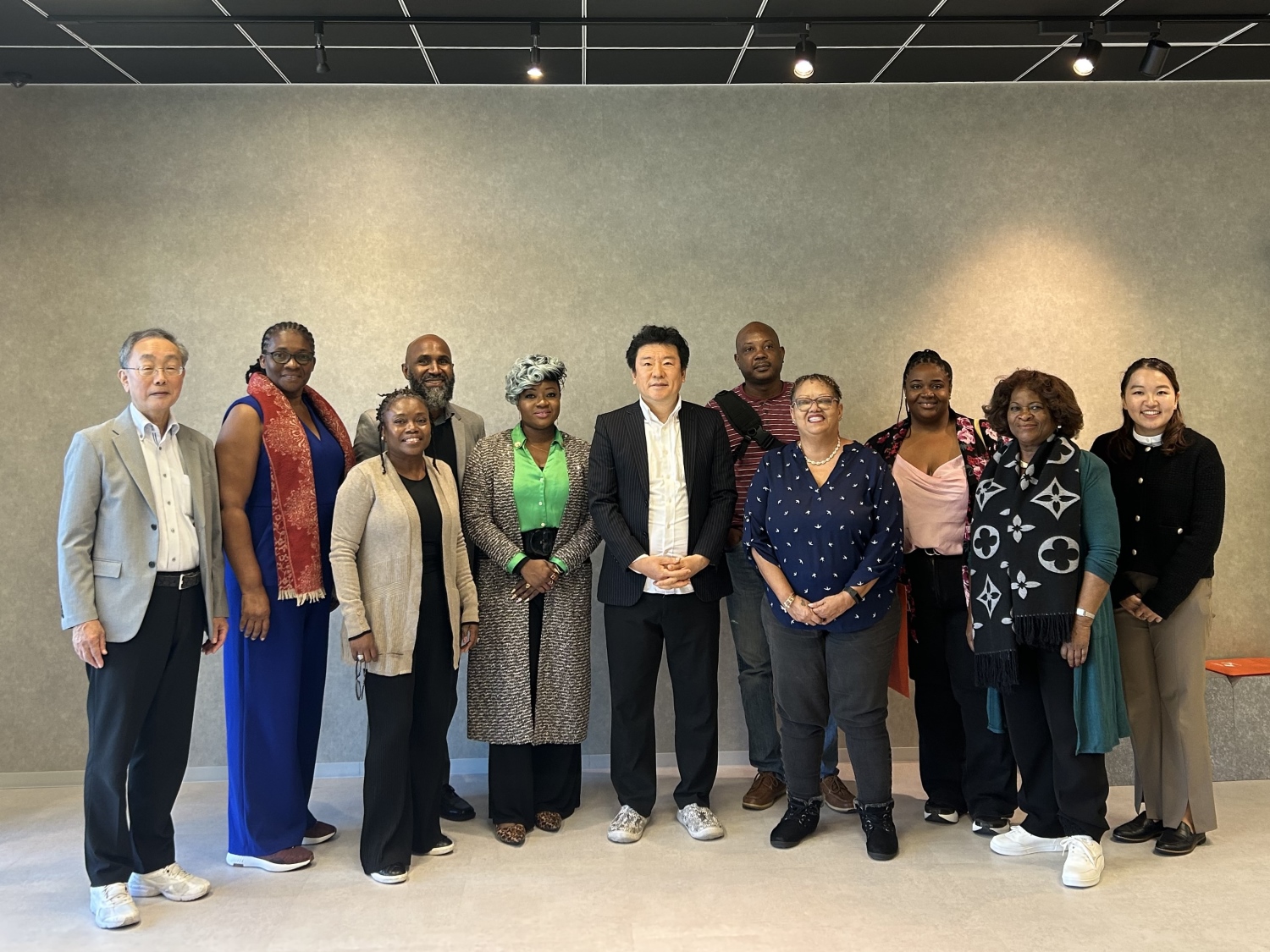
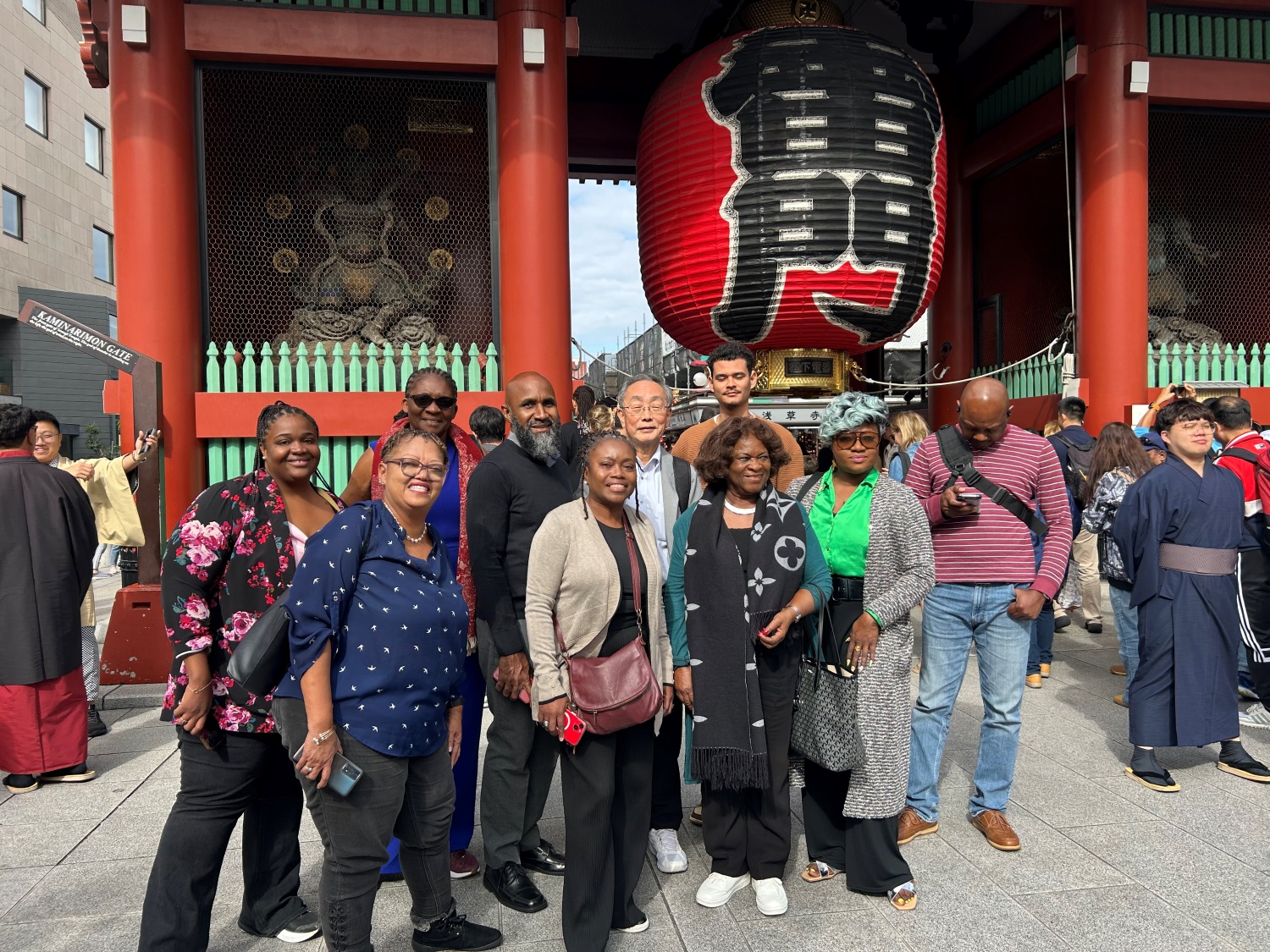
(Left: Group photo with Professor Takahashi. Right: In front of Kaminari-mon Gate, Asakusa)
◆Kyoto Visit: Protecting Cultural Properties and Experiencing Diversity of Japanese Culture
On October 22nd, the group took the shinkansen bullet train to Kyoto where they expanded their knowledge on protecting traditional Japanese culture and cultural properties. During their visit to the Agency of Cultural Affairs, they were briefed on efforts to preserve Japanese cultural properties, in particular the process of protecting intangible cultural heritage properties and the support policies enacted based upon cooperation between regional communities and the government. There were questions regarding the process of how to get a cultural property registered, as well as regarding efforts toward student contributions during the Q&A session. Dr. Sheron Johnson of Barbados thanked the Agency of Cultural Affairs and gave the representative a token of appreciation for providing funds in order to help Barbados register a World Heritage Site. Dr. Johnson stated “I hope to apply this to protecting cultural properties in Barbados. Japanese efforts between regional communities and the government to protect its cultural assets is something we can use at home”, her interest seeming to grow regarding sustainable cultural preservation. Afterward, the group took a short walk to the Kyoto Imperial Palace and took part in the Jidai-matsuri Festival.
In the afternoon the group visited Kinkaku-ji Temple and the famous stone garden at Ryu’an-ji Temple, taking in the contrasting beauty of Zen Buddhism and its temples and Japanese gardens. A number of participants were fascinated by the silence and balance of beauty, taking photos throughout the tour.
On the third day of the program, the party toured the Kyoto Imperial Palace with an English-speaking guide, listening to his explanations of the historical buildings and gardens. After learning that this was the setting of the Genji-Monogatari Kabuki play that they saw on their first day, they paid particular attention to the culture of the Imperial Palace and its former inhabitants, as well as the architectural attributes of the buildings, enjoying the beauty and history of the Palace. Following the tour, the group headed over to Doshisha University where Doshisha alum and Noh actor Haruhisa Kawamura gave them a tour. He went into detail regarding the university’s history and cultural heritage, as well as his personal connection to the university.
The next stop in the afternoon was the Toei Kyoto Studio Park, a historical theme park where participants dressed up in traditional outfits and took photos among themselves and historical figures, such as ninjas and samurai.
After the Studio Park, the group visited Kawamura Noh Theater, where they learned about Noh and experienced the entertainment genre first-hand. They learned about the intricate history of Noh theater, the difference between Kabuki and Noh, the stage structure, music, Noh masks and costumes, meanings of movements and other details from Kanze School Noh actor Kawamura himself. During the demonstration of a kimono fitting, Ms. Kimmy Stout-Robinson of Trinidad and Tobago volunteered to try it on herself. The participants displayed great interest during the description of the masks used in Noh to depict the same scene from Genji-Monogatari Rokujogo yasu dokoro from the Kabuki play on their first day. Although the story was the same, the use of the Hannya mask to depict the flames of jealousy burning around the witch was a different way of expression compared to the Kabuki scene.
Participants deepened their understanding of how Japanese culture expresses their views toward nature and living in harmony, through common themes running through Noh plays such as “praying for harvest” and “living together with nature” are important concepts that translate into modern society. Dr. Janet Dyer of Jamaica thanked Mr. Kawamura directly, stating “I now understand the difference between the Kabuki we saw in Tokyo and Noh theater. I have a deeper understanding of the detailed explanation of Noh and the importance of cultural preservation.”
On the group’s final day in Kyoto, they enjoyed a traditional Japanese kaiseki meal with Japanese sake at Manshige, a restaurant specializing in Kyoto cuisine. The participants appeared to be amazed not only by the use of a variety of fresh seasonal ingredients, but also by the importance placed on beauty of presentation. The owner chef of the restaurant, Mr. Keigo Tamura, is also the cultural ambassador of Japanese cuisine. Ms. Kimmy Stoute-Robinson from Trinidad and Tobago told Mr. Tamura directly that she would like to extend an invitation for him to visit Trinidad and Tobago in the future.
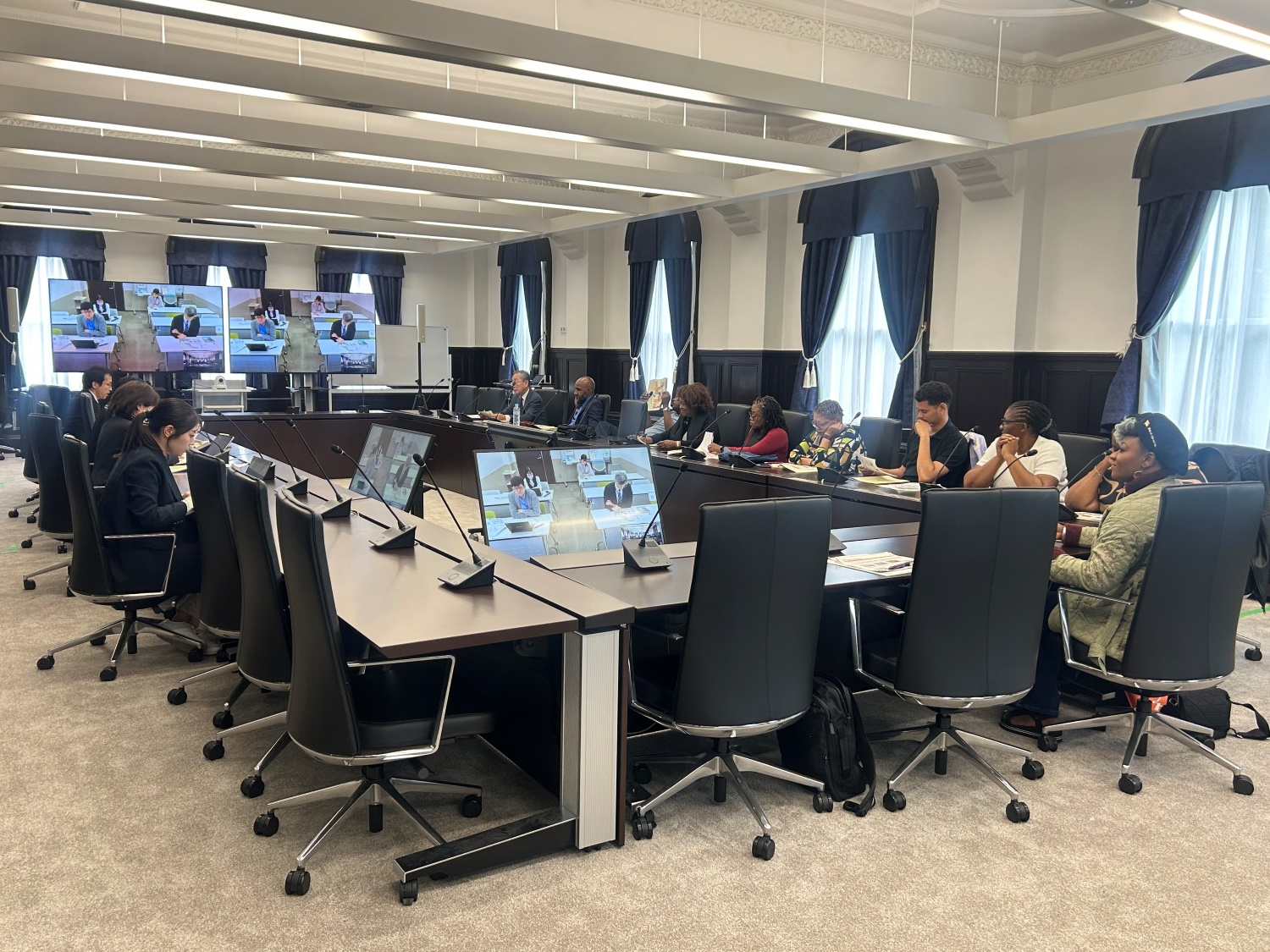
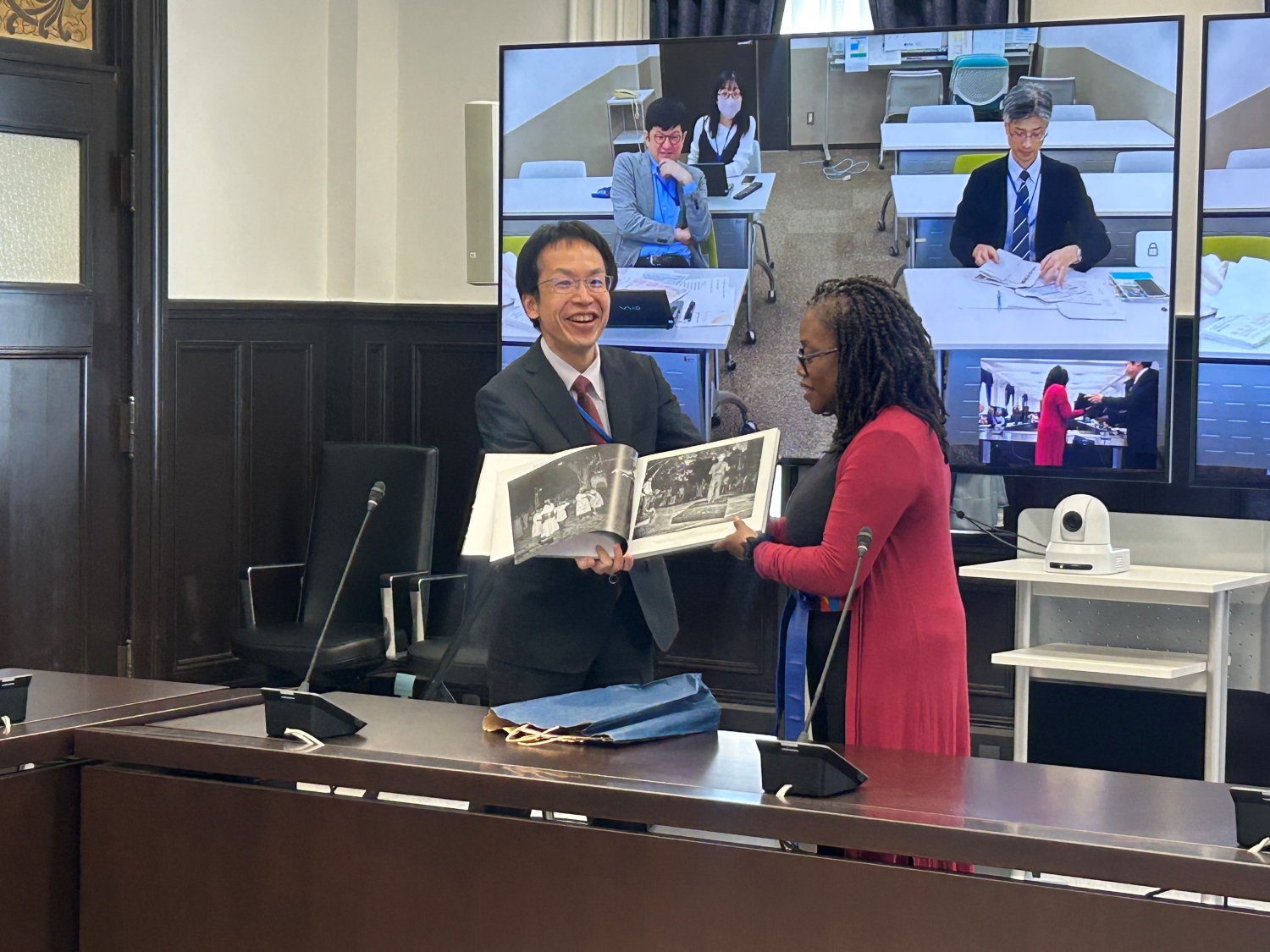
(Briefing at Agency of Cultural Affairs)
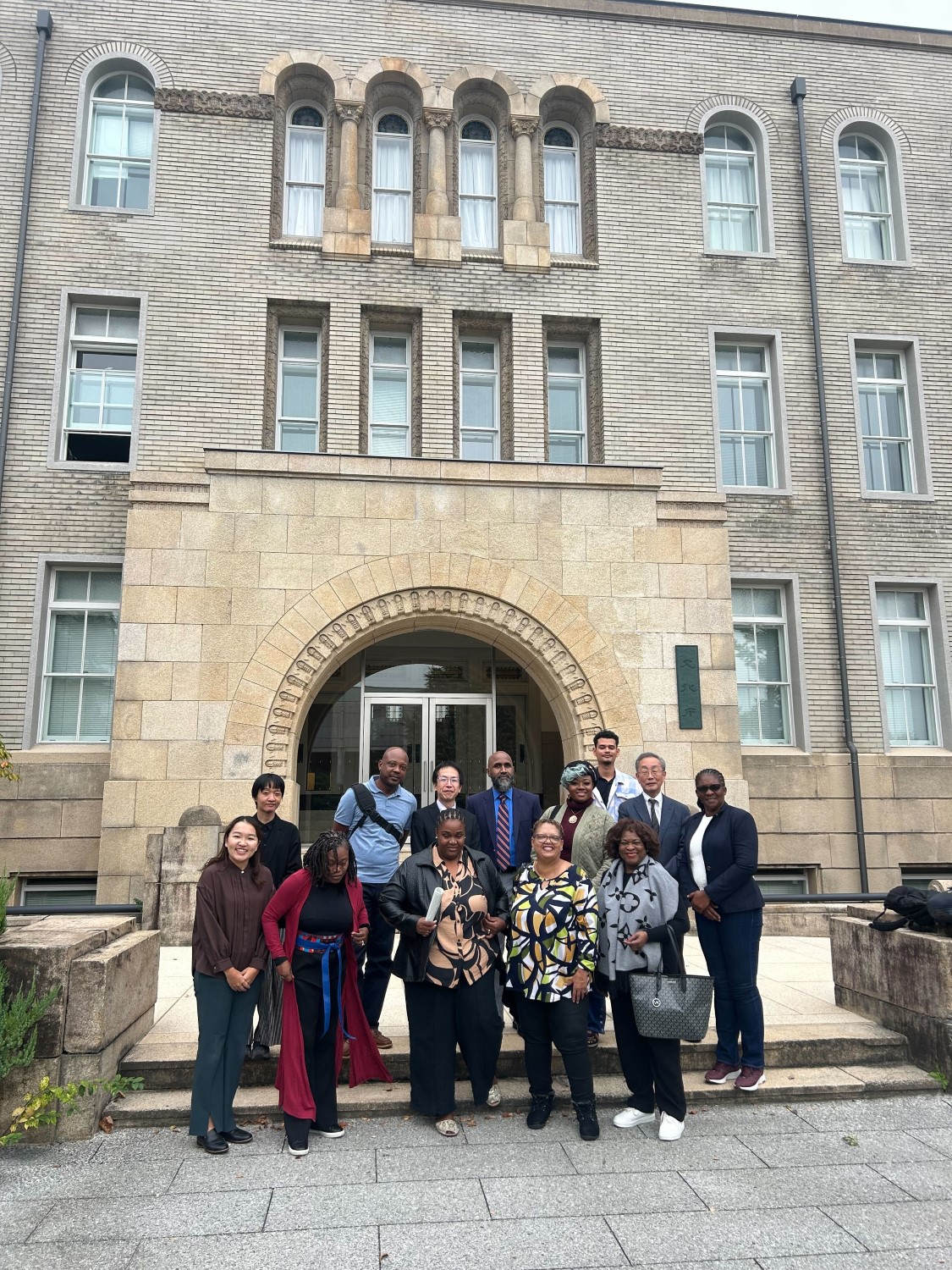
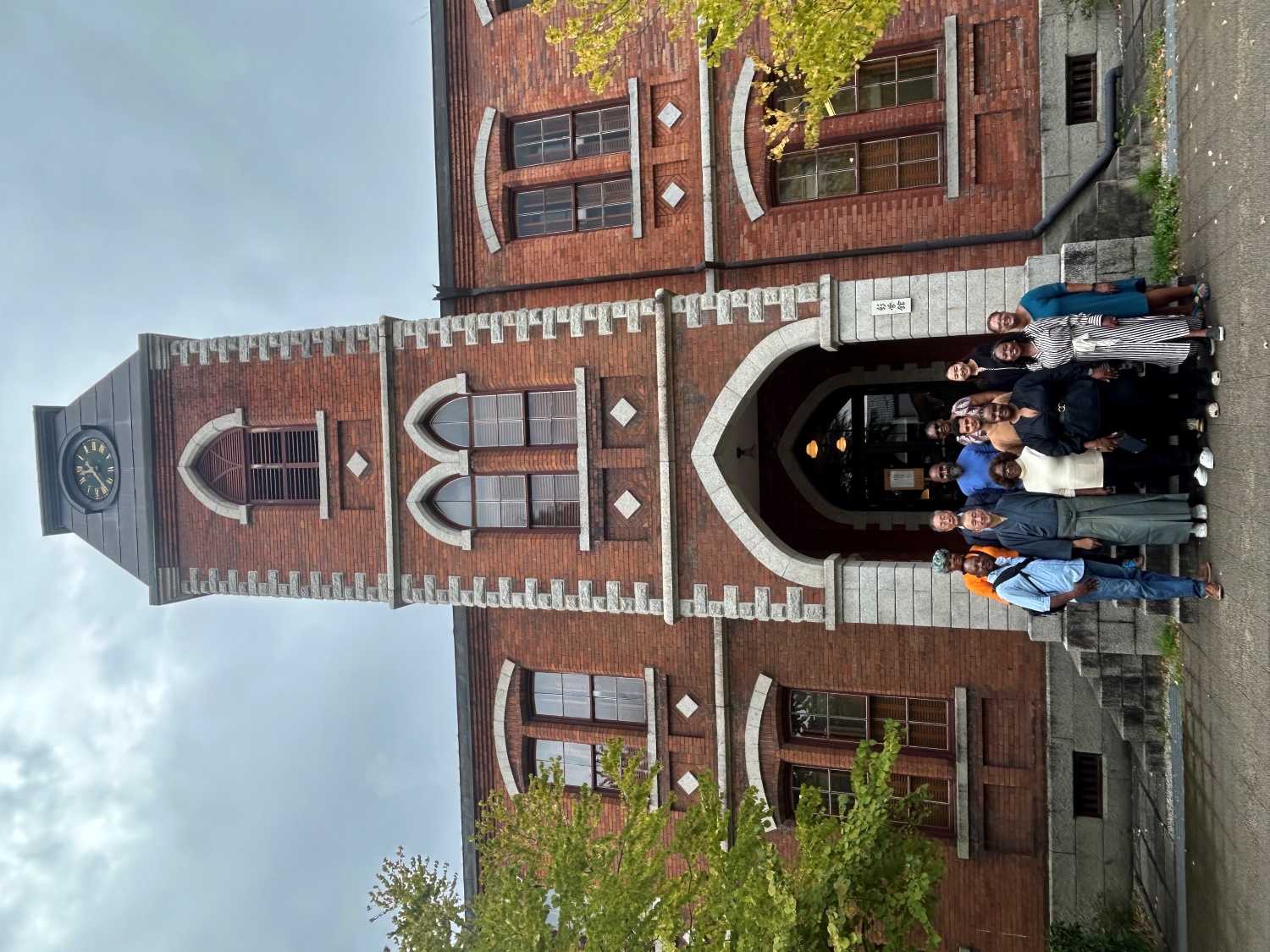
(Left: Agency of Cultural Affairs Right: Doshisha University)
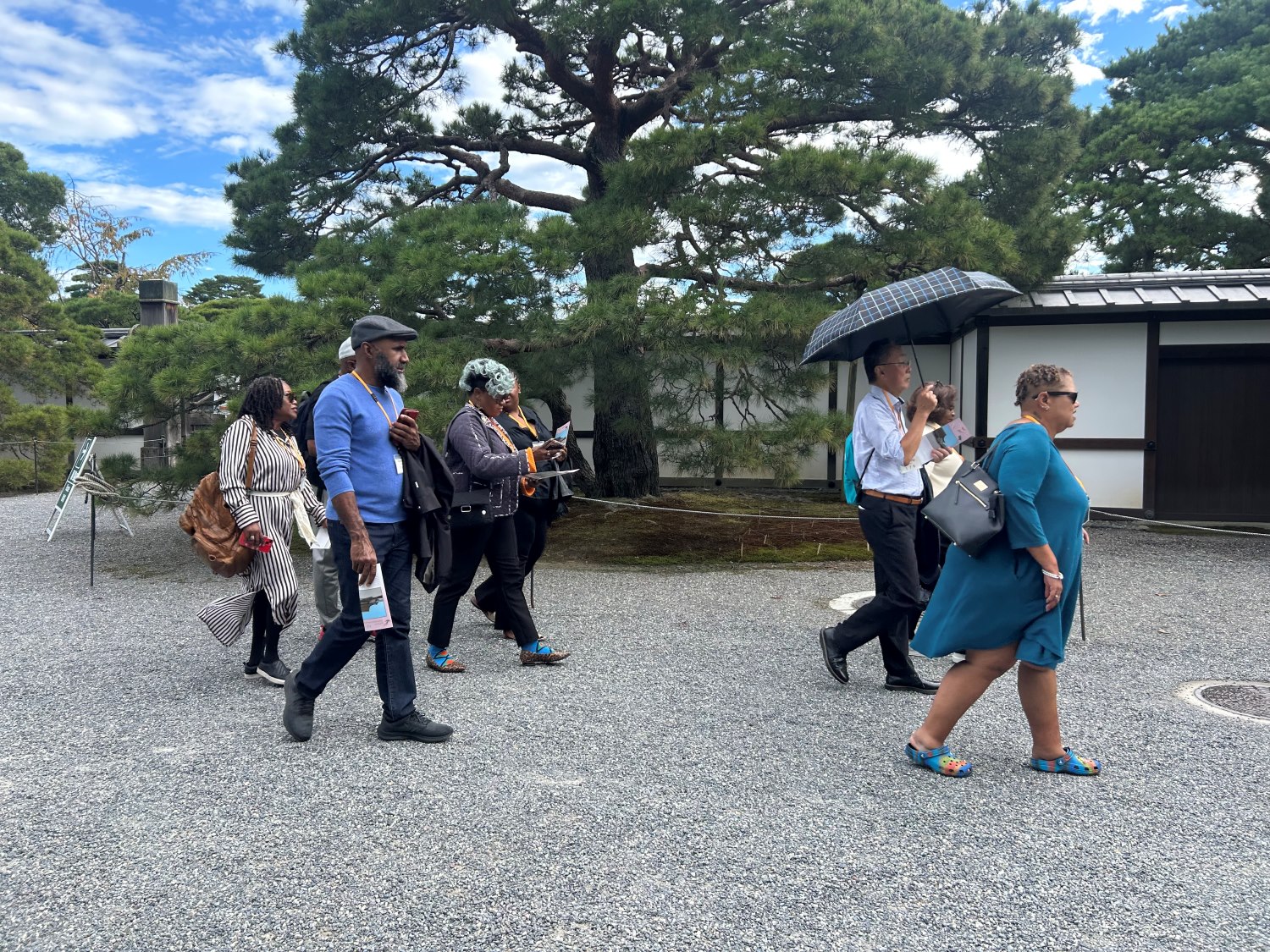
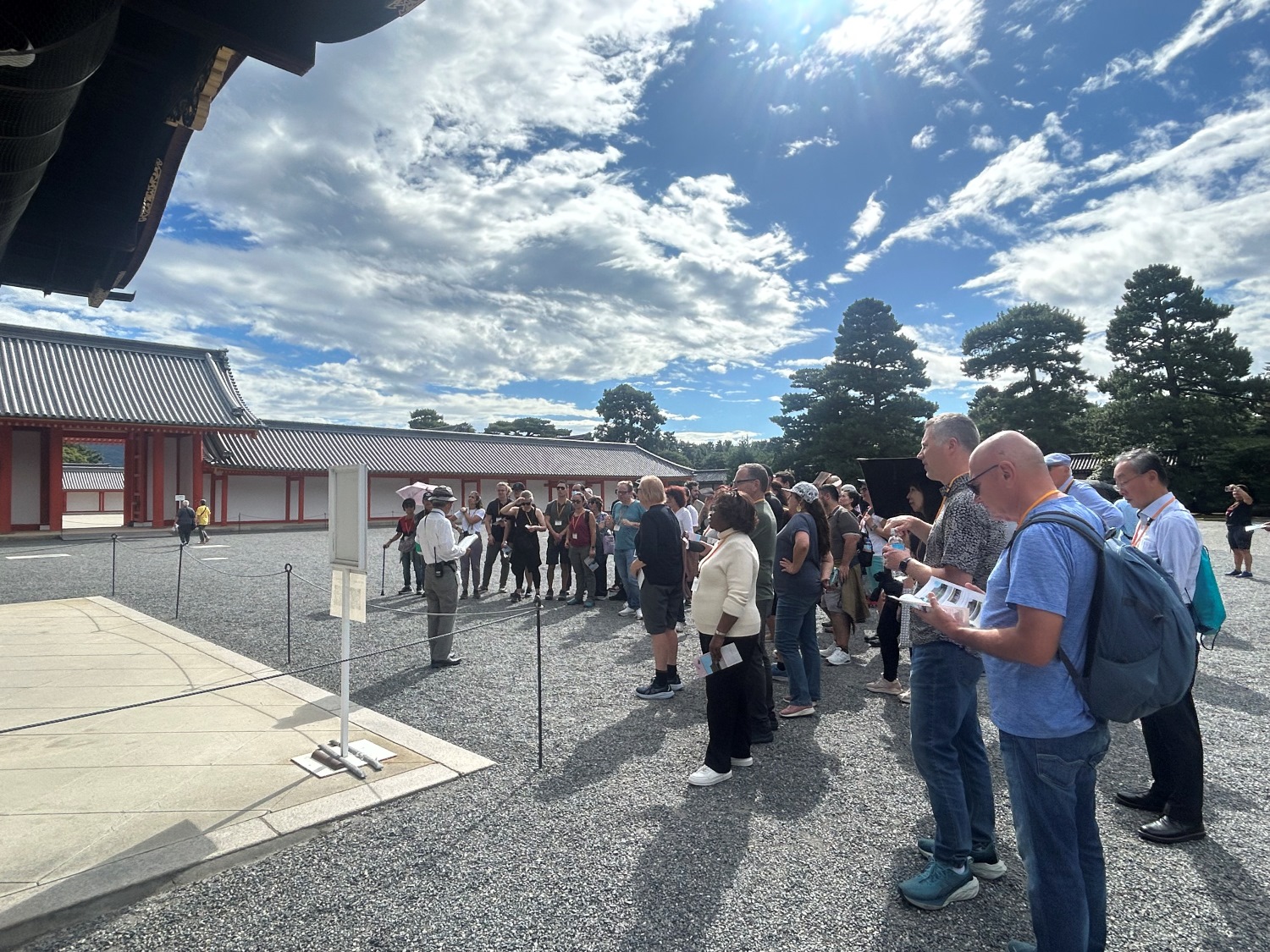
(Kyoto Imperial Palace)
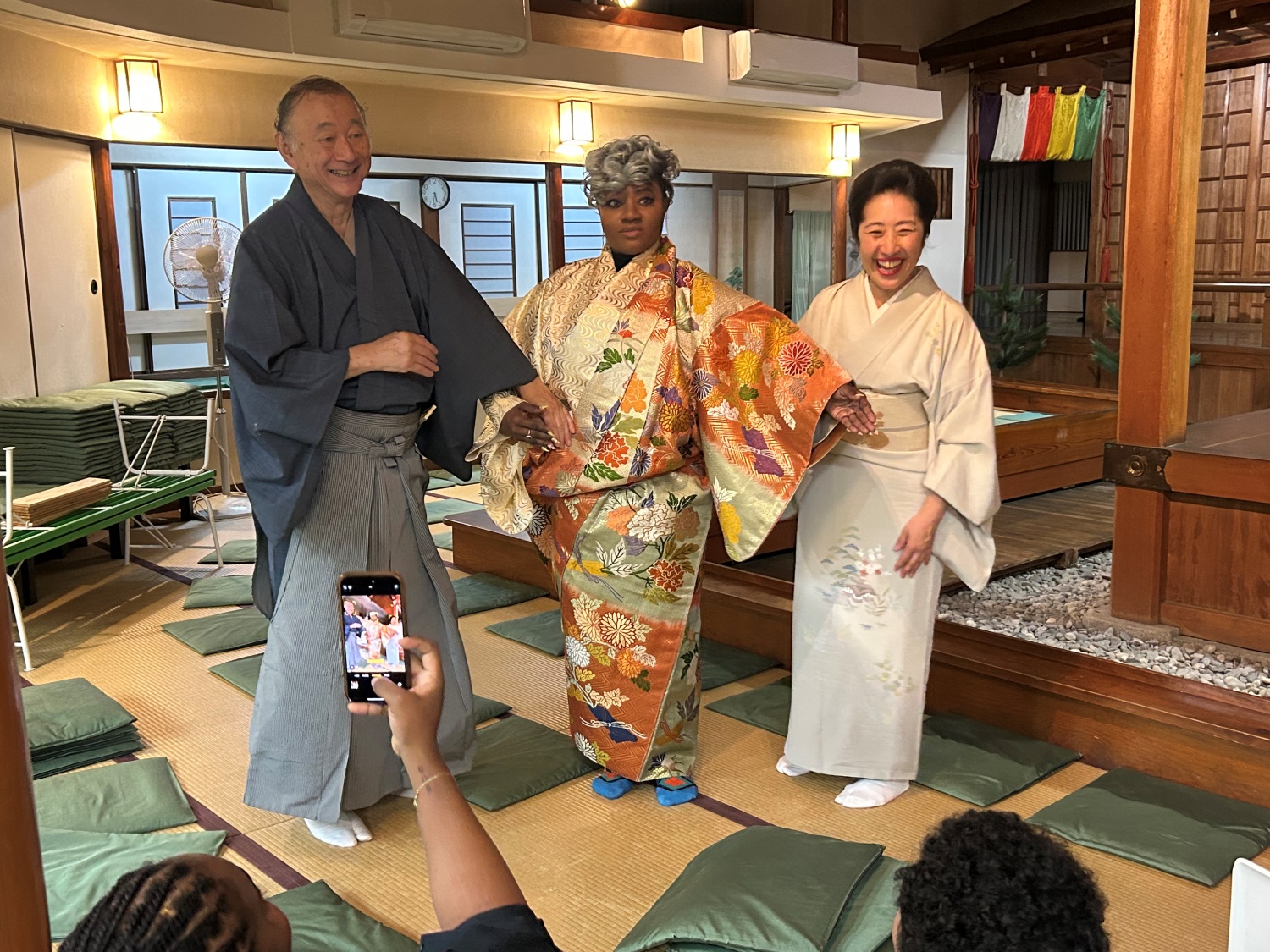

(Discussion about Noh with Mr. Haruhisa Kawamura)
◆Visit to Kanazawa: Traditional Crafts & Modern Art
On October 24th, the fourth day of the program, the group left Kyoto for Kanazawa, experiencing first-hand the intricate skills of Japanese traditional crafts at Unryo-an studio run by lacquerware craftsman Mr. Tatsuo Kitamura (the original studio in Wajima was destroyed in the New Year’s earthquake of 2024). The participants were astonished by the beauty of the craft and its attention to exact precision. At the end of the tour Mr. Kitamura showed them an Inro and Kobako, where the group members took the time to appreciate the meticulousness of both pieces, and voices of surprise were heard when he told them that it took three years to finish the Inro they were looking at. Participants appeared to have found the tour helpful and informative to see the passing down training of traditional crafts requiring fine skills to the younger generations.
In the afternoon the members visited the Kanazawa 21st Century Museum, appreciating the city where traditional crafts and modern art exist side-by-side. Following the museum visit, the group visited Kenroku-en Gardens, Kanazawa Castle, and walked through Higashi Chaya-gai street. Although they only had time for a brief visit at each stop, the participants were able to get a better understanding of the city. Some people bought matcha green tea and Japanese tea ceremony tools as presents for back home at Higashi Chaya-gai street.
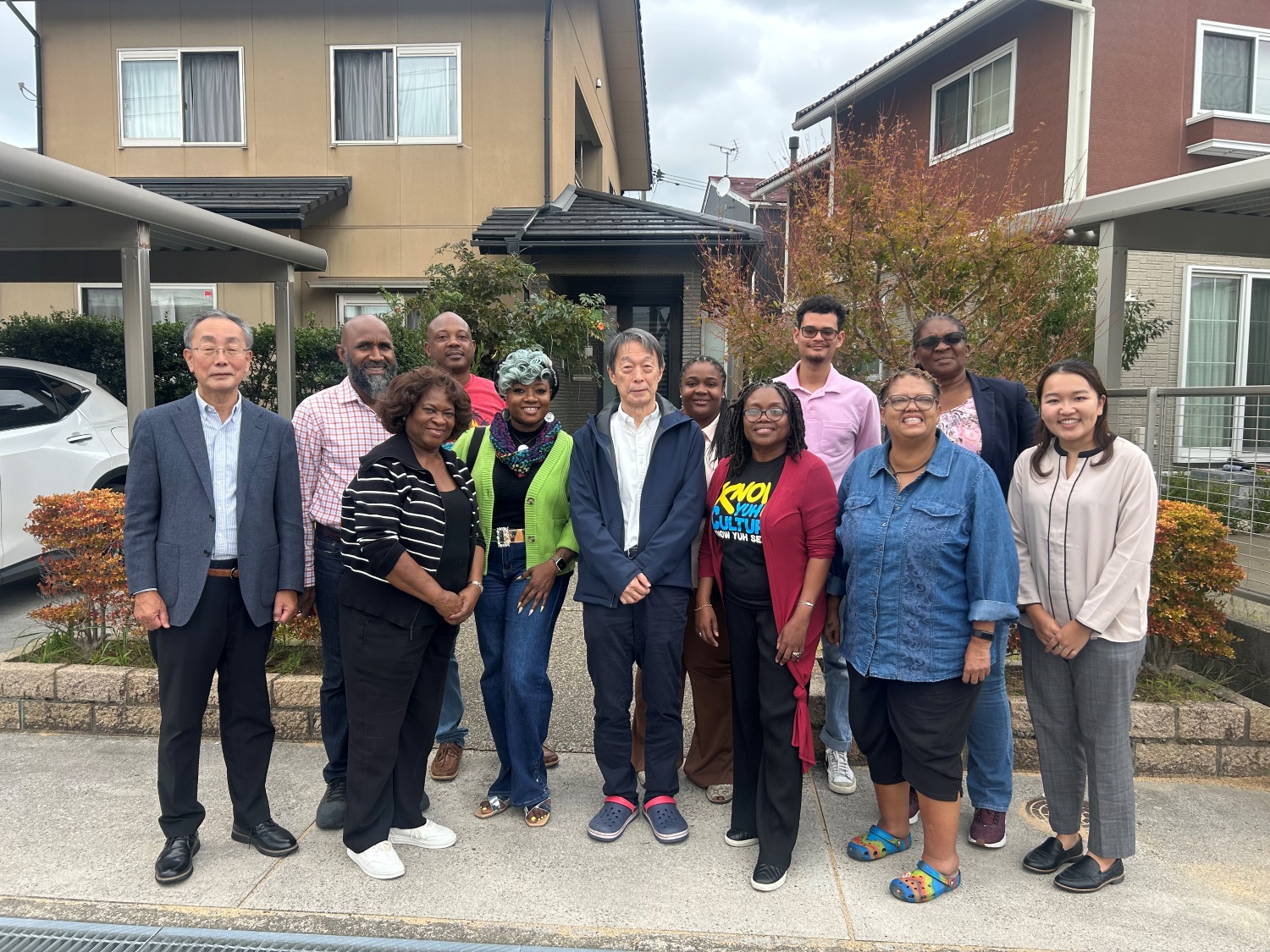
(Photo with Mr. Tatsuo Kitamura's Unryu-an Studio)
Visit to Shimane Prefecture
◆2nd Visit to Tokyo, etc.
Upon the group’s arrival back to Tokyo the following day on October 25th, they had a casual lunch together with former Japanese Ambassador to Trinidad and Tobago Mr. Tatsuo Hirayama, LIME Records President Ms. Yuri Kodera, and Caribbean Market President Ms. Yukiko Ariga. During the lunch, talk of proceeding with a collaboration between Caribbean music and Japanese music, as well as other topics, came up during various discussions.
Following lunch the group visited the Japan Foundation, where after Director Shinya Kurosawa stressed the importance of overseas tourists to Japan, Chief Secretary Kosuke Noguchi explained the Japan Foundation’s activities in the areas of Japanese culture, Japanese language, and international exchange. He and the group exchanged opinions on the Foundation’s duties and responsibilities, and communication between Japan and the Caribbean nations.
Leaving the Japan Foundation behind, the next stop was the Ministry of Foreign Affairs where Director-General of Latin-American and Caribbean Affairs Bureau Mr. Yasushi Noguchi exchanged opinions with participants on the subject of the program and the Japan-Caribbean relationship. Many people mentioned the various knowledge they had gained during the visit and expressed their intent to use it in their future activities back home. A dinner party hosted by APIC President Shigeie closed the program, which included a toast and speech by Jamaican Ambassador to Japan Ms. Shorna-Kay M. Richards. Five of the nine participants represented their country and expressed their appreciation for the opportunity to participate in the program and shared what impressed them during their trip, as well as discussed their future ambitions once back home.
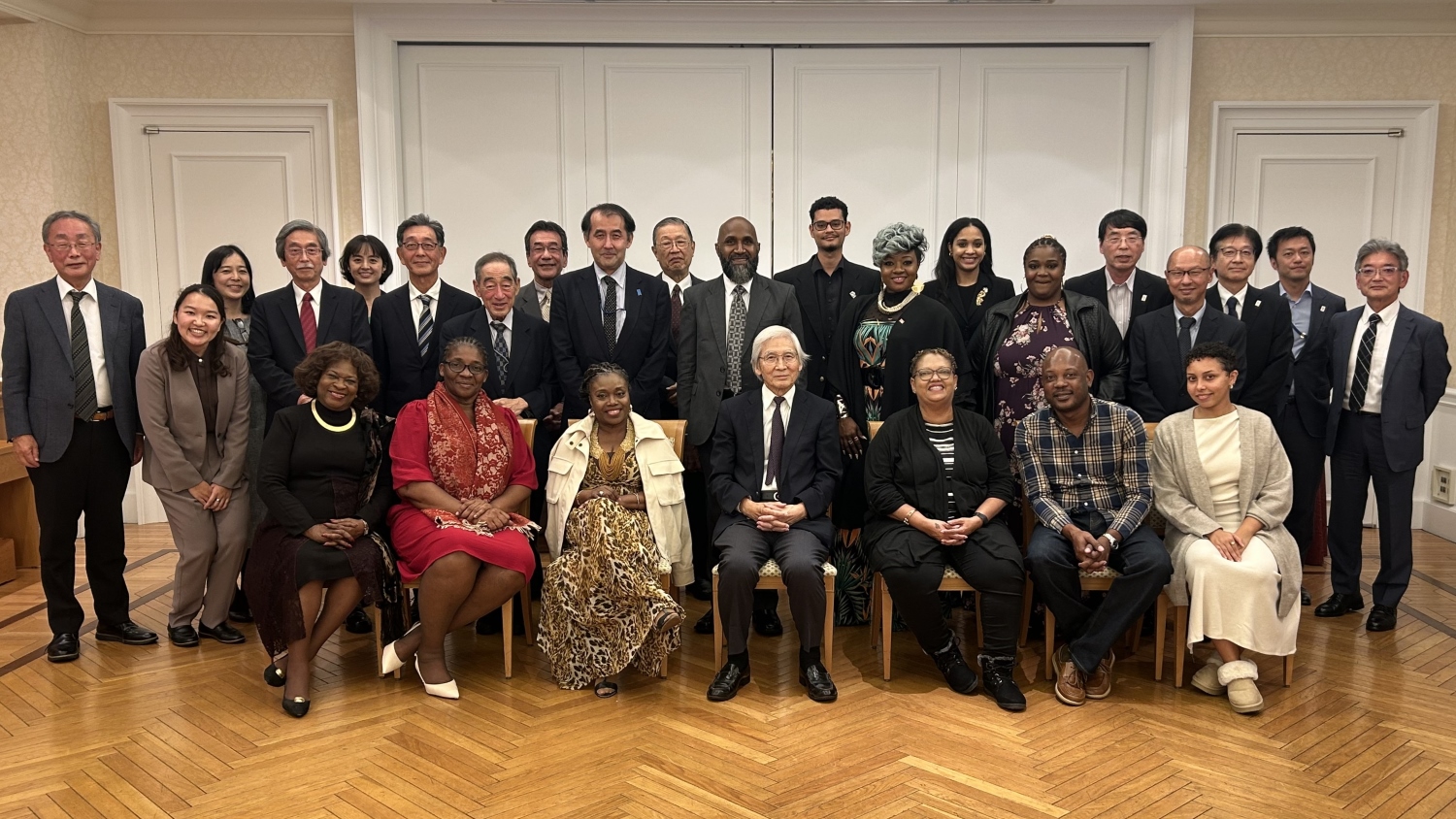
(Dinner party hosted by APIC President Shigeie)
WHAT'S NEW
- 2026.6.24 UPDATE
EVENTS
"429th Lecture Meeting Regarding Global Issues"
- 2026.5.27 UPDATE
EVENTS
"428th Lecture Meeting Regarding Global Issues"
- 2026.5.20 UPDATE
PROJECTS
"Pacific & Caribbean Student Invitation Program 2024 Participant Joins Osaka Expo 2025"
- 2026.5.20 UPDATE
SCHOLARSHIP
"10th Term Xavier & 3rd Term UWI Exchange Students Enter Sophia University"
- 2026.5.20 UPDATE
SCHOLARSHIP
"1st Term UWI Exchange Student Graduates Sophia University School (Interview)"
- 2026.5.20 UPDATE
SCHOLARSHIP
"APIC Exchange Students Attend Training in Tamba-Sasayama, Hyogo"
- 2026.5.20 UPDATE
SCHOLARSHIP
"Sixth Term Xavier Exchange Student Graduates Sophia University"
- 2026.5.13 UPDATE
PROJECTS
"Following Up on Janine Emmanuel, Participant of APIC’s Pacific & Caribbean Student Invitation Program"
- 2026.4.21 UPDATE
SCHOLARSHIP
"Welcoming 9th Term Xavier Exchange Students, 8th Term APIC-MCT Exchange Students, and 2nd Term UWI Exchange Students to Sophia University/Graduate School
"
- 2026.4.21 UPDATE
SCHOLARSHIP
"6th Term APIC-MCT Exchange Student Graduates Sophia University Graduate School"