





Pacific & Caribbean Journalist Fellowship 2025
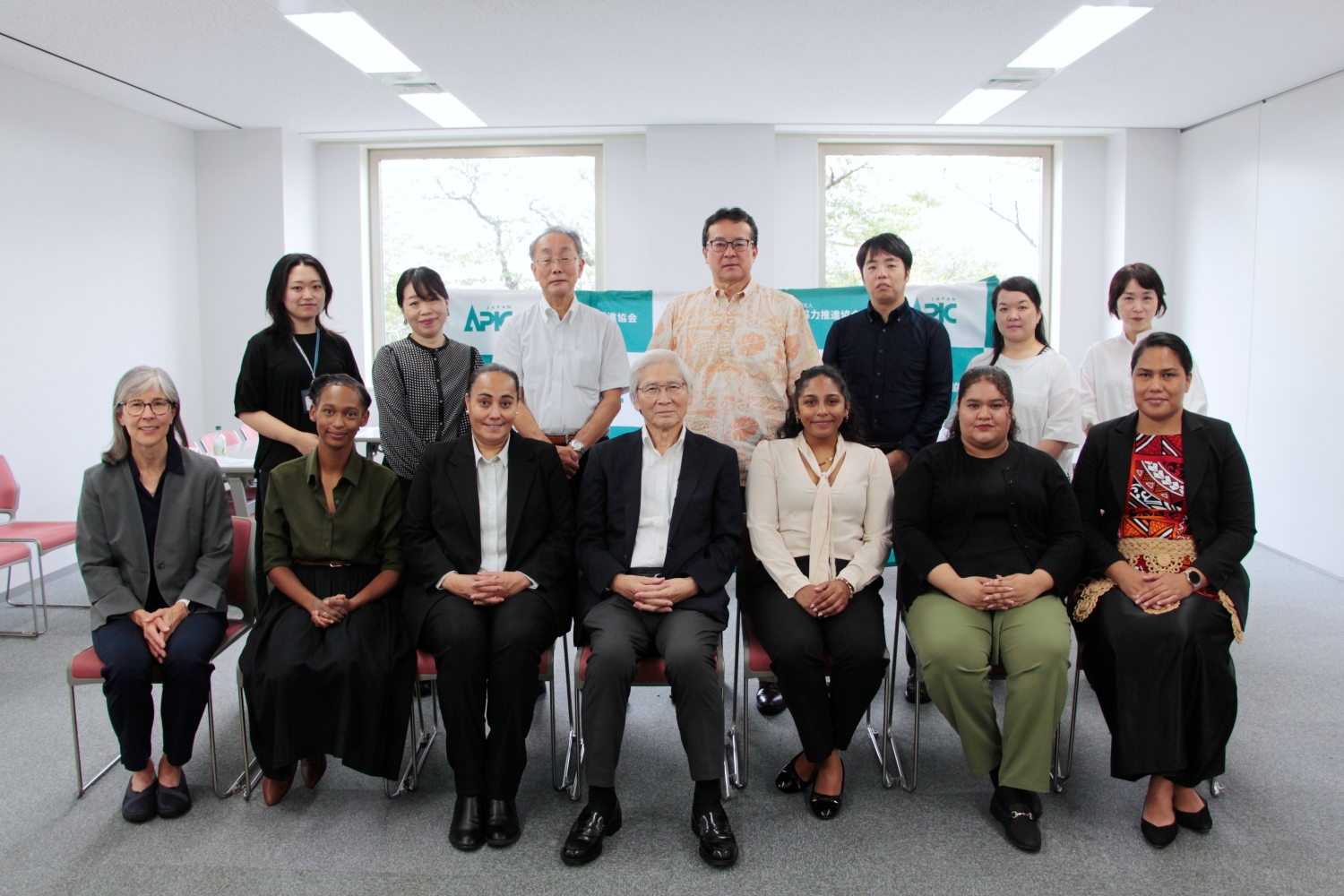
Participating journalists were Ms. Christine Rovoi of Fiji, reporter for New Zealand media; Ms. Teisa Matakivaha Cokanasiga of Tonga; Ms. Courtney Menzies of Belize; Ms. Raquel Robinson of Jamaica, and Ms. Khamarie Rodriguez of Trinidad and Tobago. Additionally, Ms. Dawn Matus joined the group from the United States as Program Coordinator. The participants from Belize and Jamaica were broadcast journalists. One of the requirements during the program is after visiting a site, under the guidance of the program coordinator, that the journalists each write at least one article to send back to their home country. APIC Director and Secretary General Araki joined each site visit with the group.
In addition to Tokyo, site visits were conducted at Osaka, Kobe, and Takamatsu, Kagawa prefecture. This fellowship has taken place since 2015, but was cancelled in 2020 and 2021 due to the COVID-19 pandemic, restarting in 2022, making this the 9th program to be held.
◆Visiting Tokyo and Briefings
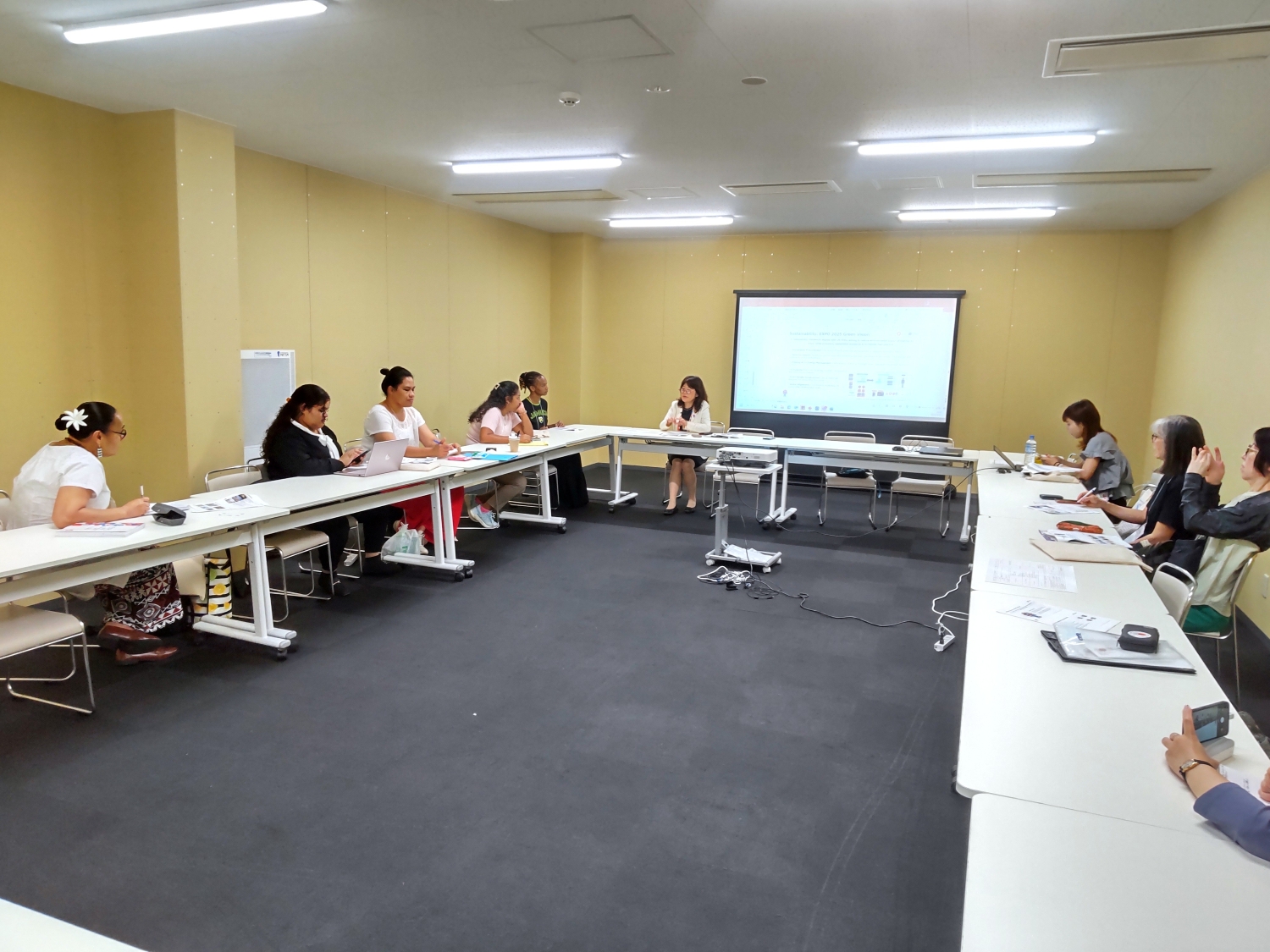
Participants arrived on Friday, September 26th, and upon meeting up with the Program Coordinator, visited the Foreign Press Center of Japan (FPCJ)’s office to conduct business matters, and spent Saturday and Sunday visiting Tokyo while getting adjusted to the time difference. Monday, September 29th was the official start of the program. First, a general program overview and orientation was held at the APIC office. APIC President Shigeie talked about current Japanese political affairs (the LDP presidential election was right around the corner), economic affairs, Japanese society (ageing society, etc.), and diplomatic challenges. In the afternoon, the group visited the Ministry of Foreign Affairs, meeting with the Director of Mexico, Central America and Caribbean Division Ms. Ritsuko Suzuki, and Senior Specialist, Pacific Division, Asian and Oceanian Affairs Bureau, Mr. Ryuji Iwasaki, talking about their respective region’s relationship with Japan. Afterward, the group headed to the Meteorological Agency, where they observed the Weather Mitigation Operation Room, and received an explanation regarding the typhoon monitoring operations. In the Earthquake and Volcano Operation Room they received an explanation regarding seismic monitoring operations, and lastly took a tour of the press conference room.
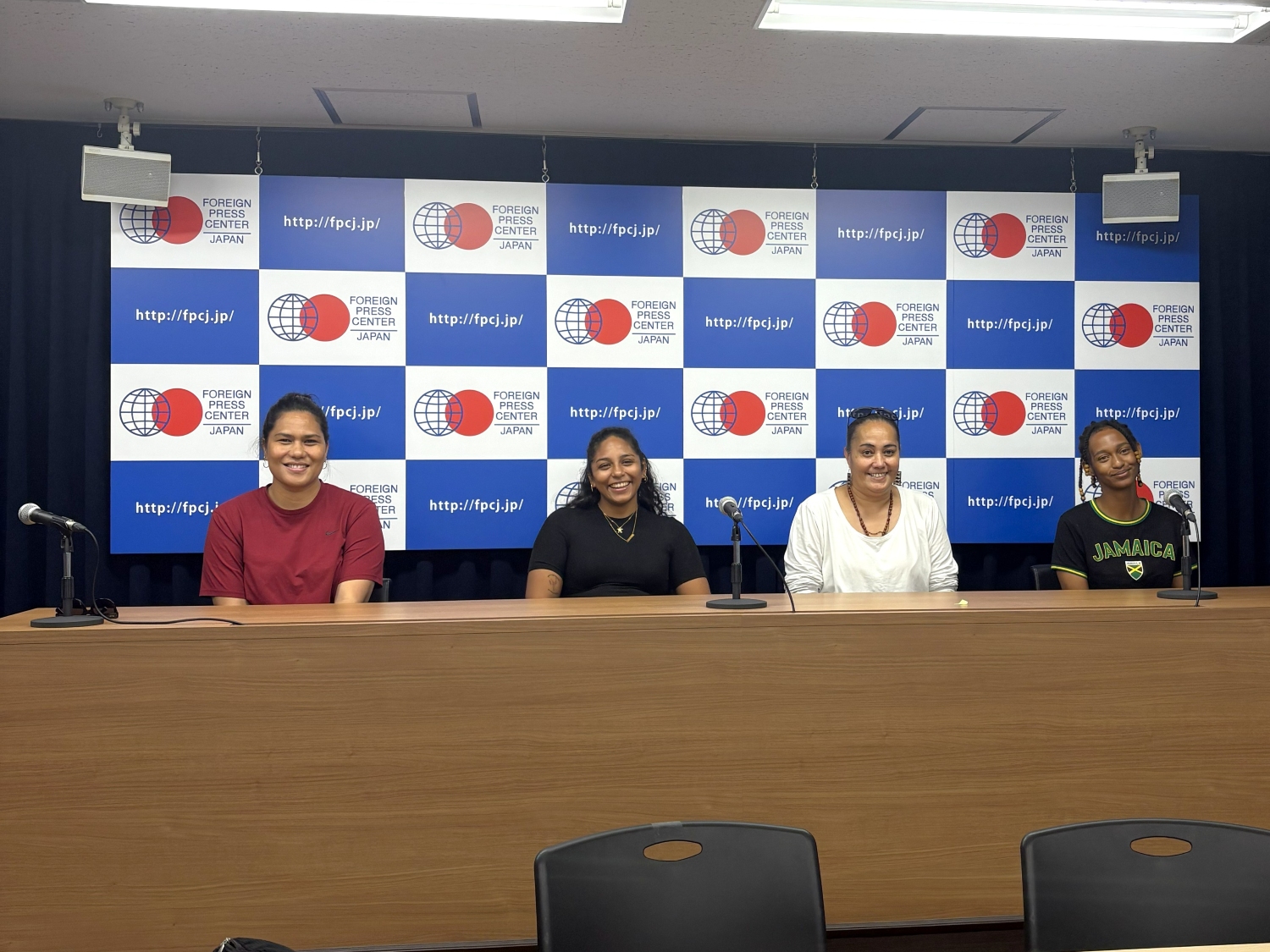
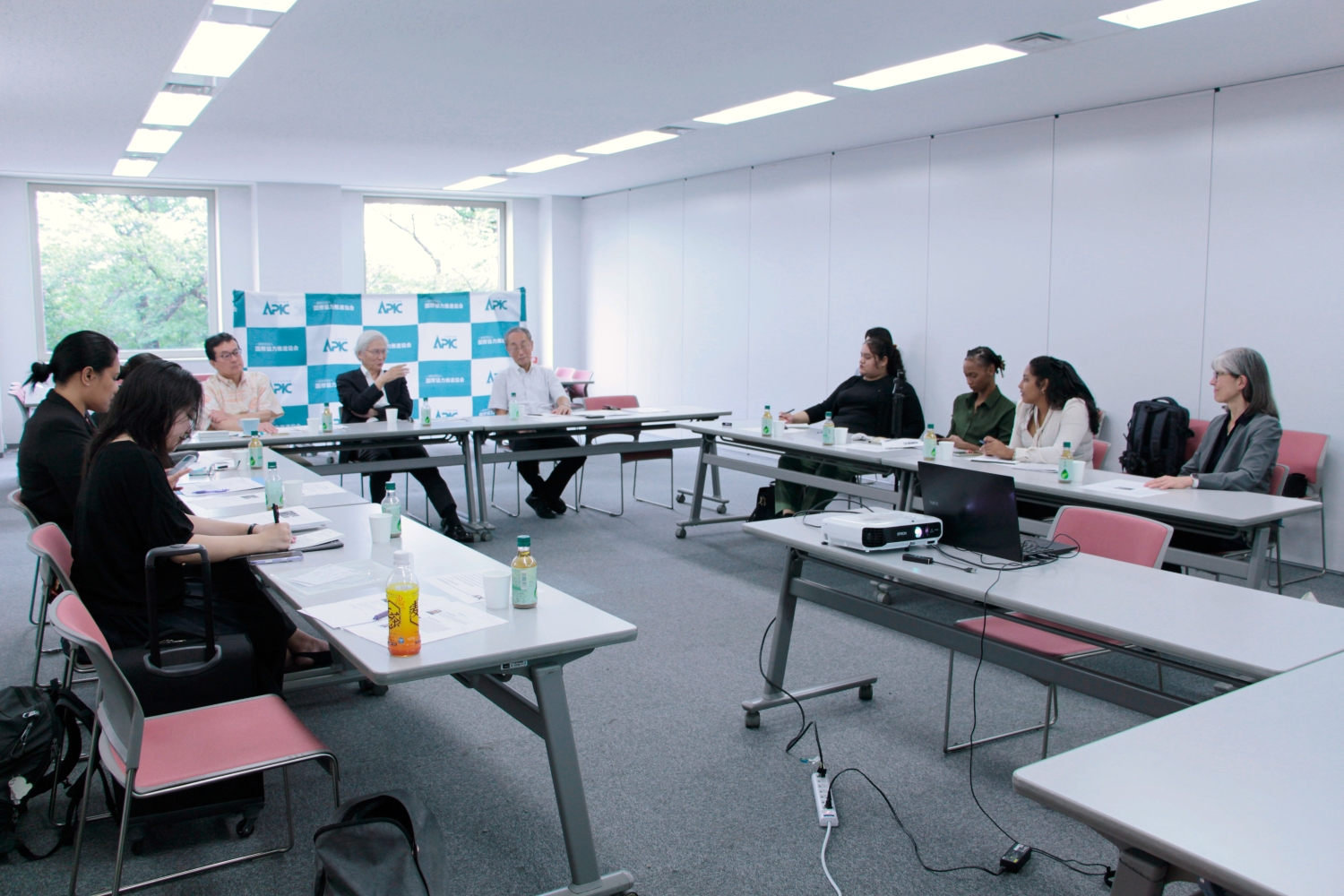
(Left: Visiting the Foreign Press Center of Japan. Right: Receiving a briefing at APIC)
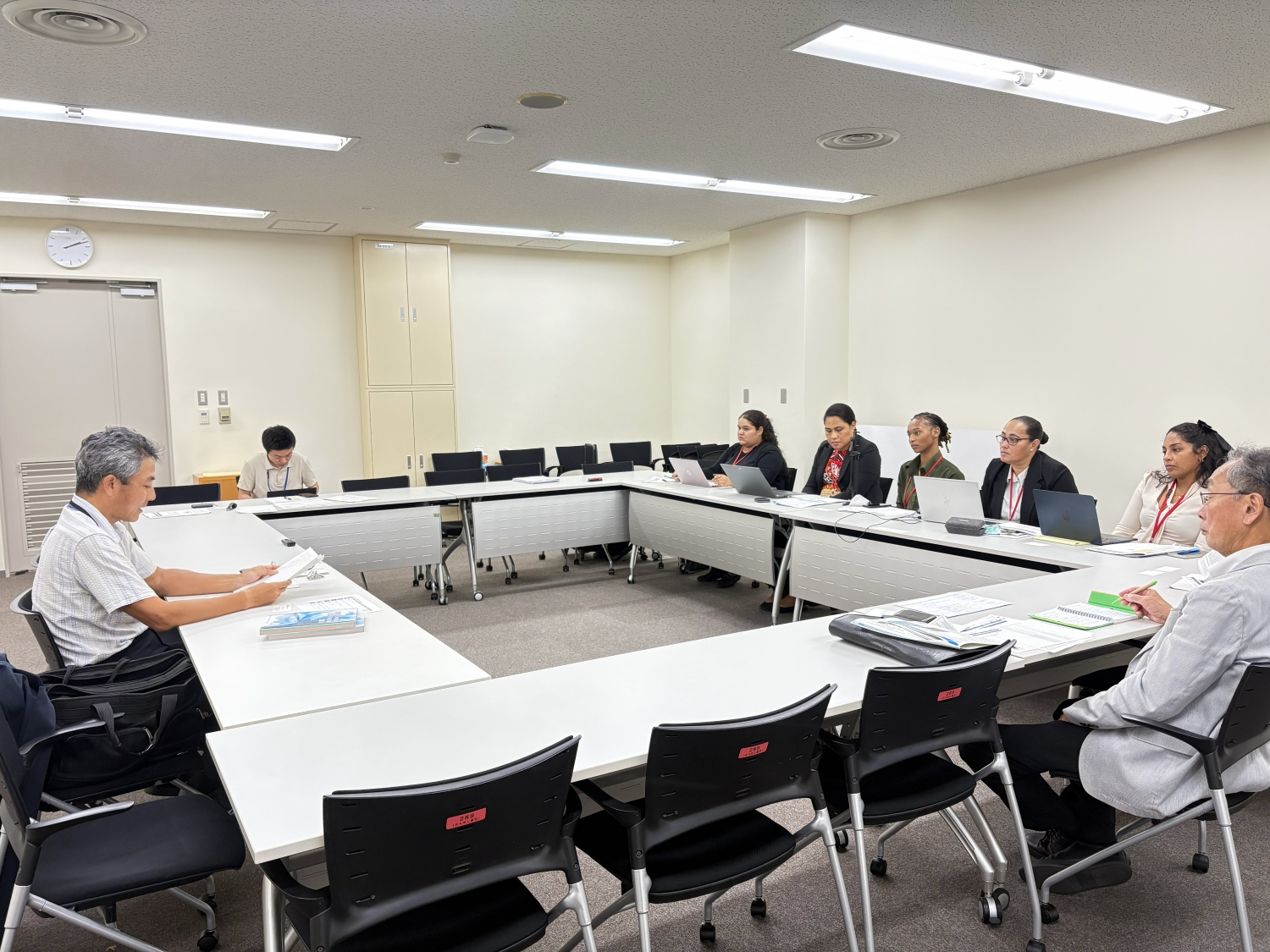
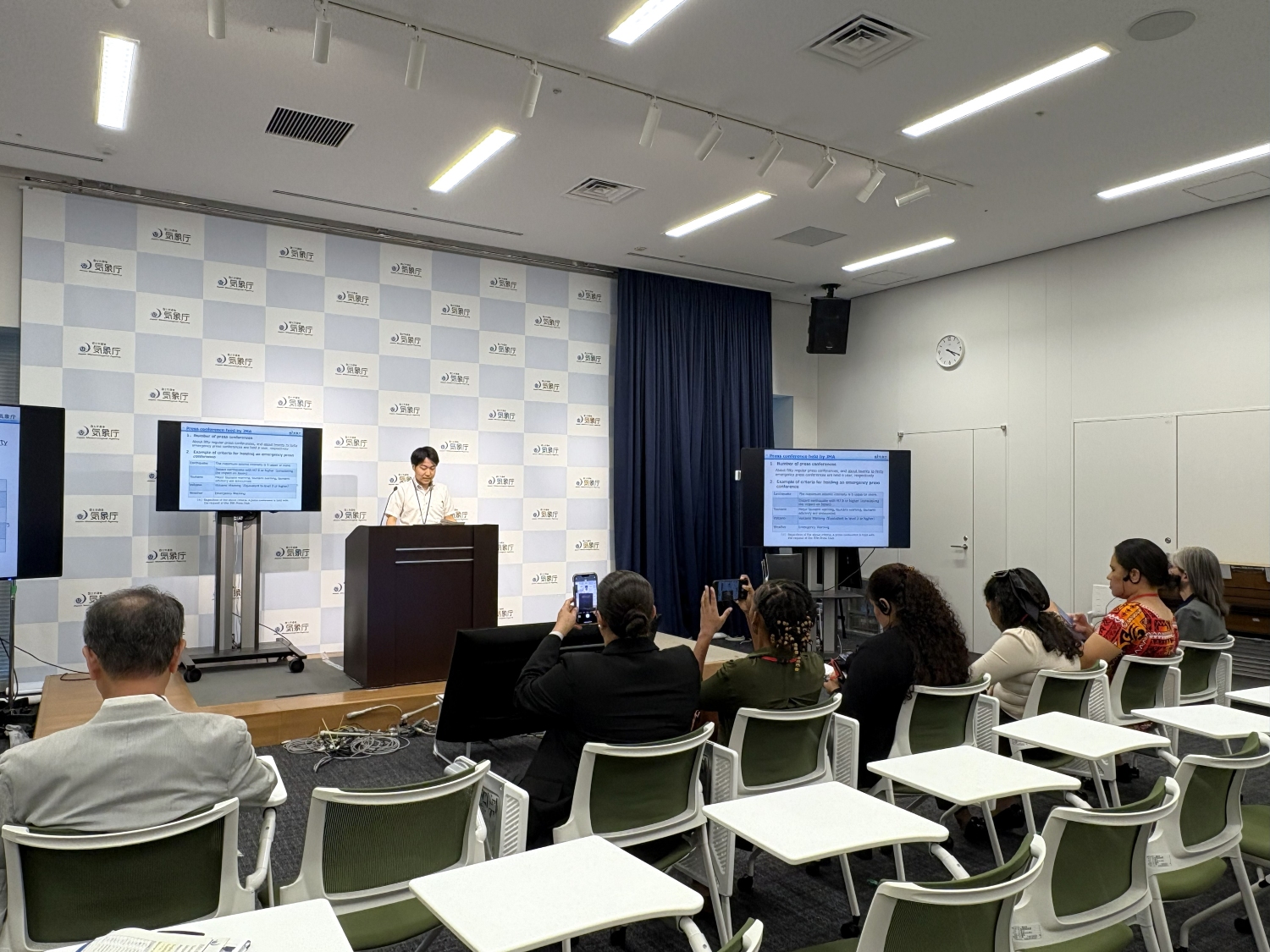
(Left: Visiting the Ministry of Foreign Affairs. Right: Visiting the Meteorological Agency)
Site Visit to Osaka Incineration Plant
On the morning of Tuesday, September 30th, the participants took the bullet train to Osaka, where in the afternoon they took a tour of the Maishima Incineration Plant. The group was surprised by the outside of the plant, as it looks exactly like a piece of Gaudi architecture. In fact, the building was designed by Austrian visual artist and architect Friedensreich Hundertwasser. It has lodged itself firmly within the community and has become a symbol of the blending of technology, ecology, and art. The Maishima Incineration Plant is one of seven incineration plants belonging to the cities of Osaka, Yao, Matsubara, and Moriguchi; collectively spending roughly 60 billion JPY on the façade of the building alone. The journalists listened intently to the explanation of the facility and actively posed questions as many of the participants do not have such a facility in their home country.
◆Visit to Osaka World Expo 2025
On October 1st, the participants visited the Osaka World Expo 2025, visiting each participant’s home country’s pavilion to observe how their country is presenting themselves to the outside, as well as to give the journalists the chance to experience the World Expo.
First, Director General Extraordinary, Public Relations and Promotion Bureau, Japan Association for the 2025 World Exposition Ms. Sachiko Yoshimura gave the group an overview of the Expo. Afterward, they participated in three different tours at the off-site Research Institute of Innovative Technology for the Earth (RITE)’s Carbon Recycling Factory, which included Osaka Gas, and Air Water. The tour demonstrated machines capturing CO2 in the air, combining it with methane gas to turn it into energy supplying the Expo as well as facilities that supply energy to 700 neighboring households. They also observed the facility where sewage water was purified and released into the ocean. Following the tours, they learned about at how quick a rate garbage is increasing in the ocean at the Blue Ocean Dome.
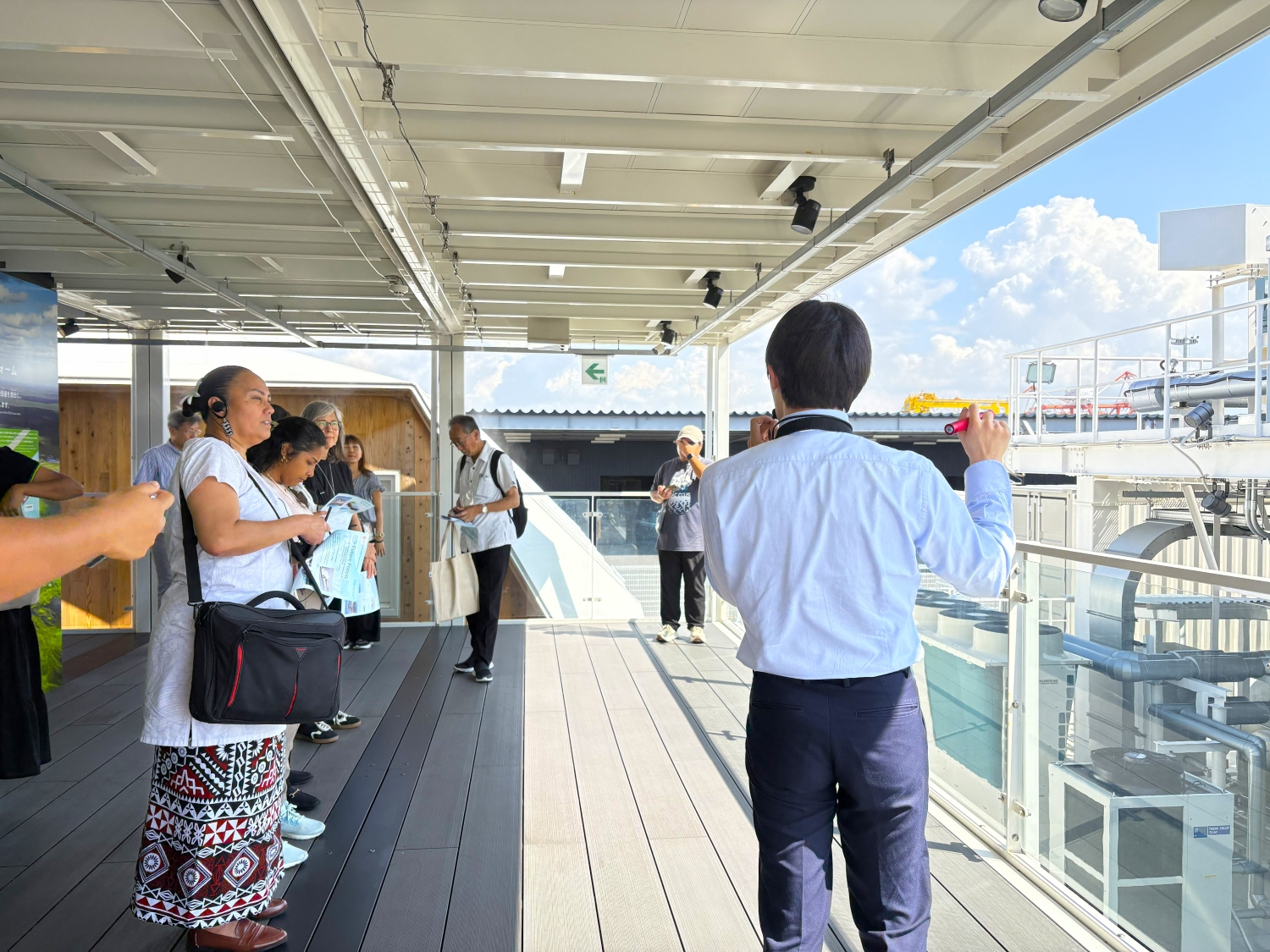
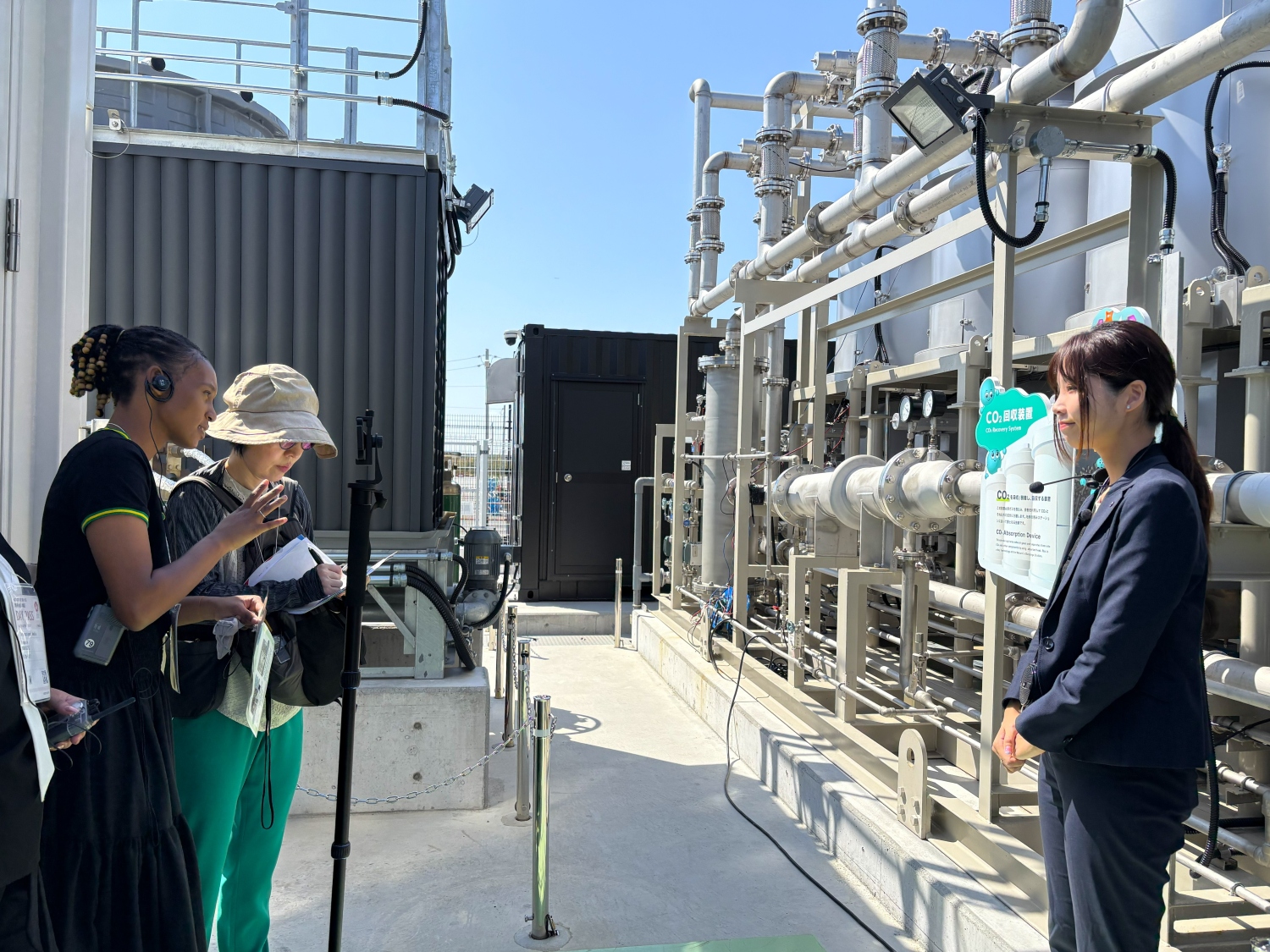
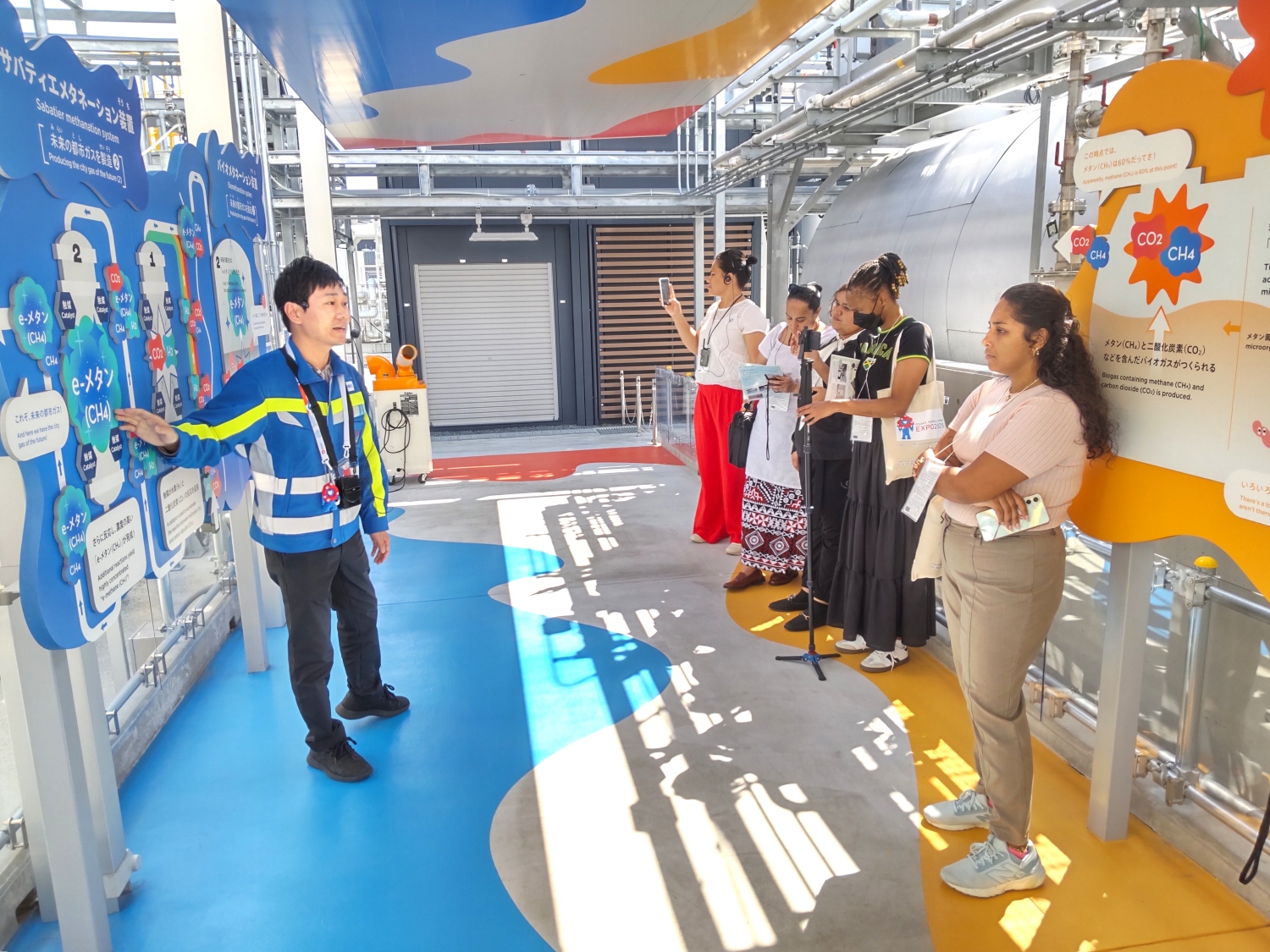
(Top left: Listening to an explanation of the outline of the World Expo. Top right & bottom: Taking a tour)
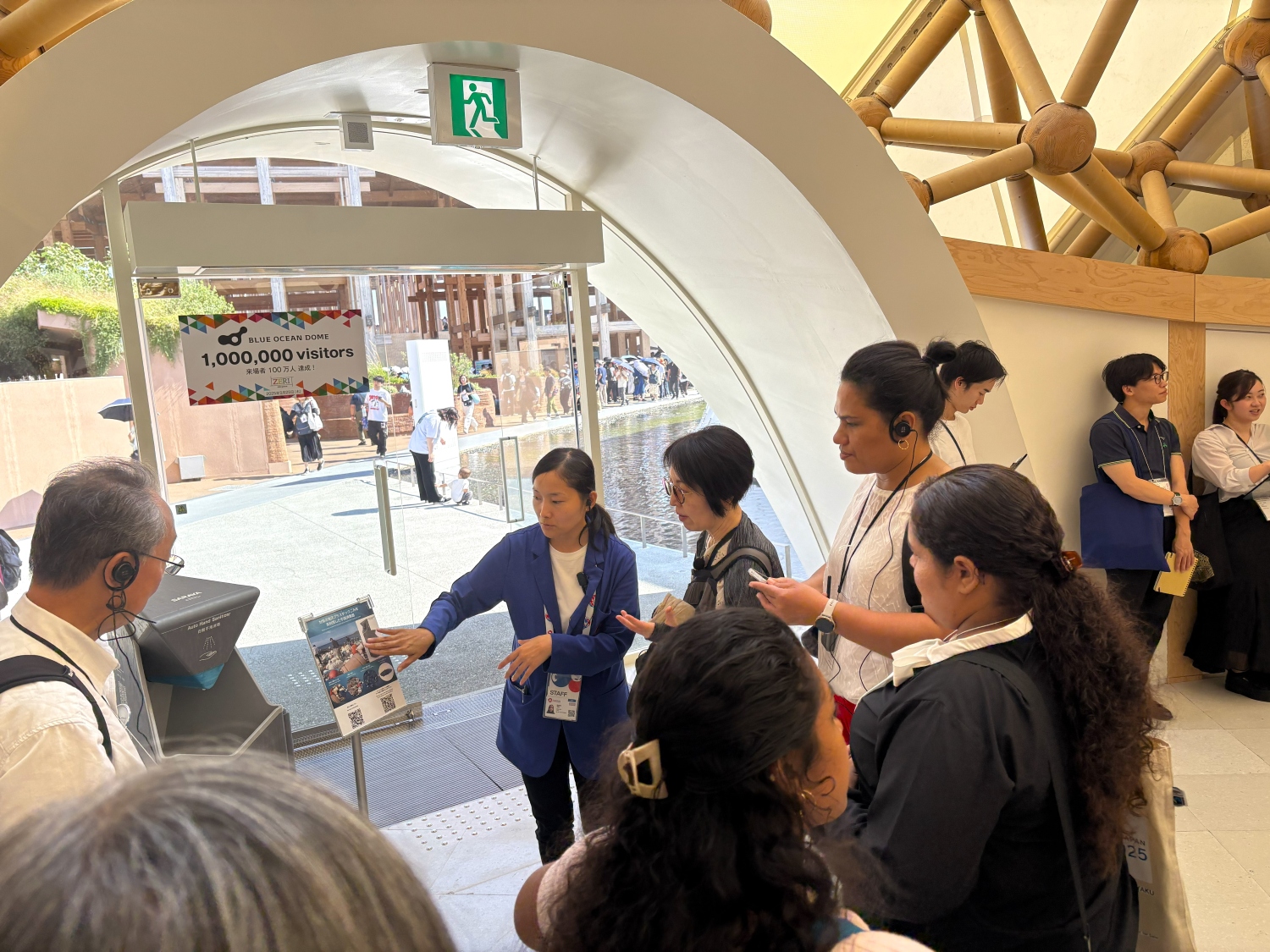
(At the Blue Ocean Dome)
In the afternoon, the group visited the Commons Pavilion which housed participants’ country’s booths. A representative of the country gave explanations at each booth, and the participating journalists also conducted interviews, writing articles to send back to their home media outlet. After the interviews, the group went up on top of the Ring and walked halfway around, taking in the view of the site from above.
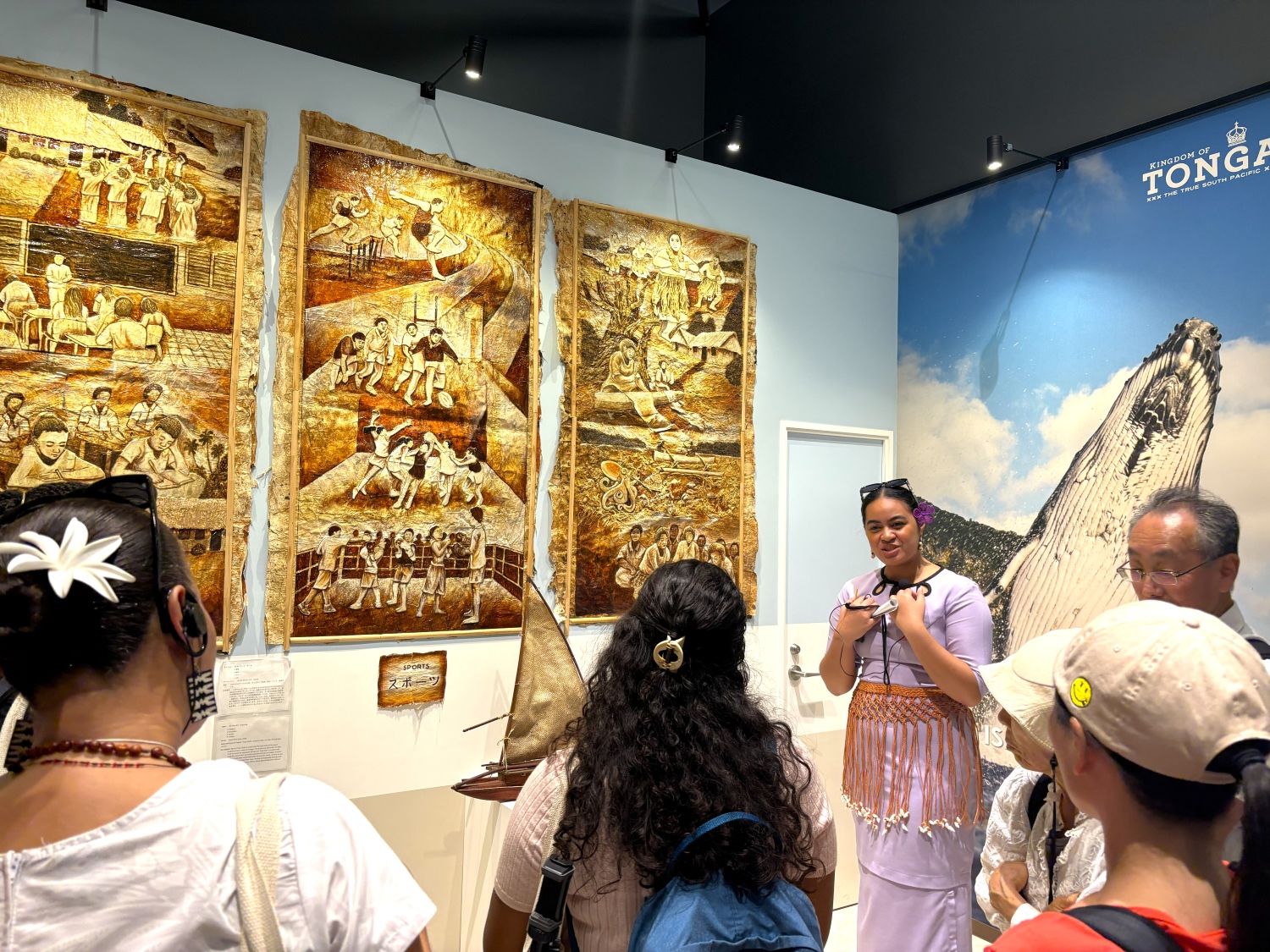
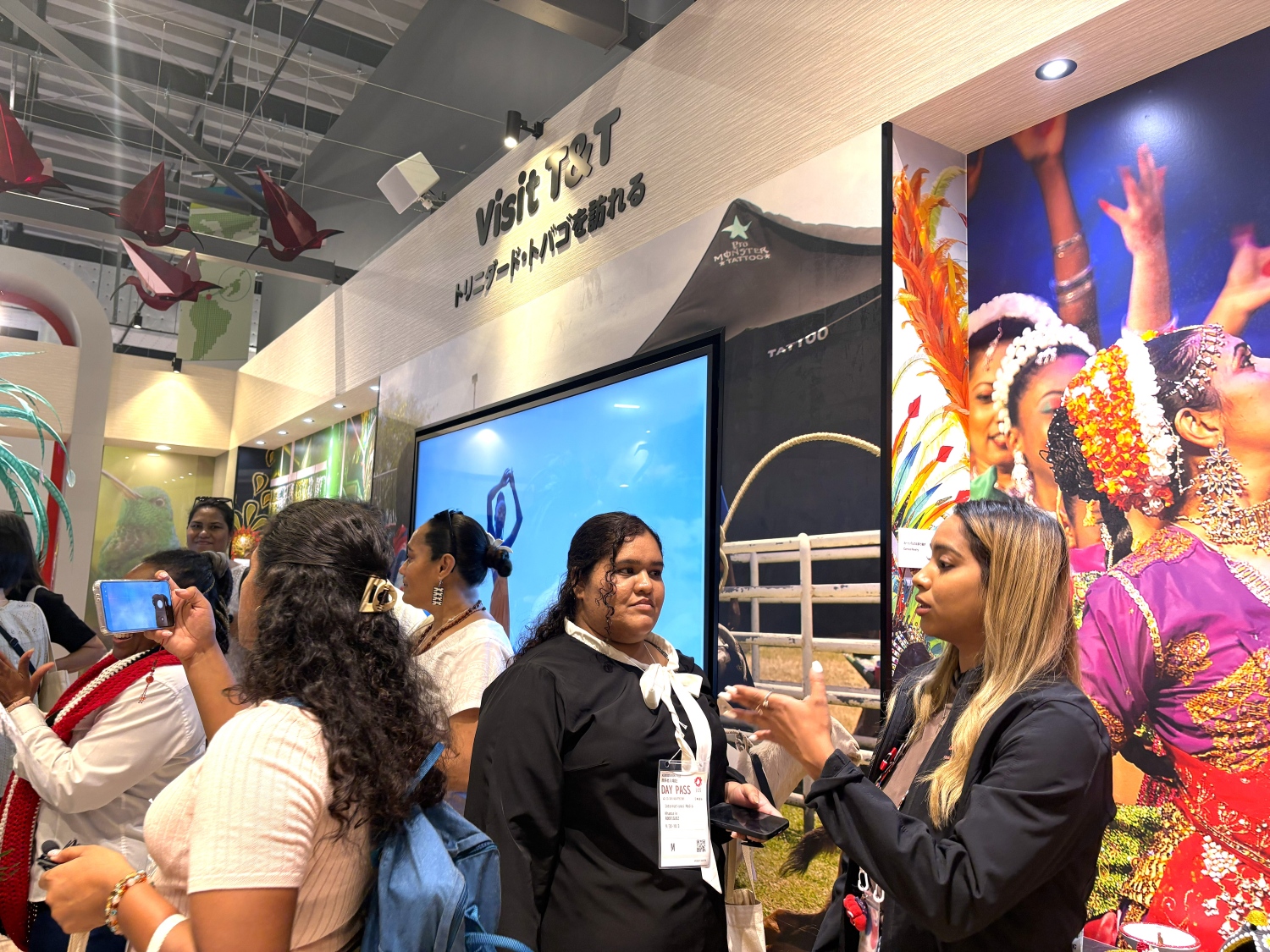
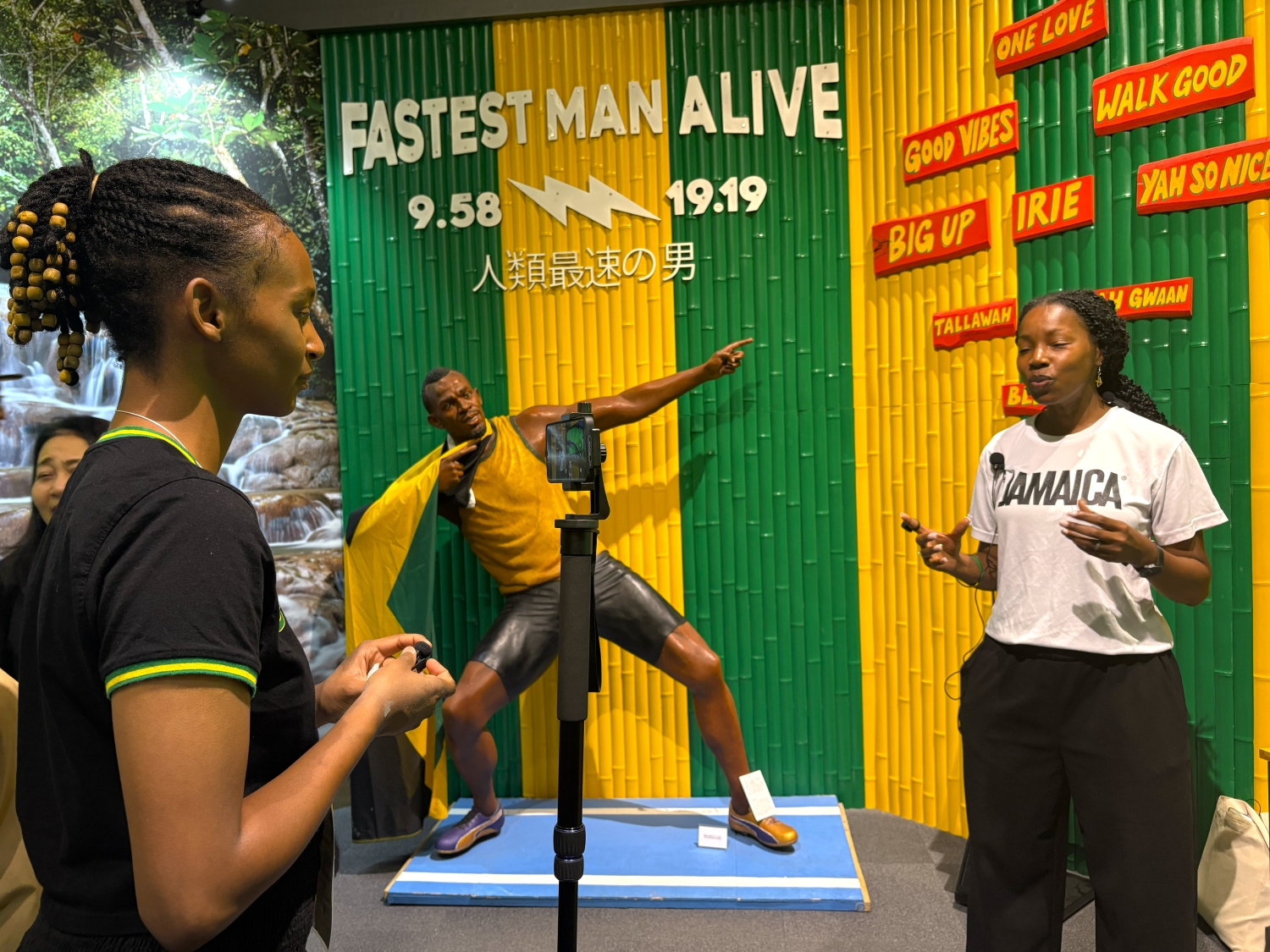
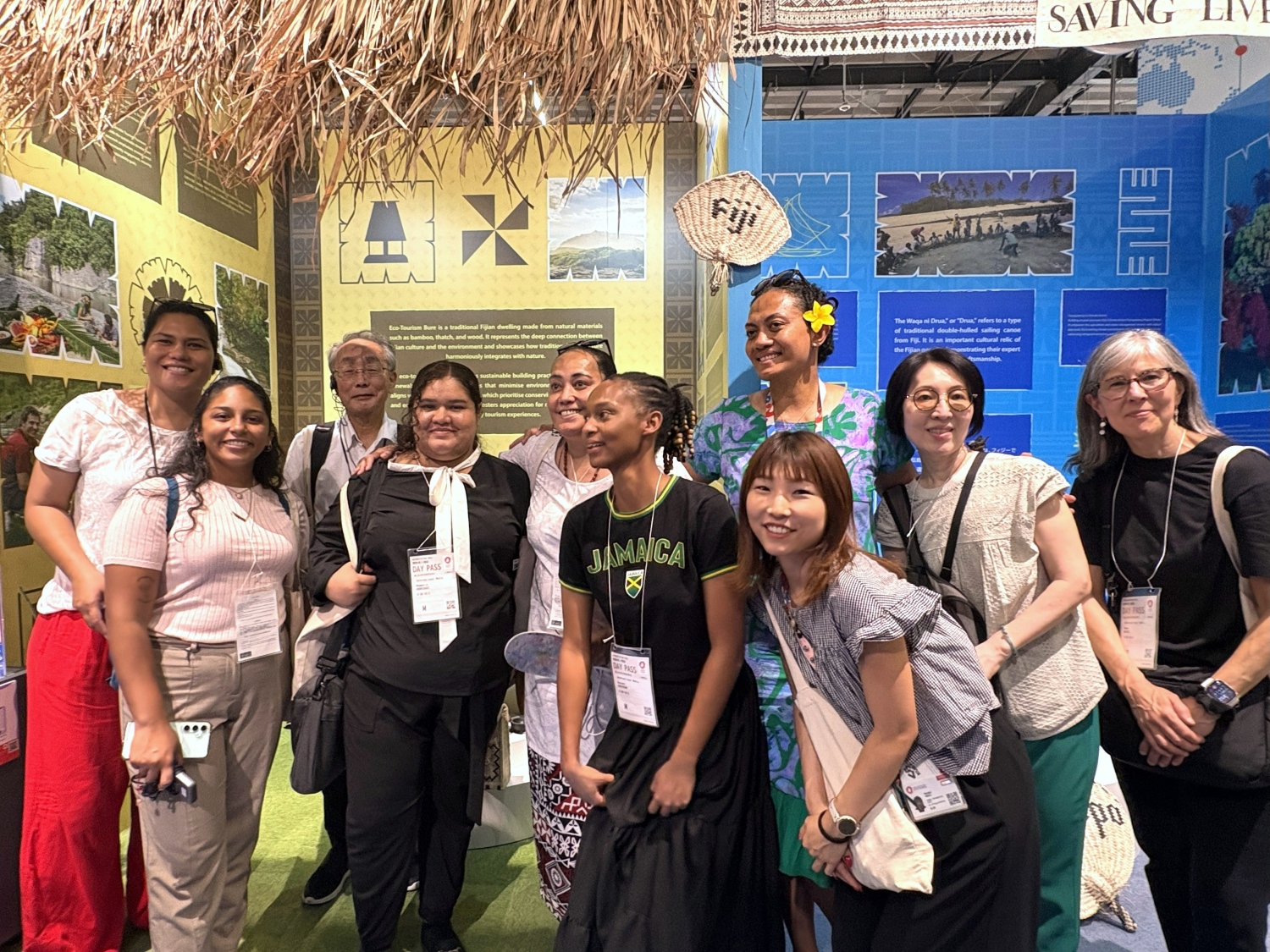
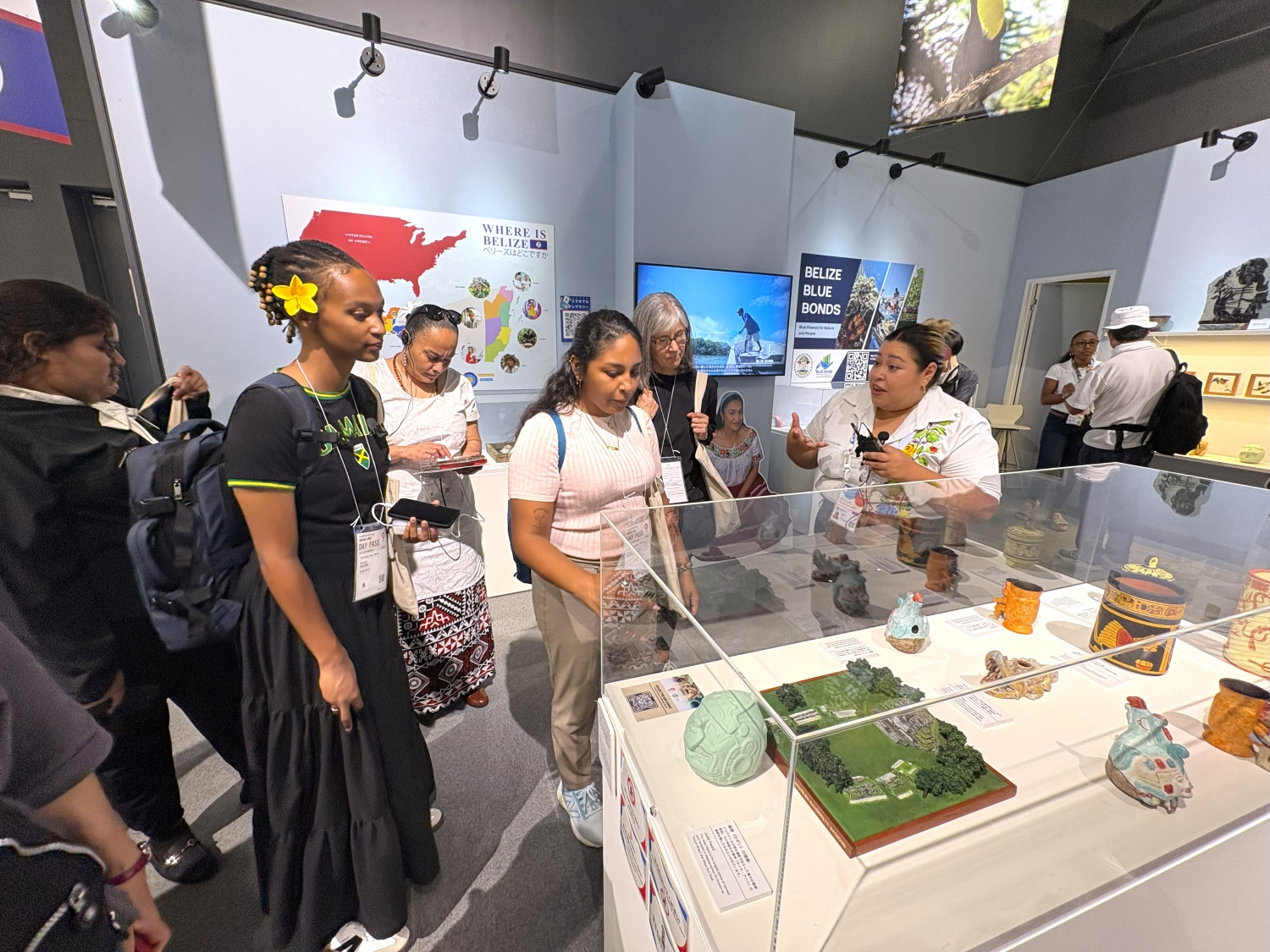
(Visiting each country’s booth. Top left: Tonga. Top right: Trinidad & Tobago. Middle left: Jamaica. Middle right: Fiji. Bottom: Belize)
In the evening the group observed a floating trash collection robot demonstration experiment on-site. It automatically picks up marine trash, as well as is able to guide a boat without a boatman present. Everyone showed a keen interest, paying close attention to the explanations.
◆From Scallops to Helmets: Remembering the Kobe Earthquake
On the morning of October 2nd, the journalists visited the Koushi Chemical Industry Co., Ltd. In Higashi Osaka. The company originally manufactured plastic products, but in an effort to give back to society they invested in producing the “HOTAMET”, which uses powder from grounded discarded scallop shells in Hokkaido, mixed with the company’s plastic to manufacture durable helmets. In addition to the helmets being used at the Osaka World Expo, the company also hopes to expand its overseas business selling its “Shellmet”. The group was impressed by how industrial waste could be reused and turned into a manufactured product for sale.
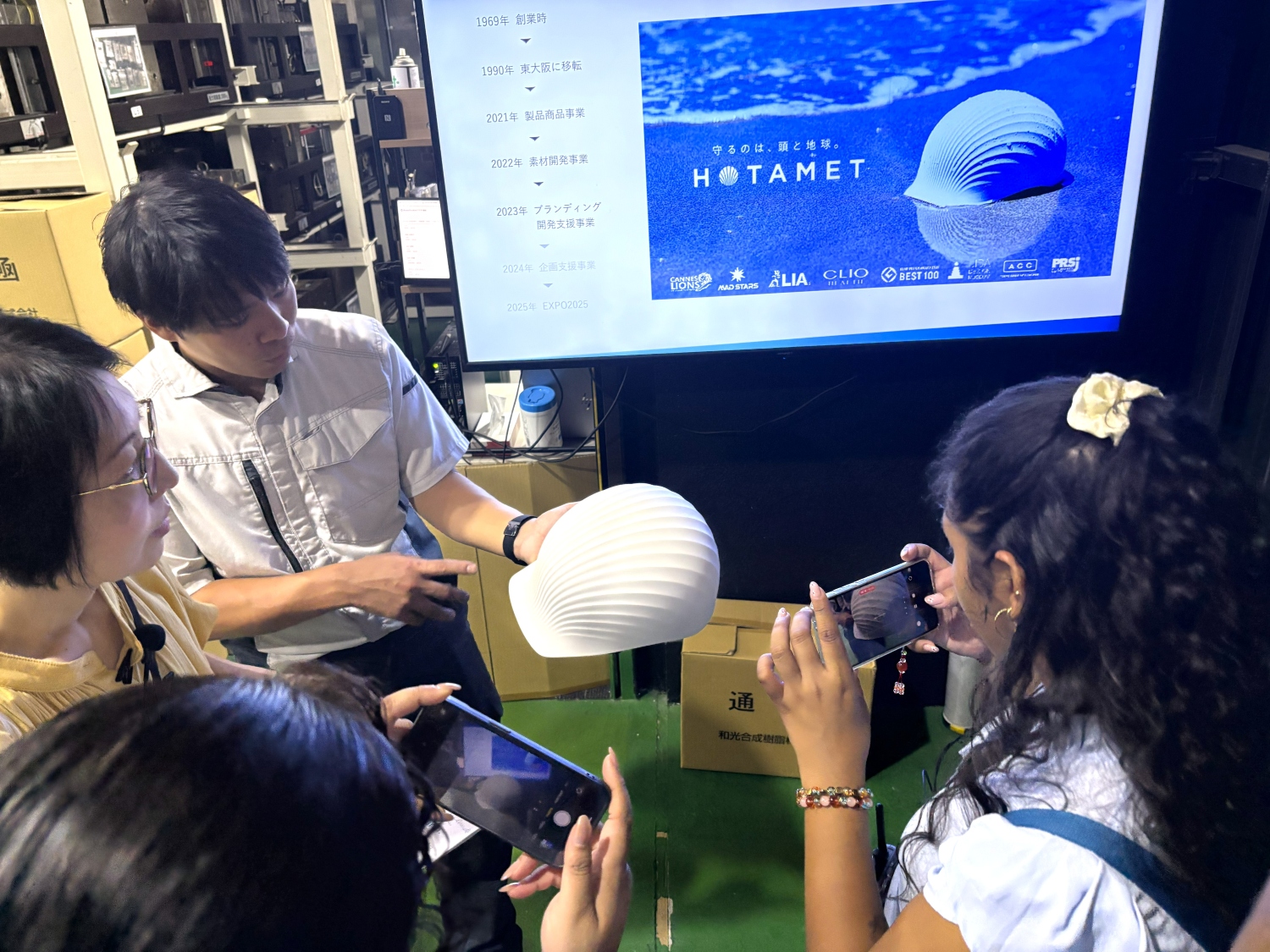
In the afternoon, the group visited Kobe, where they first stopped at The Great Hanshin-Awaji Earthquake Memorial Disaster Reduction and Human Renovation Institution (DRI) and watched a video depicting the magnitude of the disaster, followed by a talk by a volunteer guide regarding disaster mitigation measures, including experiments testing building durability. The next stop was the Kobe Shimbun newspaper, where journalist and Managing Editor Mr. Katsunobu Ishizaki shared his personal experiences of the earthquake, talking about how at 25 and still new to the job, how he became in charge of reporting on the earthquake in the Kobe and Ashiya areas from the collapsed Kobe Shimbun headquarters, and through his experiences how he thinks media should report on disasters. Mr. Ishizaki explained how Kobe Shimbun reporters left Kobe to cover the Tokyo sarin gas attacks in March of the same year (the earthquake occurred in January), leaving only a handful of reporters in Kobe to cover the aftermath of the earthquake, who continued to cover topics such as related deaths, the mental state and emotional distress of the earthquake victims, etc. He also claimed that the newspaper has covered and printed more pages on overseas natural disasters than other Japanese papers. Some of the visiting journalists had not yet been born thirty years ago, or were still young children and thus with no memory of the catastrophic damage done, they were amazed to see how Kobe’s cityscape had been completely rebuilt after the Great Earthquake.
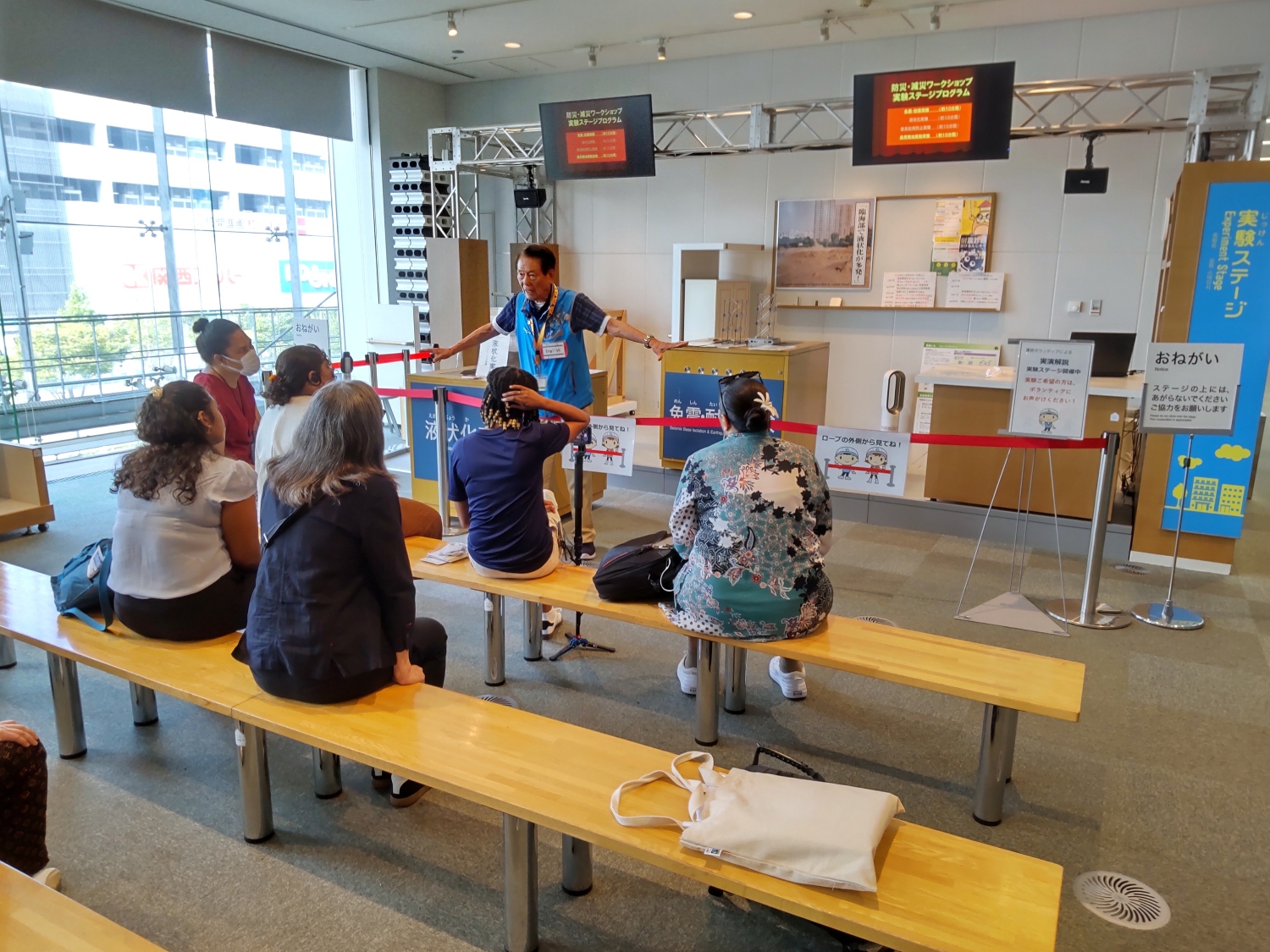
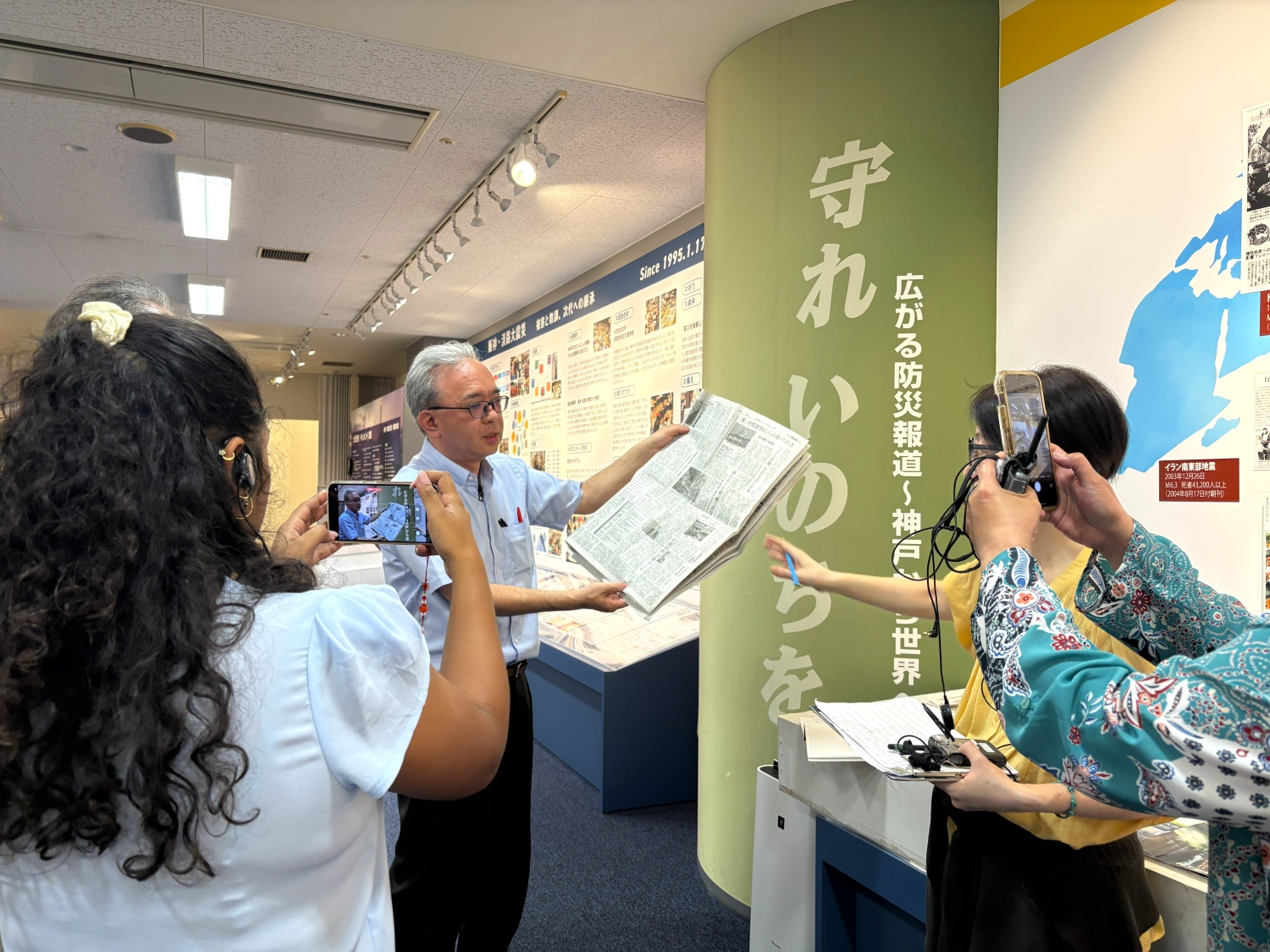
(Left: At the DRI. Right: Visiting the Kobe Shimbun headquarters)
The group arrived at Takamatsu in the morning via Awajishima. There, they took part in coastal garbage pickup with Mr. Keiji Morita, Leader of “Kagawa Marine Garbage Pickup Team”. Mr. Morita first started coastal litter removal at the age of 26 when he returned to his hometown in Kagawa and was shocked to see the amount of garbage that had washed up on shore. Although the local government was skeptical of his efforts at first, it has now become an official government project. Recently, students from Korea, Taiwan, and China on school trips to the Naoshima art museum take turns picking up trash on the beach under the direction and supervision of Mr. Morita. Participants split up into two groups, and for 15 minutes they pick up trash along the shore and separate it into 20 international standard categories, such as plastic bottles, plastic bottle caps, plastic pipes used for oyster farming, household plastic, cigarette butts, etc. The journalists showed great interest in learning about Mr. Morita’s efforts, with questions coming non-stop.
On October 4th, the group visited Ritsurin Garden for three and a half hours starting at 10:30 a.m. The Garden was originally the residence garden of the Takamatsu Domain during the Edo Period. The guide explained the origin of the name (literally translated “park of chestnut trees”, as there used to be many such trees), the meaning of the “Tsuru-crane-kame-tortoise-matsu-pine” tree, how a large number of Japanese pine trees were planted to commemorate the stay of the Taisho Emperor, and other facts about the park. Later on, the group took a break and had a bowl of matcha at the tea house, “Kiku Getsu Tei” within the garden.
◆Reporting in Tokyo & End of Program
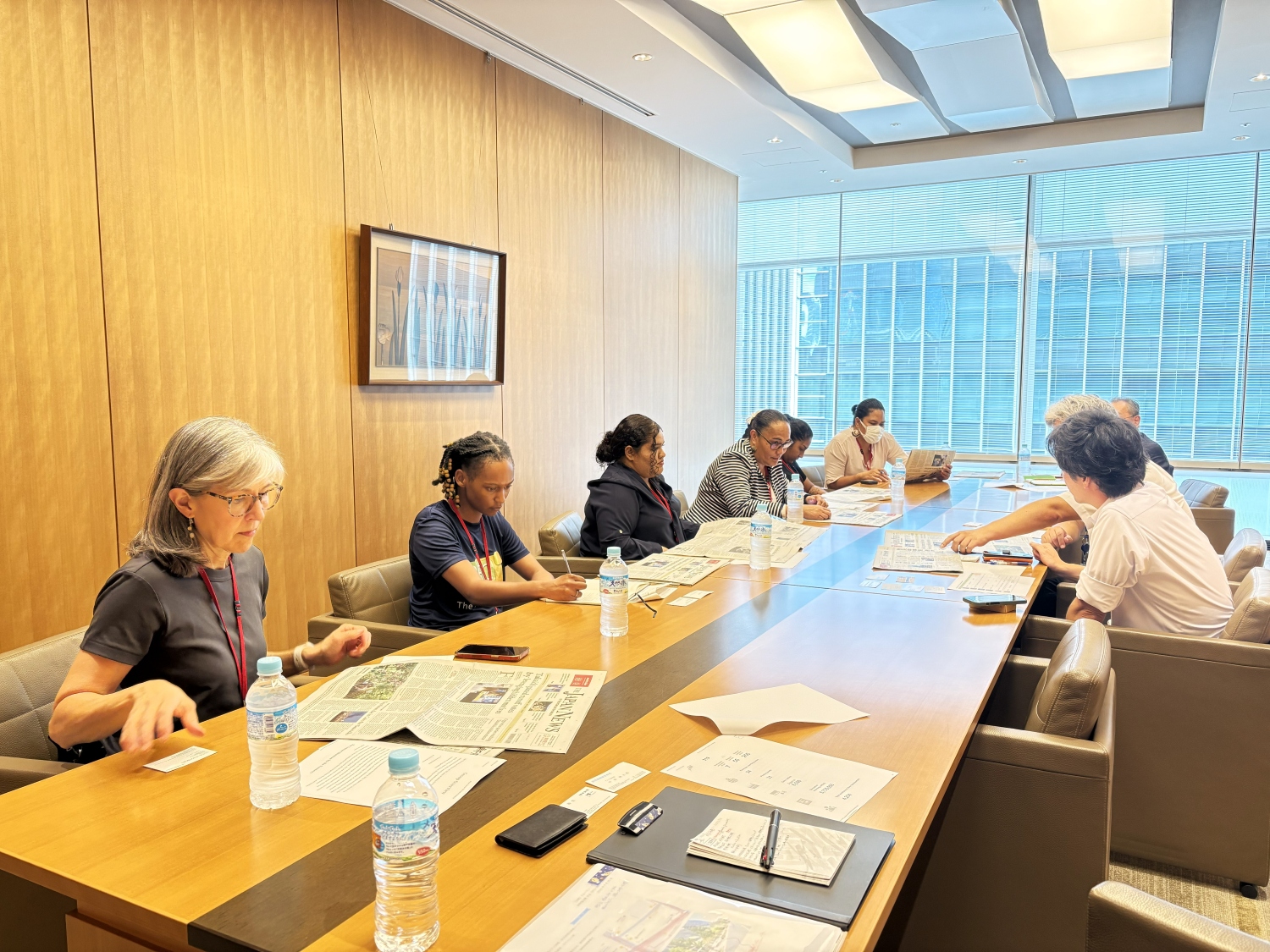
On the morning of October 6th at the Yomiuri Newspaper Tokyo headquarters, Deputy Director of International Division Mr. Kentaro Nakajima (previous Washington Bureau Chief) and reporter from the Editorial Department Mr. Yuya Yokobori met with the visiting journalists and conversed candidly with them regarding the Japanese political situation, among other topics. Mr. Nakajima explained that Yomiuri Shimbun is the largest newspaper company in Japan, but that in recent years the number of subscribers has been declining as more people turn to online news. He also outlined the company’s editorial stance and overall approach. One of the visiting journalists asked about if, similar to how American news outlet Fox News makes its support of Trump obvious, whether or not Japanese newspapers have an overt political bias. Mr. Nakajima responded that Japanese newspapers do not have a political bias like other countries' media might.
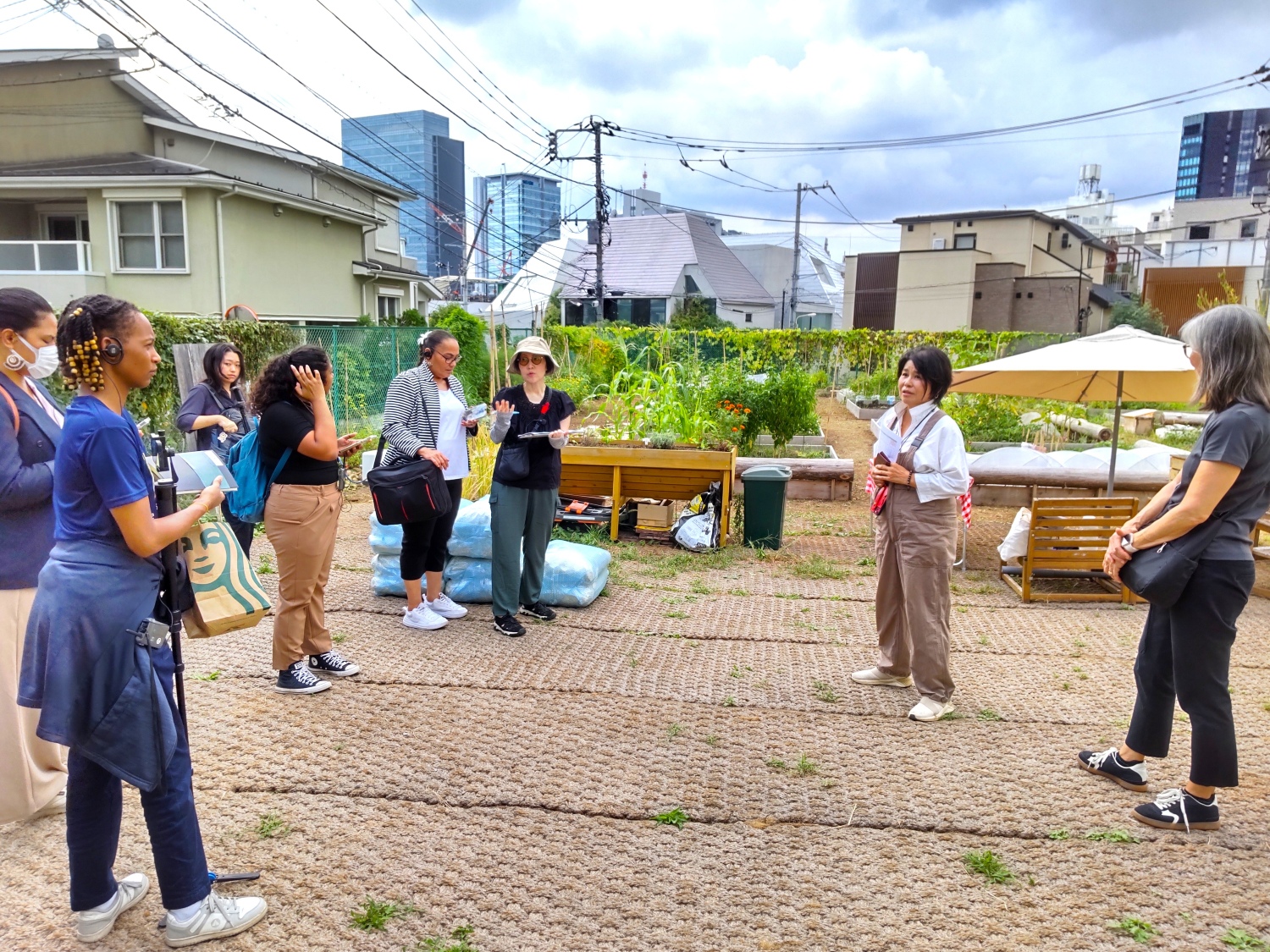
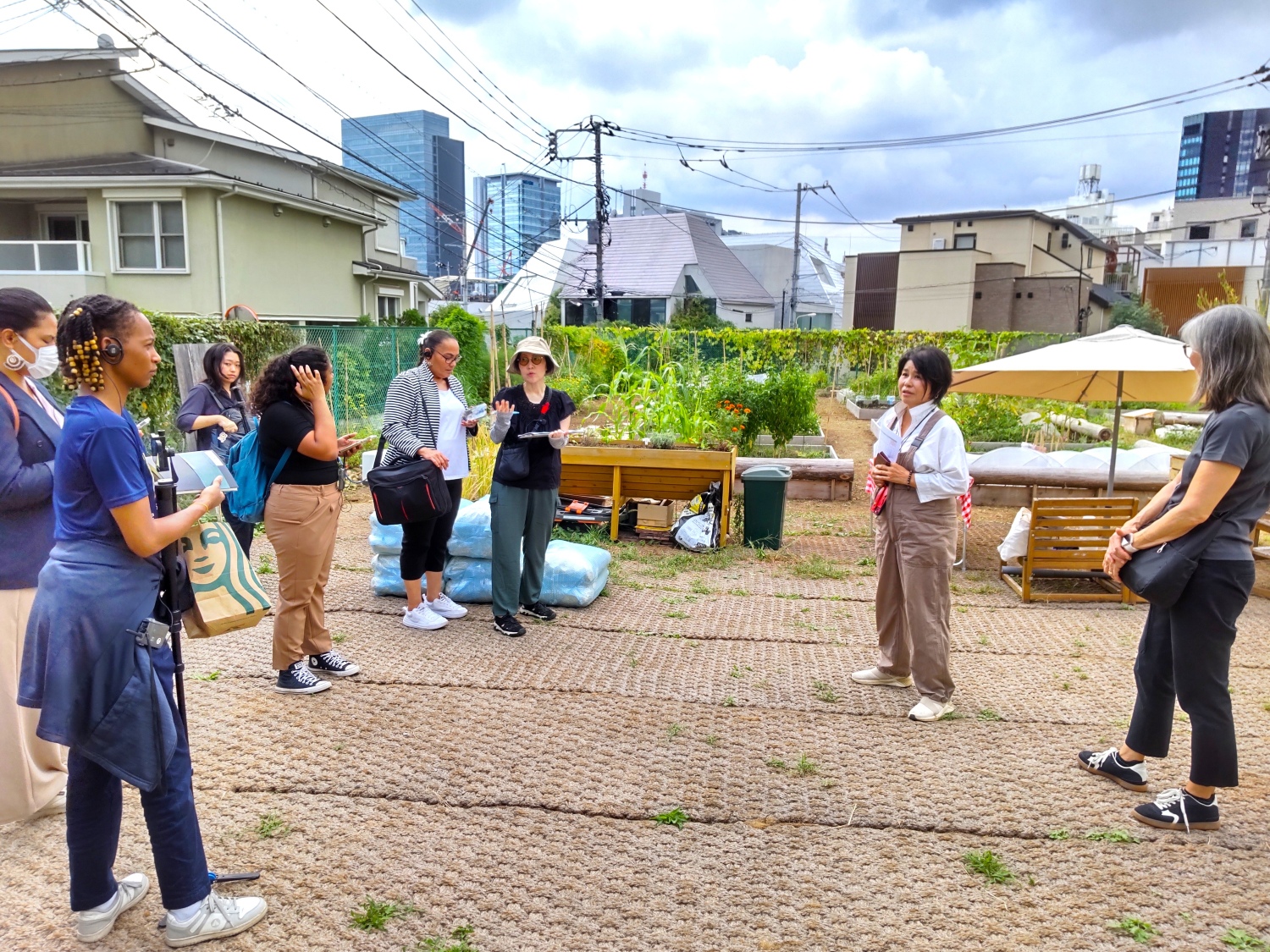
In the afternoon, the group visited a plot of empty government land in Jingumae, Shibuya, equivalent to seven tennis courts in size, run by NGO Harajuku Harappa Farm. The NGO is conducting a composting project on the land, and according to NGO Representative Director Ms. Mikiko Anzai, the NGO contracted the land from the government for a one-year lease starting in April 2025, bringing in dirt and soil to create a small field. She explained how resource recycling and communication in the local community has emerged through farming, resource recycling action by composting, and educational workshops held by the NGO. The group showed keen interest in the NGO’s initiatives, as food scraps are sent to the trash in their home countries, making the topic of reuse and circulation of particular interest. The current challenge facing the NGO is successfully collecting enough signatures to petition the government to continue leasing the land after the contract ends in March, 2026.
(Left: At the DRI. Right: Visiting the Kobe Shimbun headquarters)
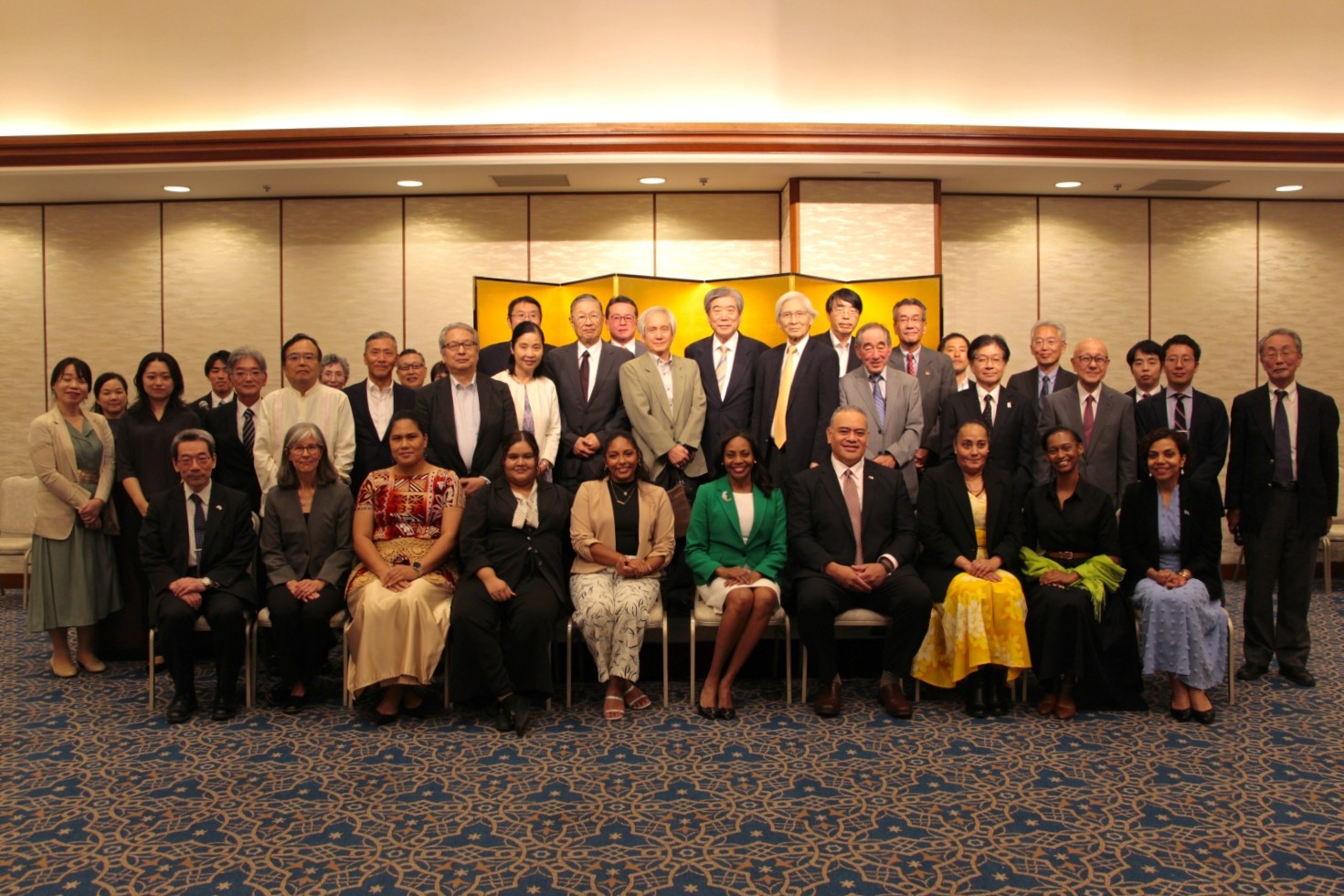
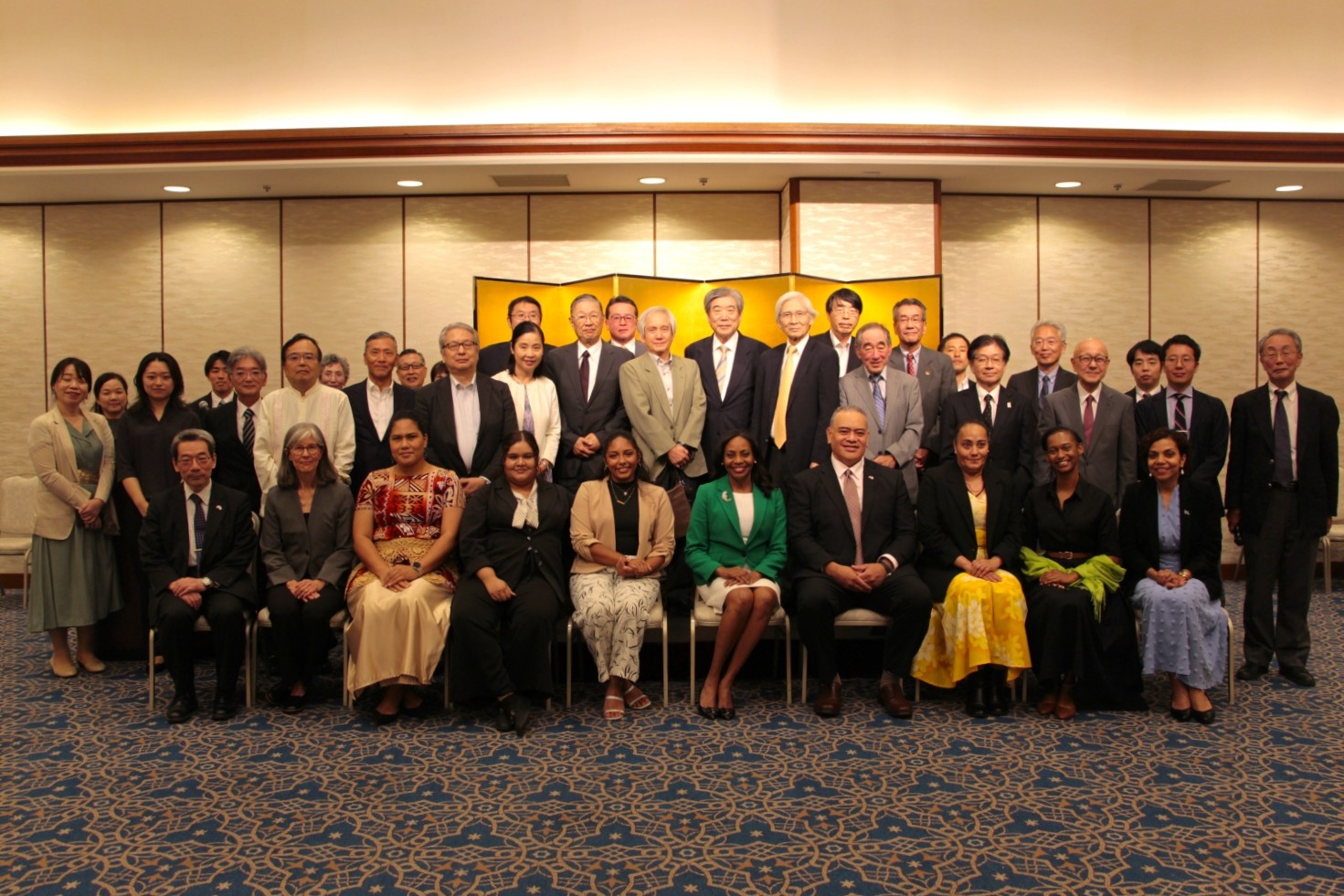
In the evening, the program ending ceremony was held at the Josui Kaikan Hall, followed by a dinner hosted by APIC President Shigeie for the Fellowship participants and related parties.
WHAT'S NEW
- 2026.6.24 UPDATE
EVENTS
"429th Lecture Meeting Regarding Global Issues"
- 2026.5.27 UPDATE
EVENTS
"428th Lecture Meeting Regarding Global Issues"
- 2026.5.20 UPDATE
PROJECTS
"Pacific & Caribbean Student Invitation Program 2024 Participant Joins Osaka Expo 2025"
- 2026.5.20 UPDATE
SCHOLARSHIP
"10th Term Xavier & 3rd Term UWI Exchange Students Enter Sophia University"
- 2026.5.20 UPDATE
SCHOLARSHIP
"1st Term UWI Exchange Student Graduates Sophia University School (Interview)"
- 2026.5.20 UPDATE
SCHOLARSHIP
"APIC Exchange Students Attend Training in Tamba-Sasayama, Hyogo"
- 2026.5.20 UPDATE
SCHOLARSHIP
"Sixth Term Xavier Exchange Student Graduates Sophia University"
- 2026.5.13 UPDATE
PROJECTS
"Following Up on Janine Emmanuel, Participant of APIC’s Pacific & Caribbean Student Invitation Program"
- 2026.4.21 UPDATE
SCHOLARSHIP
"Welcoming 9th Term Xavier Exchange Students, 8th Term APIC-MCT Exchange Students, and 2nd Term UWI Exchange Students to Sophia University/Graduate School
"
- 2026.4.21 UPDATE
SCHOLARSHIP
"6th Term APIC-MCT Exchange Student Graduates Sophia University Graduate School"