





APIC-PIC Joint Environmental Seminar in Vanuatu
◆Challenges Seen Through Site Visits
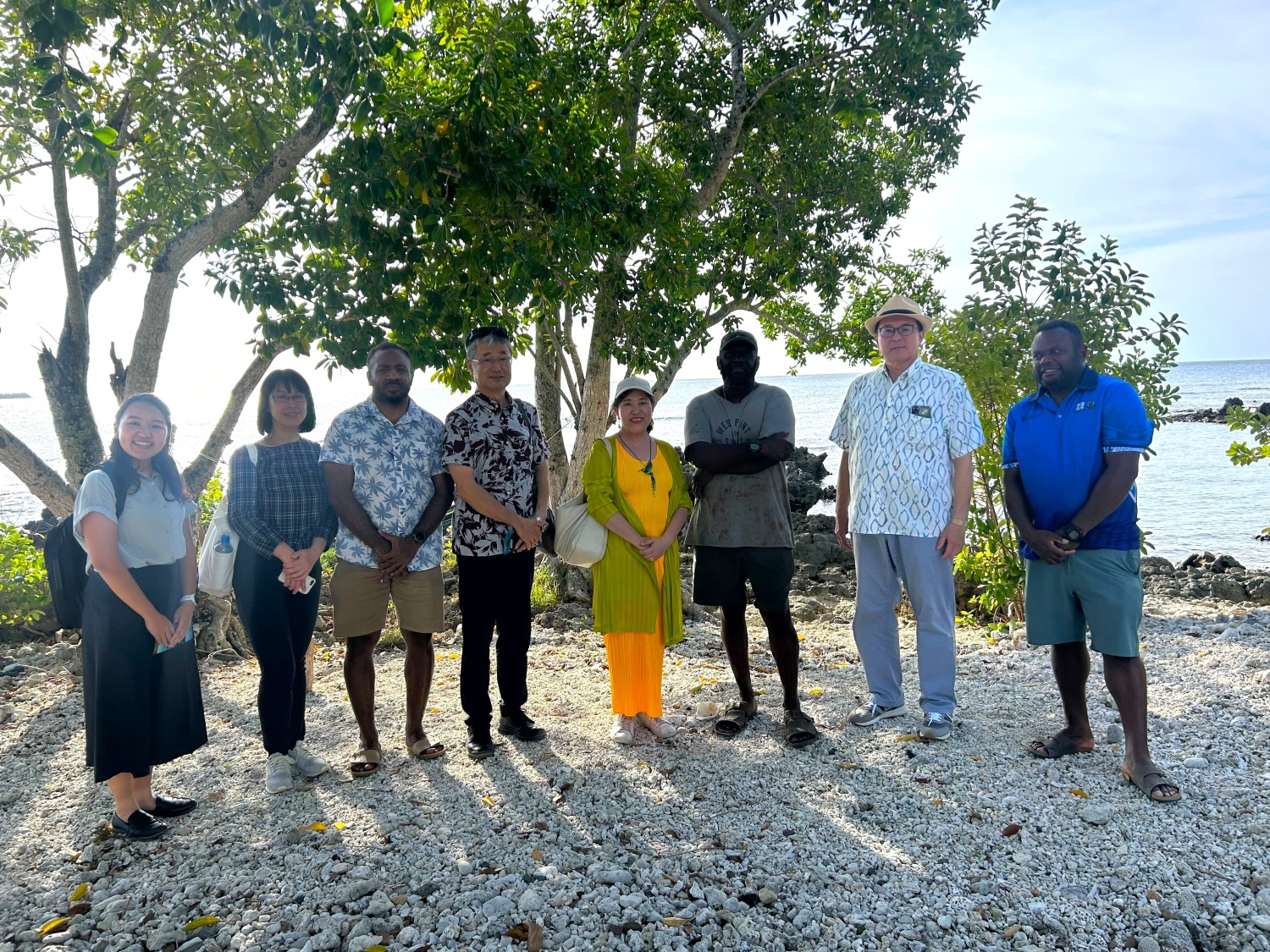
On September 12th, the visiting group (Professor Akemi Ori of Sophia University Graduate School of Environmental Studies, APIC Executive Director Kazunari Tanaka, APIC secretariat Ms. Miri Asano) spent the day visiting related organizations and sites in order to get a better understanding of the challenges and efforts needed on environmental and economic levels.
During their first visit of the day to the JICA Vanuatu office, Resident Representative Mitsutaka Uchijima gave a briefing on the effects on the country of the December 2024 earthquake. The damage done by the earthquake severely affected the hotel and tourism industry, but reconstruction started swiftly and in early 2025 many hotels reported that reservations were full until the end of the year, indicating the tourism demand has returned to normal. Representative Mr. Uchijima stressed that the people’s respect of nature and their strong animist beliefs which attract tourism will be the key to Vanuatu’s economic recovery.
Representative Mr. Uchijima also introduced the Japan Overseas Cooperation Volunteers’ current activities in the country, as well as explaining a new “blue economy” technology cooperation project. In particular, the “Project for Promotion of the Grace of the Sea in the Coastal Villages in Vanuatu”, centered in Mangaliliu, is expected to shift from protected resource status to “use and protection balance” starting April 2025. This shows how important it is for Vanuatu to develop its tourism industry, fishing industry, and natural resources in a disaster-resilient way after experiencing the earthquake.
At the next visit to the Department of Environmental Protection and Conservation at the Ministry of Climate Change, Director Melenamu Osborne informed the group of the urgent problem facing waste management. The problem of lack of landfills and the steep increase of plastic waste is complicated by the fact that the country does not have enough experience dealing with earthquake debris. He pointed out that the biggest challenge in creating policies to handle these problems was how to efficiently use the allotted budget and limited personnel available, as well as balancing the economy and ecology.
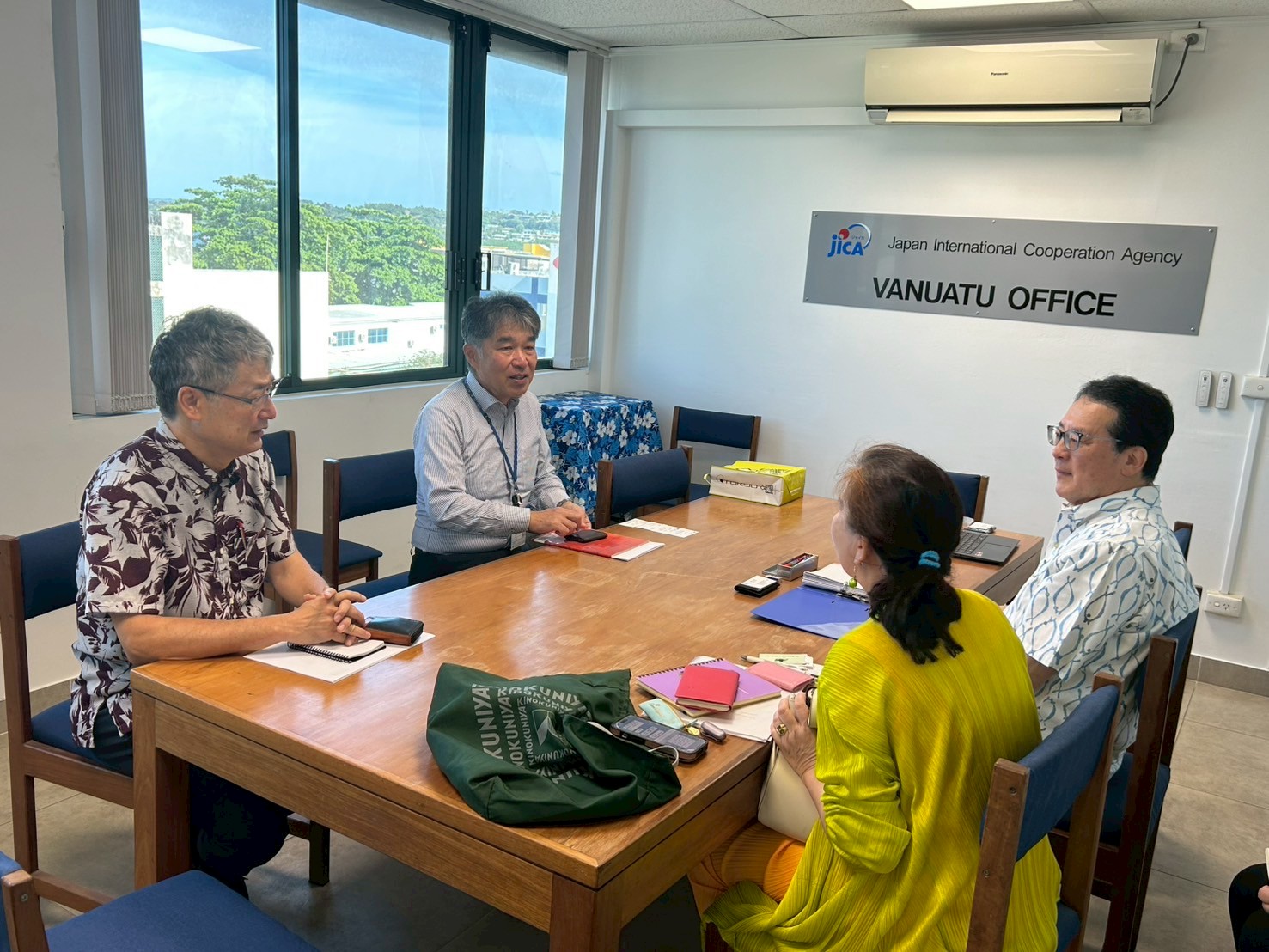
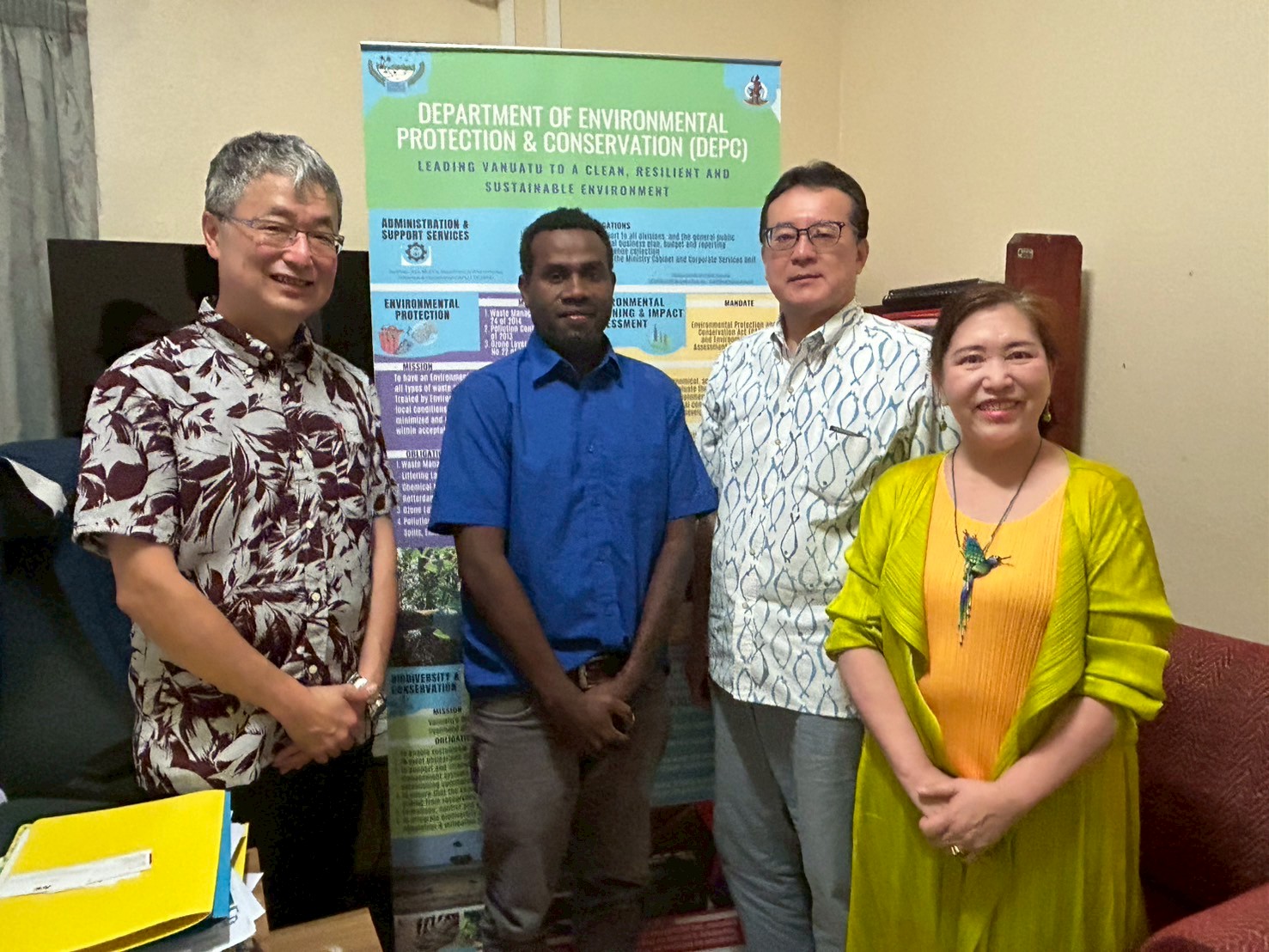
(Left: JICA Vanuatu Office Right: Vanuatu Department of Environmental Protection and Conservation, Ministry of Climate Change)
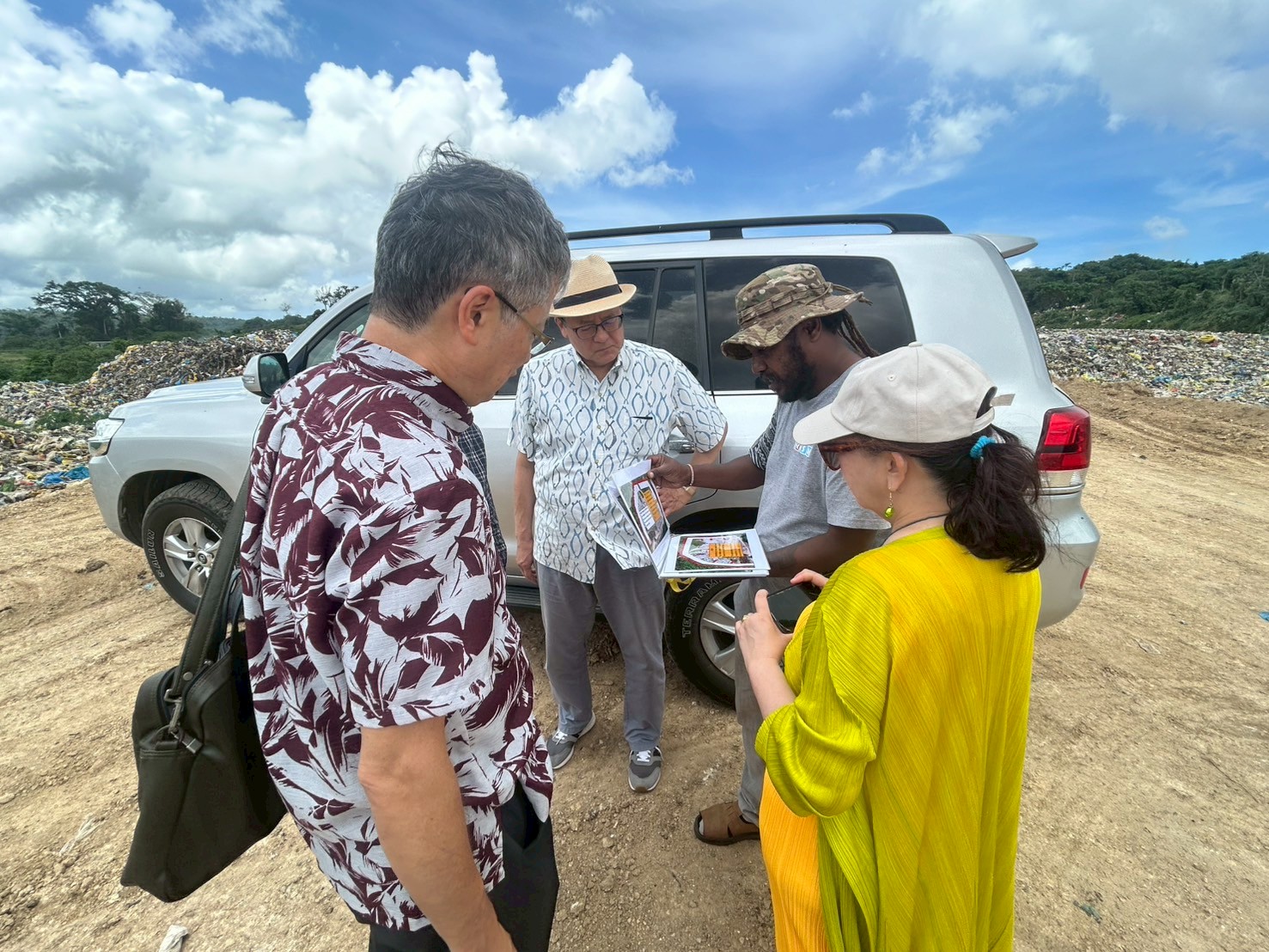
In the late morning, the group visited the Bouffa landfill on the outskirts of the capital, Port Vila. The limited number of employees and broken machines left unfixed combined to create poor landfill management, with reports of repeated naturally occurring fires. The scene imparted a strong impression on the visitors that the creation of a “sustainable system” is urgent in managing the risk posed to the environment due to the high levels of dioxin being released.
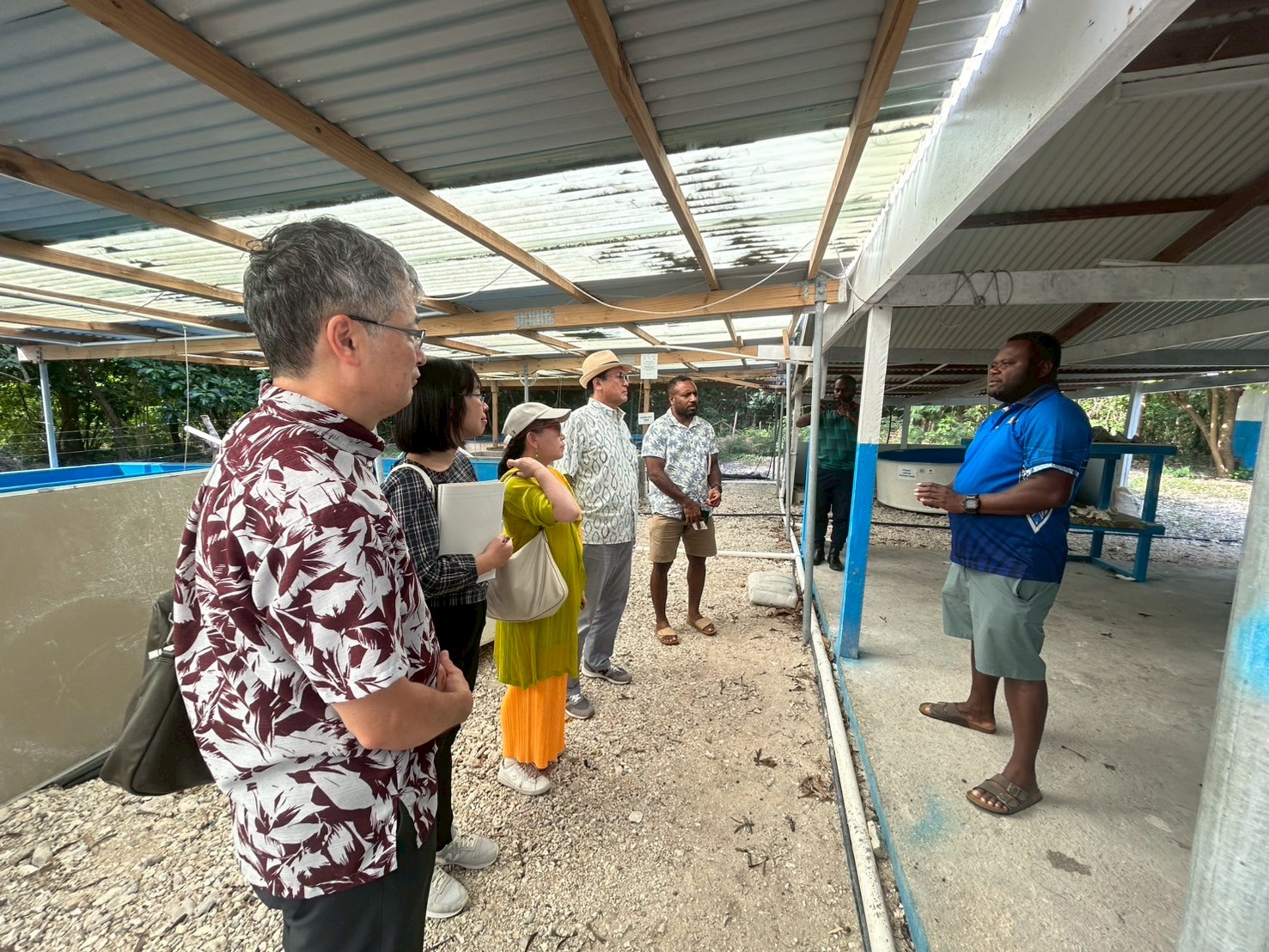
In the afternoon, the group visited the Roau Mariculture Community Hatchery, conducting a site visit at JICA’s “Project for Promotion of the Grace of the Sea in Coastal Village in Vanuatu”. A system that gives profit to the entire community has been put in place by creating a spot where tourists can try cultivating giant clams and coral first-hand. When the site was badly damaged by the 2015 cyclone, residents gathered together to rebuild the buildings, and currently students and younger generations are proactively engaging in the site’s activities. This type of resident engagement is an example which symbolizes Vanuatu’s environmental and economical alignment, “protecting natural resources results in profit, supporting the regional society”.
evening APIC Executive Director Tanaka hosted a dinner, with Japanese Ambassador to Vanuatu Naohisa Okuda, Director of Vanuatu Department of Environment and Conservation Mr. Osborne Melenamu as special guests. The dinner provided an opportunity for members from the Japan side and Vanuatu side to become familiar with each other and exchange opinions ahead of the environmental seminar which took place the following week.
◆Visit to Experience Culture and Nature
On Saturday September 13th, the group spent the day experiencing first-hand Vanuatu’s culture and nature with Japanese Ambassador Okuda leading the tour.
Following breakfast, the first stop was to the Vanuatu National Museum, where the group watched a demonstration of the UNESCO Masterpiece of the Oral and Intangible Heritage of Humanity-registered “sandroing” (sand drawing). The drawings are made without lifting the brush while the storyteller narrates, a unique form of expression blending art and storytelling, maintaining high popularity as a tourist attraction. Afterward, the group observed the reconstruction of the Teouma Bridge from the car window as they drove by. The project was made possible due to JICA grant aid.
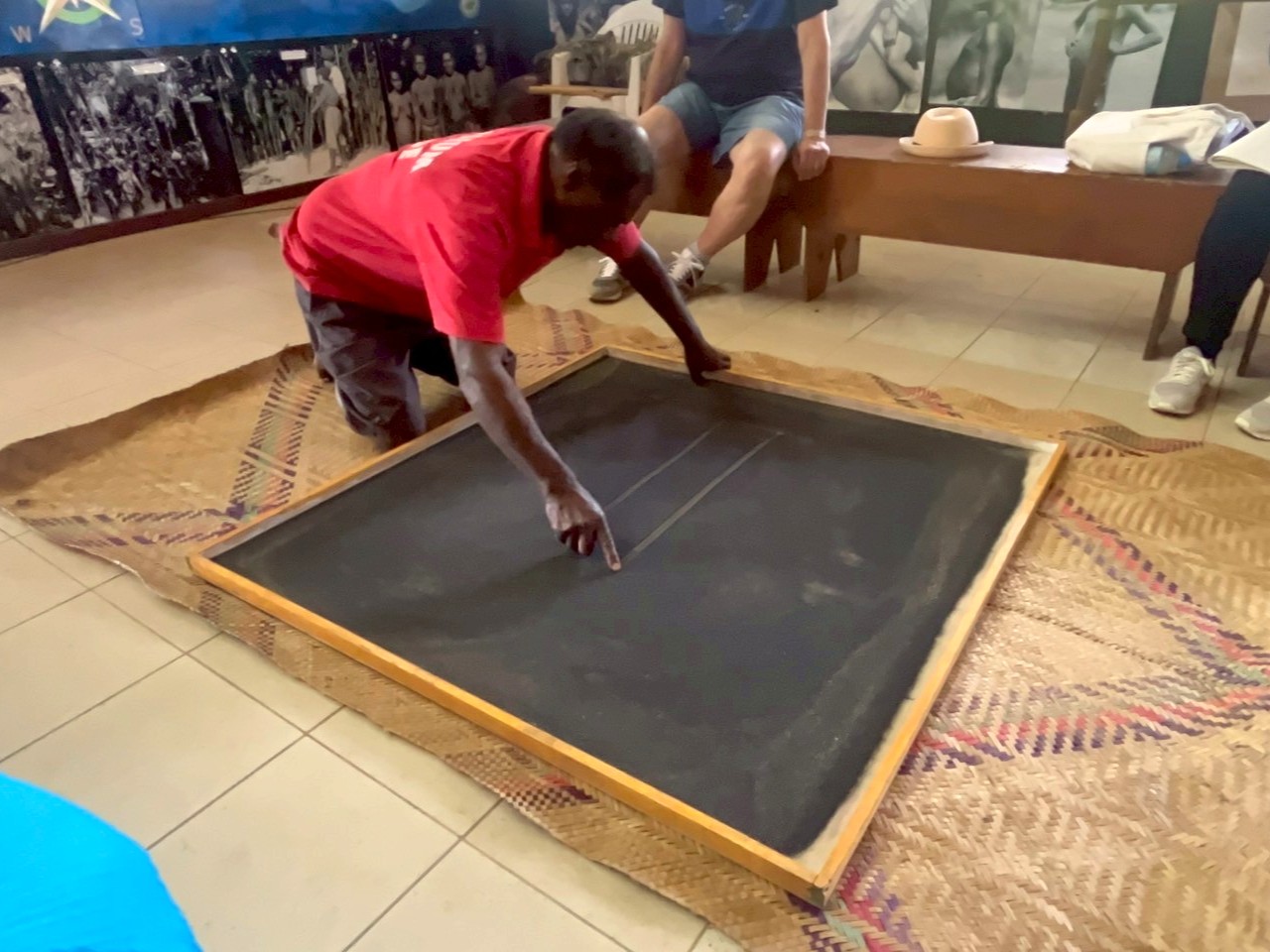
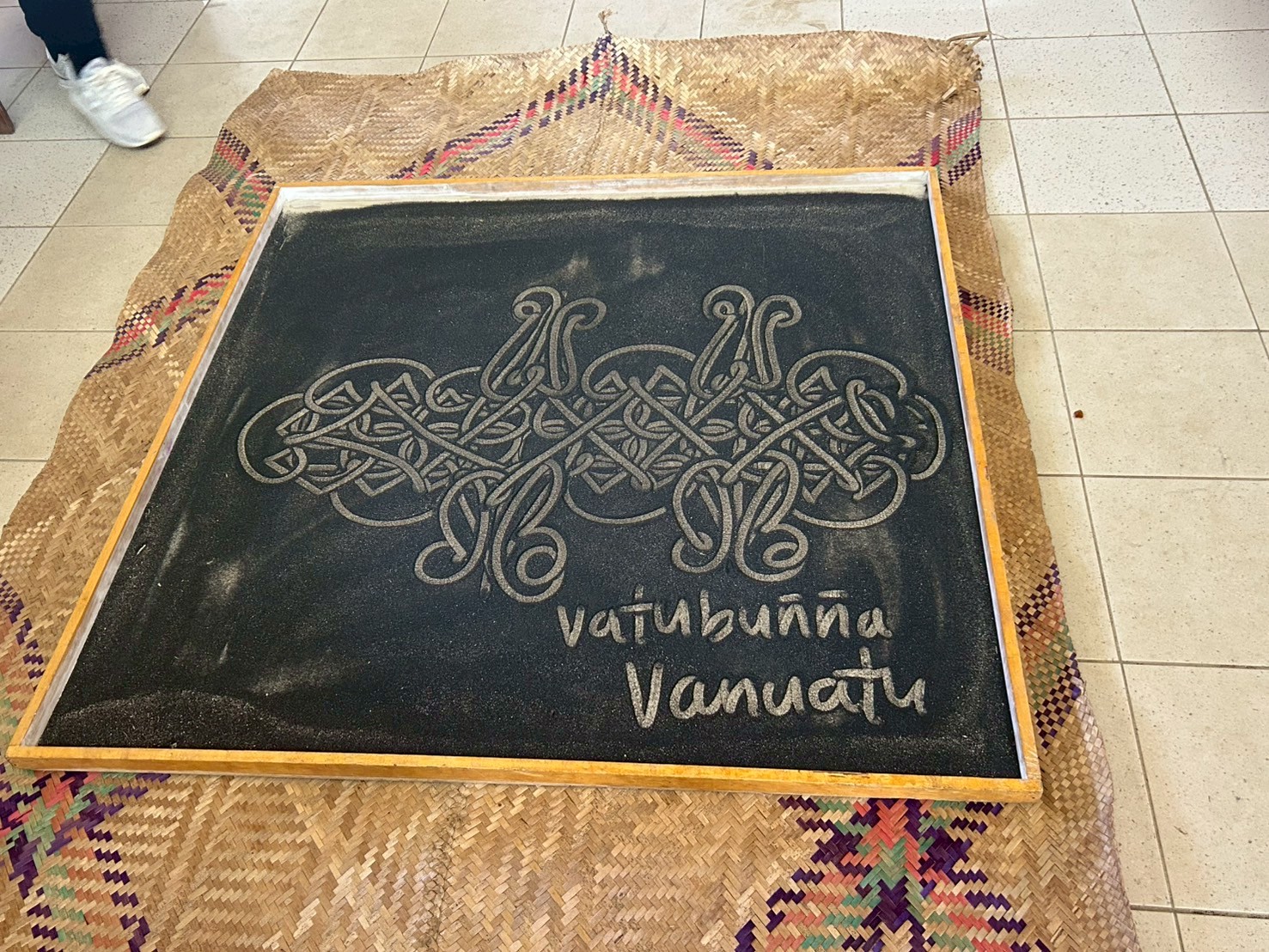
("Sandroing” sand drawing demonstration)
The group learned about wisdom that is ingrained in regional society in everyday life, such as traditional dwellings, medical care using medicinal herbs, farming and fishing methods, etc., at the Pepeyo Cultural Village. The group also experienced Vanuatu’s cultural richness, observing traditional dance and music. Here they were introduced to kava, which due to its high-earning revenue is also called “Green Gold”, and is one of the island’s leading exports.
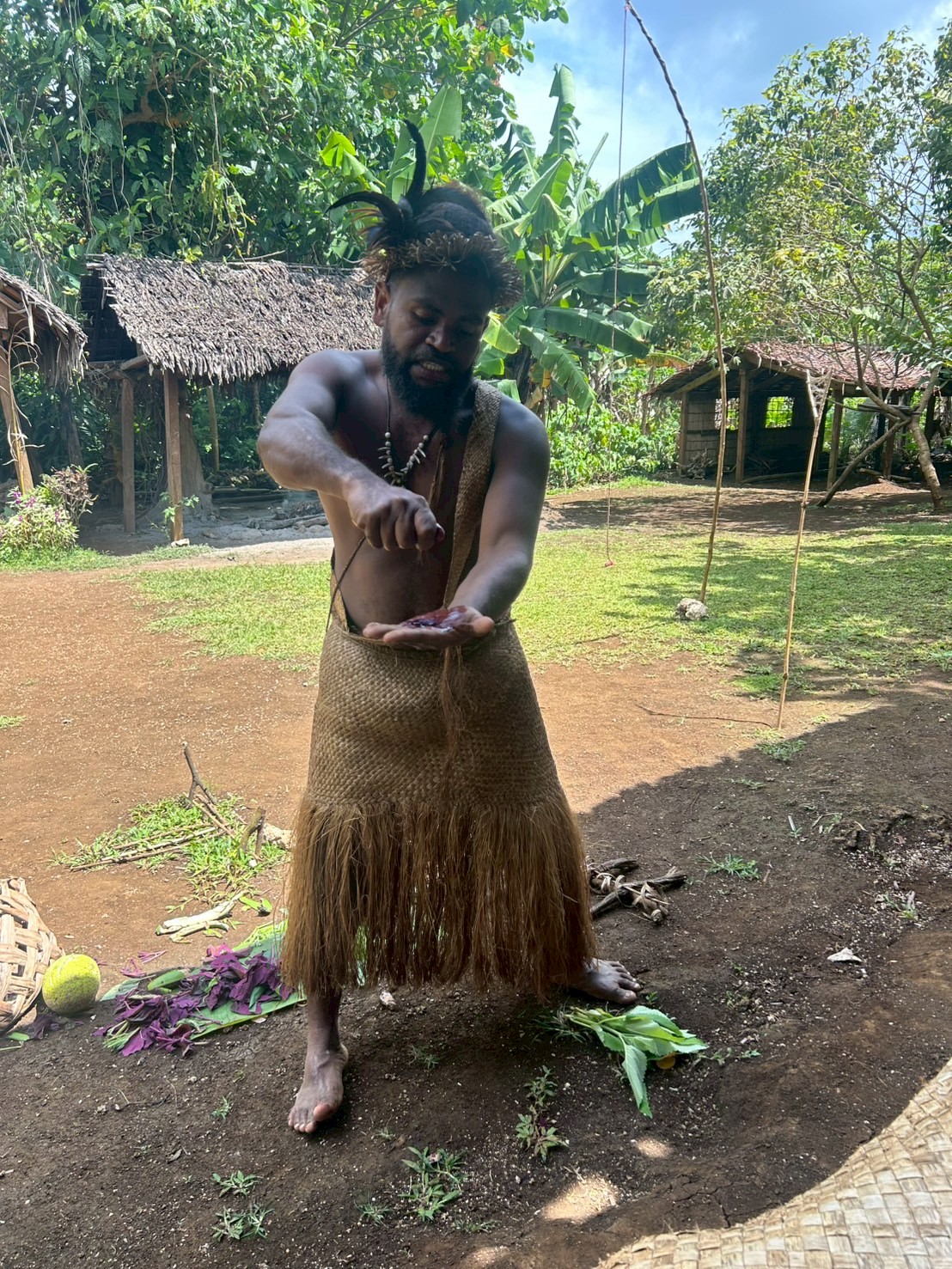
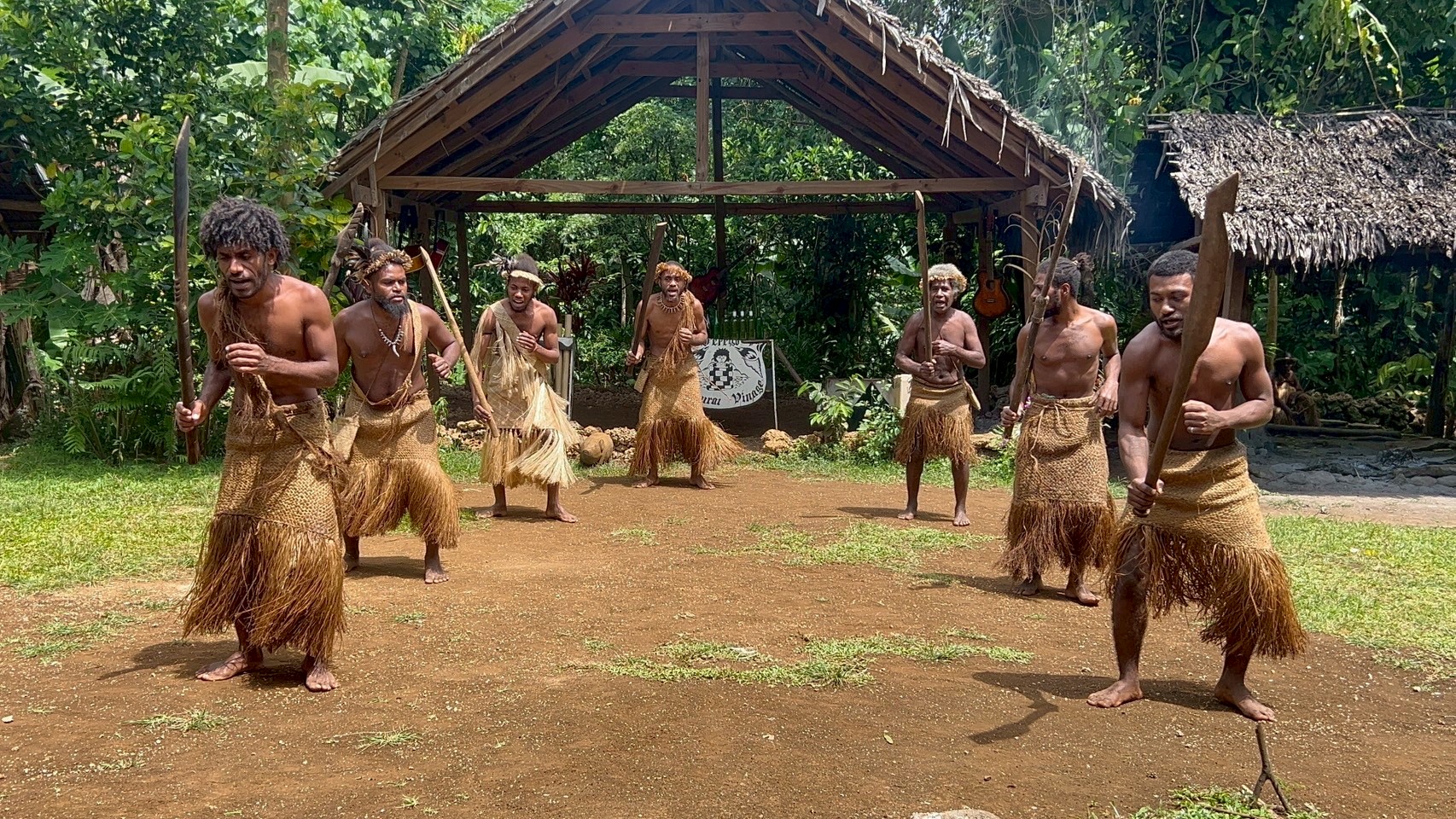
(Visiting Pepeyo Cultural Village)
That afternoon the group tried snorkeling in the Blue Lagoon. Snorkeling in the beautiful clear water in a rich ecosystem helped to reinforce the importance of tourism while protecting the environment.
In the evening the group went to a “kava bar”, where everyone was able to try the traditional food of Vanuatu, “laplap”. They were also treated to a fire dance show, wrapping up a full day of cultural experiences.
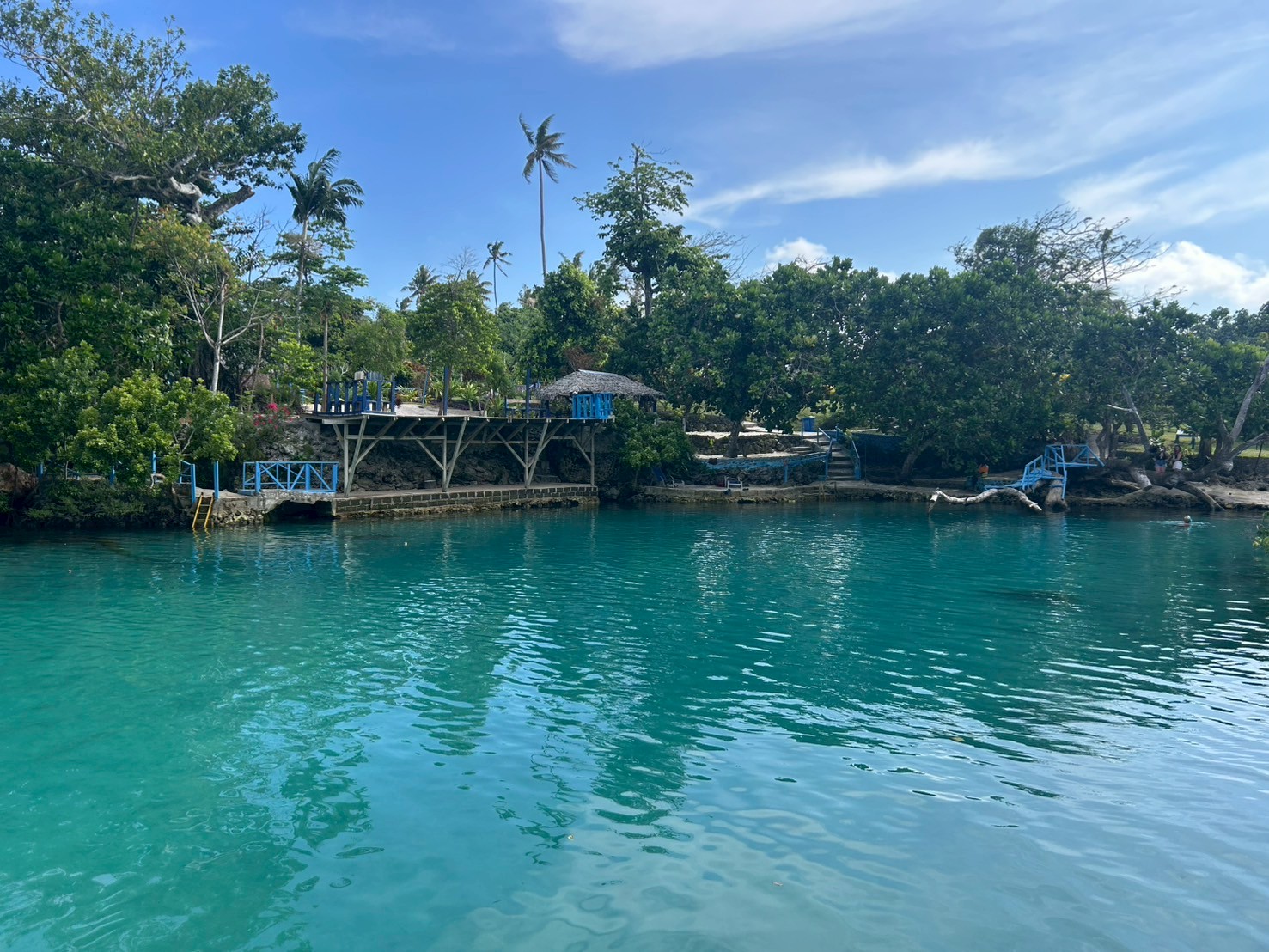

(Left: Blue Lagoon Right: Watching a fire dance show)
◆Welcome Dinner at Ambassador’s Residence
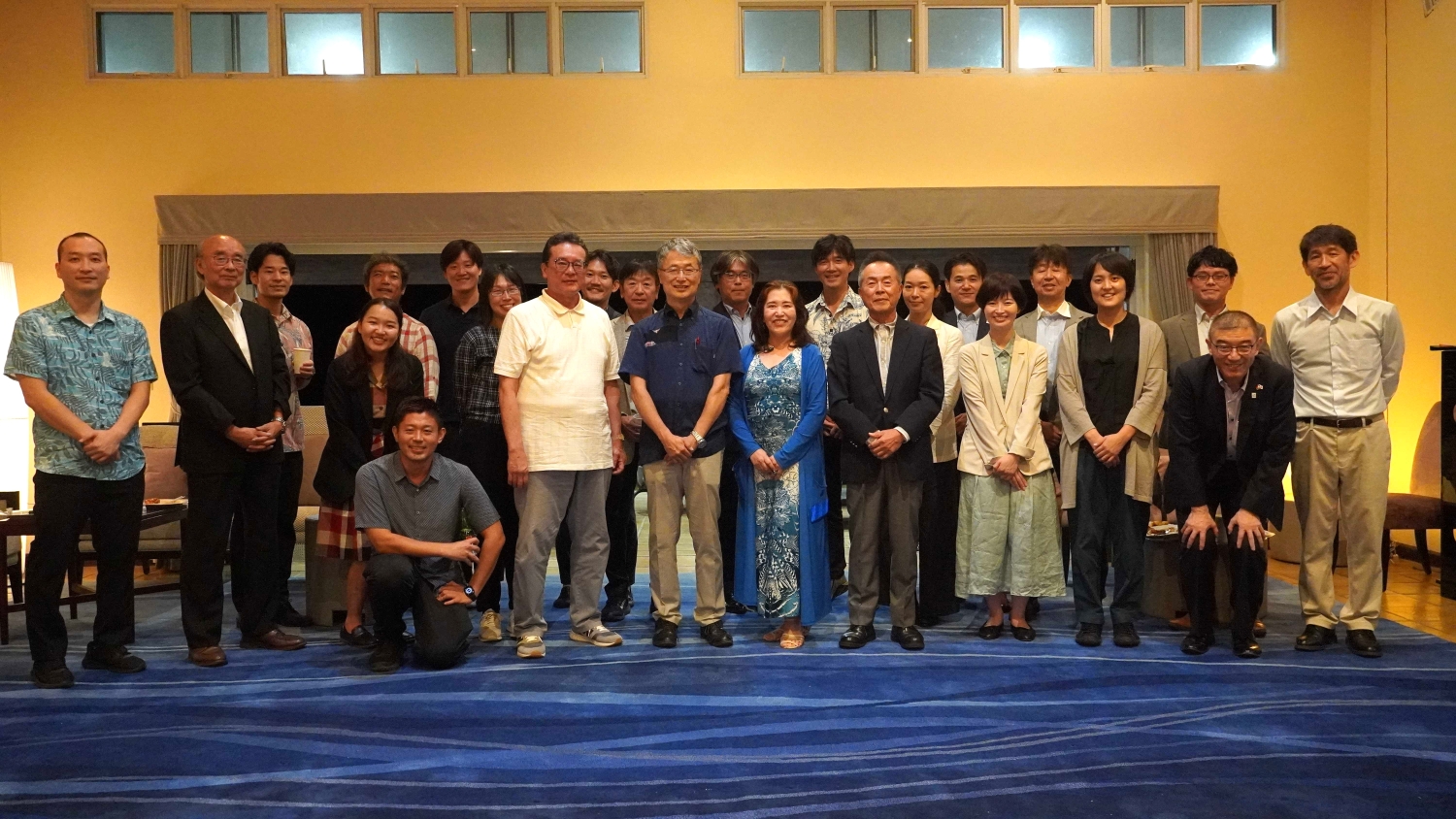
In the evening of the 14th, Japanese Ambassador to Vanuatu, Mr. Okuda, hosted a cocktail reception welcoming everyone from Japan to the island. In addition to the PIC, Mr. Ryuzo Saito and Mr. Ozaki, other Japanese companies such as Qunie Co., Ltd., NBK Corporation, GOMI Solutions Co., Ltd., NAA Business Co., Ltd., Tokyo Rope Mfg. Co., Ltd., Fuso Group Holdings, J-Life, ArkEdge Space, and others were in attendance that evening. The evening started with speeches from Ambassador Okuda, PIC, and APIC, followed by introductions from each attending member. PIC Director Saito made a toast following a speech given by President Miyamoto of NAA Business Co, Ltd. Attendees chatted among themselves in a relaxed atmosphere, providing an important time to network before the next day’s Economic and Environmental Seminar.
◆Economic Seminar Hosted by PIC
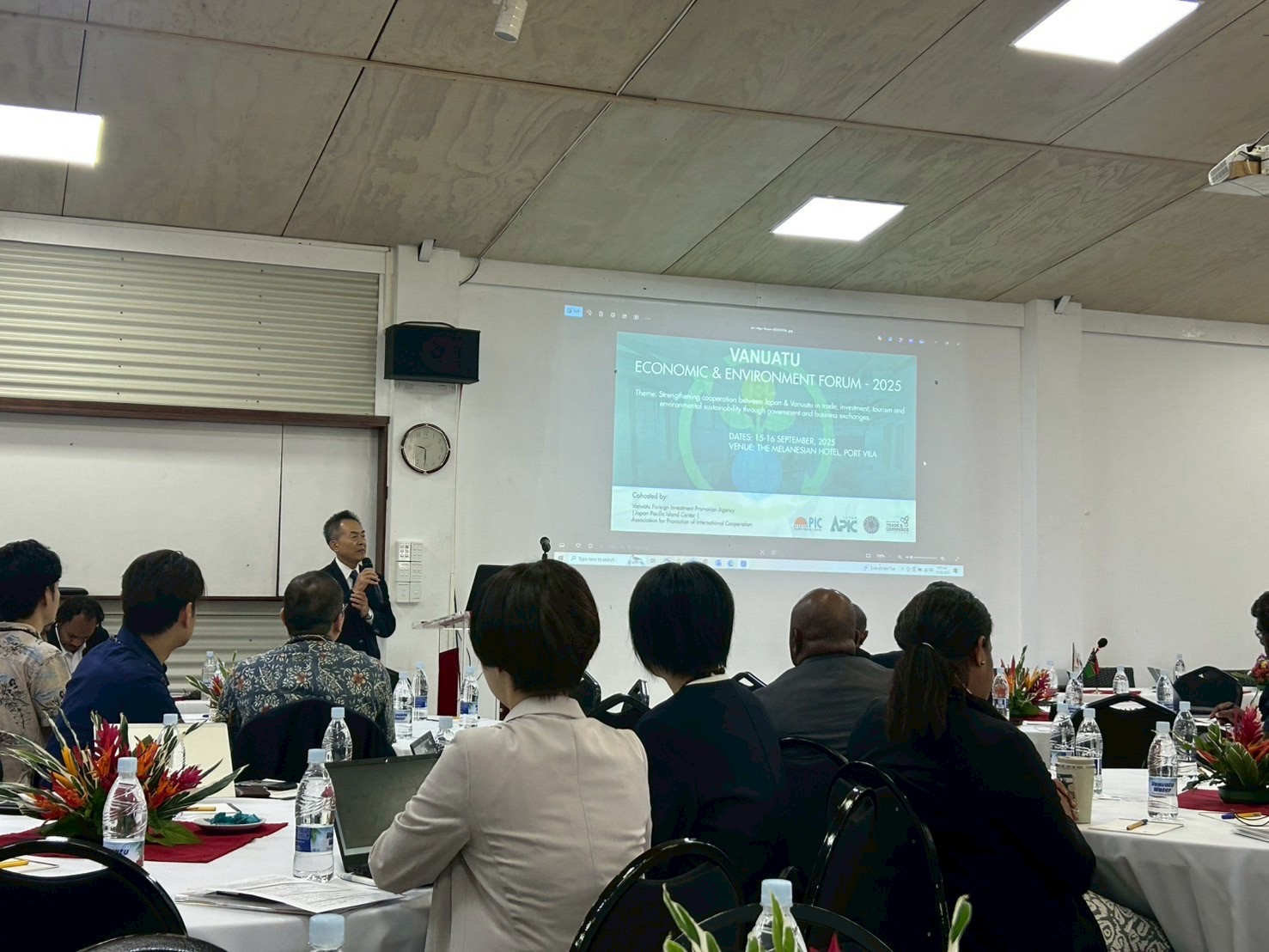
PIC’s Economic Seminary was held on the 15th at the Melanesian Port Vila. Members of the Vanuatu government, Japanese businesses, and international organizations came together to participate in a lively discussion on the topic of economics and the potential of investment.
Mr. Raymond Vuti, Director of Vanuatu Foreign Investment Promotion Agency, gave a briefing on geopolitical risks facing the island and the economic damage sustained due to the 2024 earthquake during the first half of the seminar. He provided explanations regarding the current status of foreign investment, as well as the top policy priorities of the Vanuatu government (education, health, infrastructure, Blue Economy, etc.). Director Paul Pio of the Tourism Department talked about the importance of turning the country’s tourism into a sustainable business in light of the significant economic damage due to the collapse of the island’s airline, Air Vanuatu. JICA Representative Mr. Uchijima talked about the organization’s financial contributions thus far, and current infrastructure restoration projects as well as its technical cooperation for “The Project for Promotion of the Grace of the Sea in Coastal Village in Vanuatu”.
During the second half of the seminar Japanese and local businesses presented their respective contributions in Vanuatu. Cooperation potential was evident in a wide range of fields including garbage disposal, energy businesses, communications, construction, etc. In particular, Vanuatu outlined a new growth strategy incorporating tourism, farming, and engineering, expressing a strong hope for Japanese aid in technical and human resource areas.
A reception was held after the seminar ended, where attendees continued to deepen their exchanges. Director of External Trade and Commissioner General of Osaka Expo, Mr. Joe Pakoa Lui, discussed with APIC about sending exchange students to Japan to study at a graduate program in the environmental field in order to help develop Vanuatu’s human resources. APIC will work together with Director Lui in this area.
◆Environmental Seminary Hosted by APIC
On the 16th APIC hosted its 6th Pacific Environmental Seminar. This year a new structure was implemented, where an economic seminar was held first, helping to integrate dialogue regarding economic and environmental challenges facing the region. APIC Executive Director Mr. Kazunari Tanaka was the moderator for the event.
The opening was marked with speeches from Japanese Ambassador Okuda and Vanuatu Ministry of Climate Change Director General Mr. David Gibson, who stressed the importance of international cooperation toward solving environmental issues. They were followed by Sophia University Professor Ori, who gave a briefing on Japan’s waste disposal and recycling systems. Ms. Moeko Yoshitomi of the Ministry of the Environment briefed the audience on Japan’s aid efforts. Mr. Kazuta Sekiyama of GOMI Solutions Co., Ltd., gave a report on the company’s case studies in Palau and Tuvalu.
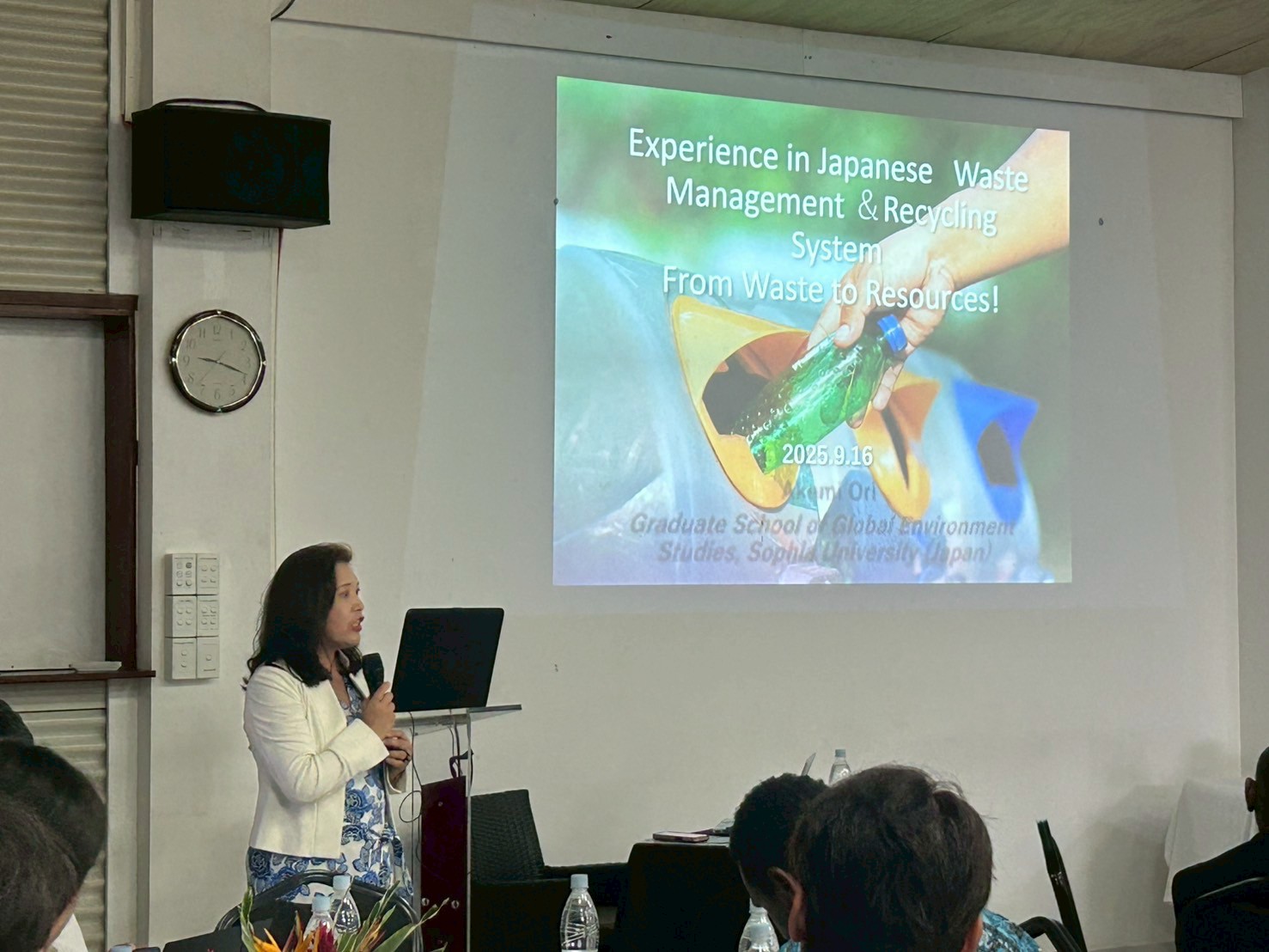
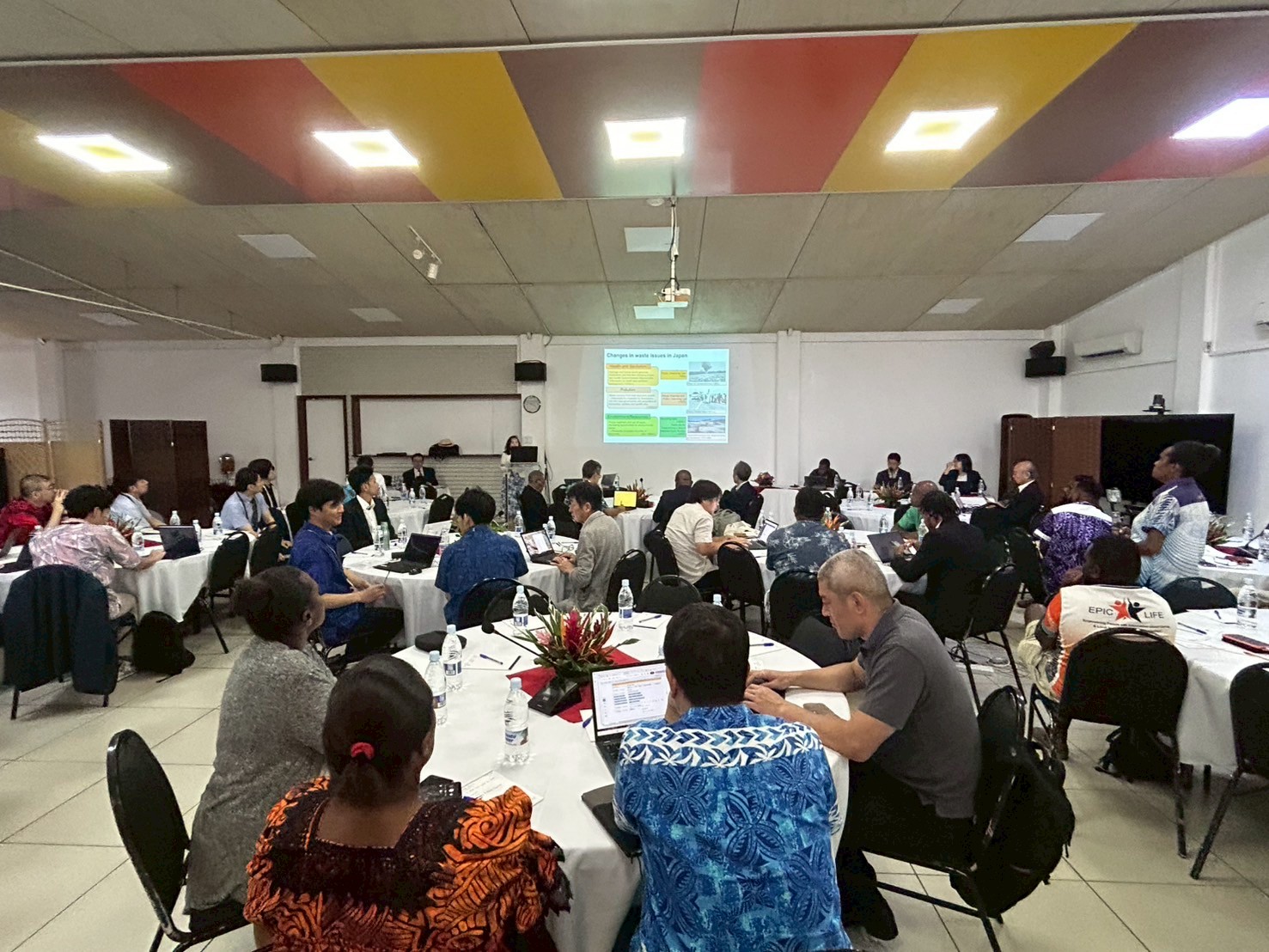
(Left: Professor Ori. Right: Seminar venue)
During the panel discussion, Senior Officer of the Ministry of Climate Change, Mr. Rontexstar Mogeror, Ms. Yoshitomi, Mr. Sekiyama, and from the venue the Port Vila City Council, JICA Japan Overseas Cooperation Volunteers, and Japanese business persons also took part in the discussions. Examples of issues that were discussed include the lack of landfills and trash sorting, contaminated water, lack of recycling facilities and high transport cost, material maintenance and storage, the need to develop human resources, etc. On the other hand, participants were made aware of the benefits of the creation and selling of bags made from recycled rice sacks and other “eco-tourism” initiatives as part of a broader effort to turn environmental challenges into economic gains. In response, Ambassador Okuda cited the need to reach a consensus on what types of activities, and also the need to find someone to designate as the key person of the project. PIC Director Saito pointed out the possibility of collaboration with Japan and Vanuatu businesses with the mind “Waste is a Resource”.
Vanuatu Daily Post journalist Ms. Anita Roberts, who partook in APIC’s 2023 Pacific & Caribbean Journalist Fellowship, visited the venue and wrote an article in her paper highlighting how the positive outcomes of APIC’s projects are benefitting the local community.
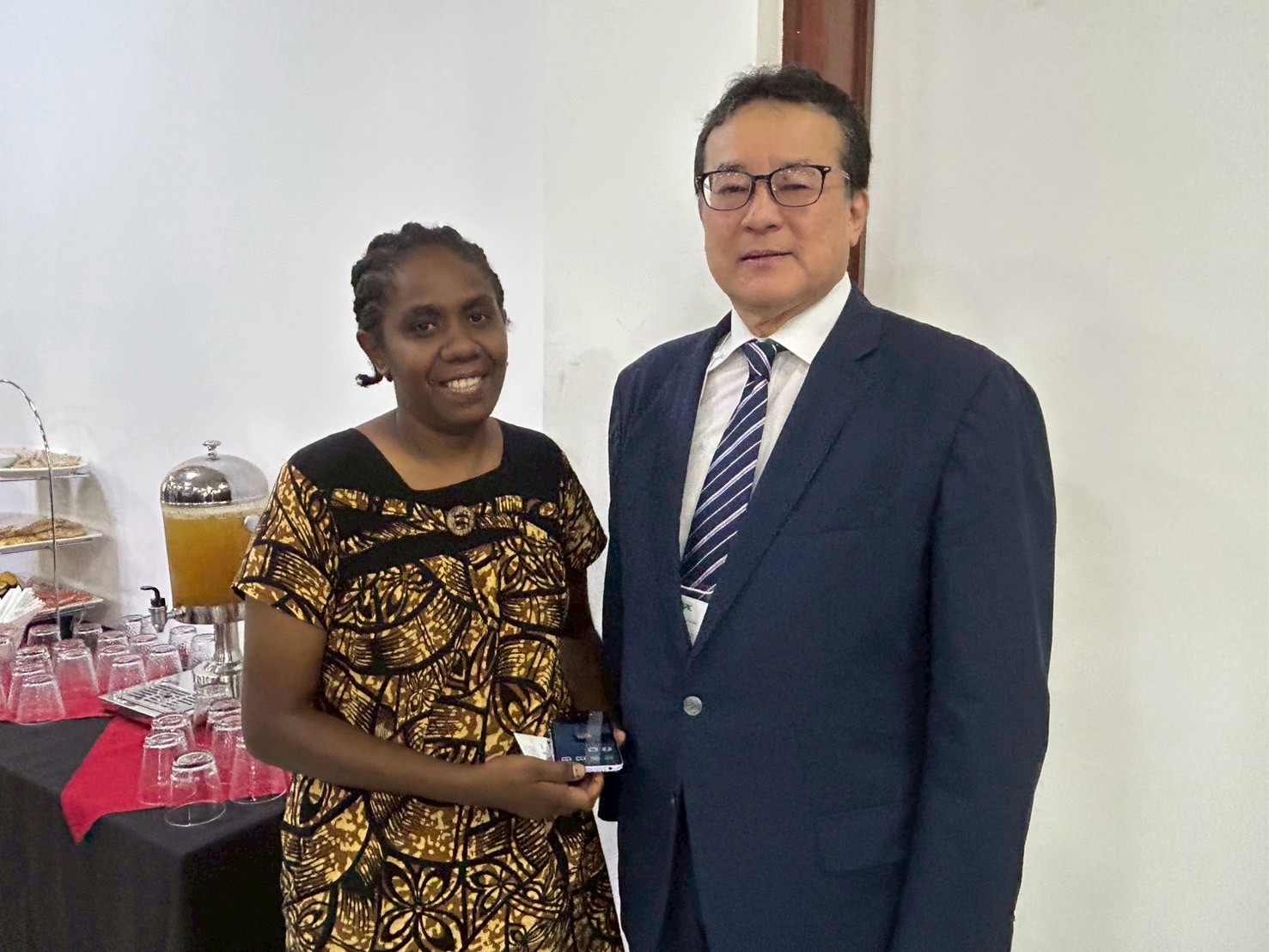
Hosting the two seminars in collaboration with PIC allowed Japanese businesses and Vanuatu government officials to participate in large numbers, thus being able to provide contact points for both the environmental and economic fields. Not only were concrete local issues discussed at length, but APIC was able to interact with Japanese businesses for the first time at one of its seminars. Another significant positive outcome of this year’s program is that the importance of thinking sustainably on both economic and environment fronts was communicated to everyone in attendance. Furthermore, the possibility of not only Japanese ODA, but also the participation of private businesses in solving environmental issues, particularly of waste management, in Vanuatu was made clear.
WHAT'S NEW
- 2026.6.24 UPDATE
EVENTS
"429th Lecture Meeting Regarding Global Issues"
- 2026.5.27 UPDATE
EVENTS
"428th Lecture Meeting Regarding Global Issues"
- 2026.5.20 UPDATE
PROJECTS
"Pacific & Caribbean Student Invitation Program 2024 Participant Joins Osaka Expo 2025"
- 2026.5.20 UPDATE
SCHOLARSHIP
"10th Term Xavier & 3rd Term UWI Exchange Students Enter Sophia University"
- 2026.5.20 UPDATE
SCHOLARSHIP
"1st Term UWI Exchange Student Graduates Sophia University School (Interview)"
- 2026.5.20 UPDATE
SCHOLARSHIP
"APIC Exchange Students Attend Training in Tamba-Sasayama, Hyogo"
- 2026.5.20 UPDATE
SCHOLARSHIP
"Sixth Term Xavier Exchange Student Graduates Sophia University"
- 2026.5.13 UPDATE
PROJECTS
"Following Up on Janine Emmanuel, Participant of APIC’s Pacific & Caribbean Student Invitation Program"
- 2026.4.21 UPDATE
SCHOLARSHIP
"Welcoming 9th Term Xavier Exchange Students, 8th Term APIC-MCT Exchange Students, and 2nd Term UWI Exchange Students to Sophia University/Graduate School
"
- 2026.4.21 UPDATE
SCHOLARSHIP
"6th Term APIC-MCT Exchange Student Graduates Sophia University Graduate School"