





Barbados: A Walk Through History Part 18 (Final)
Section 10 Steps After Independence
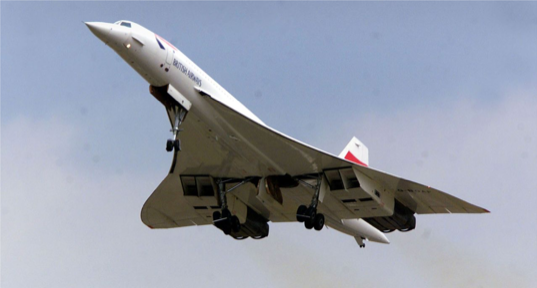
(Concord Supersonic Jet)
The “monstrous bird” first appeared in Barbados on November 2nd 1977. The special flight of the supersonic jet, Concord, descended upon Grantley Adams Airport this day to take Queen Elizabeth II and her husband Prince Philip back home to England after their worldwide tour to commemorate the Queen’s “Silver Jubilee” of 25 years’ reign. Barbados was the final destination of their trip. It only took the Concorde, whose top speed exceeded twice the speed of sound, or Mach 2, just three and a half hours to carry the royal couple across the Atlantic from Barbados to London.
Ten years later, in December 1987, a weekly Concorde flight route between London and Barbados was established. Apart from Barbados, the Concorde, which was jointly developed by the UK and France, had regular arrival and departure points only in London, Paris, New York, Washington DC, Dallas, Bahrain, Singapore, Dakar, and Rio de Janeiro.
The Concorde retired in 2003 due to Air France aging and a sharp decline in tourism demand after the 9/11 attacks in 2001. The Barbados route was also discontinued. However, the fact that the Concorde’s London-Barbados route existed for over 15 years is indicative of the island’s high popularity as a vacation spot among British travelers-particularly the wealthy ones.
Since gaining independence, Barbados has successfully steered away from its slumping sugar industry and pursued tourism as its main industry to become a stable country. However, as previously mentioned in this column, there were multiple times when this peaceful island was threatened by outside enemies, causing it to be on the verge of an existential crisis. Most importantly, Barbados survived the horrendous experience of having endured the inhumane system of slavery under British rule.
Among the countries that share similar histories, including the islands in the Caribbean nearby Barbados, there are a fair number of countries which have been unable to attain political stability and public safety after independence. However, until this day, Barbados has never experienced a coup d’etat or any violent political changes since its independence. Compared to its neighbors, Barbados maintains public peace, which can be claimed as a major contributing factor to its success as a tourism nation (note 1).
In this last installment, I would like to take a look at the path Barbados has taken since the point of its independence until present day.
*******************************************************************************
Achievements of the First Prime Minister, Errol Barrow
Errol Barrow. Leader of the Democratic Labour Party (DLP), the first Prime Minister after independence and served in that position for two terms, a total of ten years, until 1976.
In regards to domestic affairs, Barrow put in effort to build a foundation for stable development for Barbados by implementing policies such as the national health insurance scheme, lowering the voting age to 18, as well as introducing policies to improve the treatment of sugar industry workers. Barrow also recognized the importance of education, and successfully made secondary school free, in addition to the already free primary education. The University of the West Indies (UWI: jointly run by English-speaking Caribbean nations) Cave Hill Campus and Barbados Community College, a local institution for adult education, were also established during Barrow’s time in office.
Barrow’s greatest achievement on the foreign affairs front was his leadership as a driving force behind Caribbean regional integration. In 1965, right before Barbados’ independence, Barrow started talks about trade liberalization between Barbados and British Guiana (now Guyana) with Forbes Burnham, the leader of British Guiana, whom he had studied with in London. Antigua and Trinidad and Tobago joined the movement, and in May 1968 CARIFA (Caribbean Free Trade Association) was born. After its inception, Dominica, Grenada, Jamaica, St. Lucia, Belize, and others joined CARIFTA to become an organization which the majority of English-speaking Caribbean nations and territories were part of.
Barrow was also successful in attracting the Caribbean Development Bank (CDB), an affiliated institution of CARIFTA, to establish its headquarters in Barbados upon its foundation in 1970.
CARIFTA went even further and was eventually superseded by CARICOM (the Caribbean Community). Established by the Treaty of Chaguaramas in July 1973, CARICOM was founded by four original member states- Barbados, Guyana, Jamaica, and Trinidad and Tobago-with the aim of regional economic integration, coordinating foreign policy, and promoting cooperation in the fields such as health and education. CARIFTA progressively dropped out of the picture with the foundation of CARICOM, and the CDB also became a body of CARICOM. Currently, CARICOM has flourished into a regional organization boasting fourteen nations and one British overseas territory (note 2).
CARIFTA and CARICOM were not confederations, but regional organizations that aimed for free trade, economic integration, and policy coordination among participating nations. However, it can be said that the regional solidarity envisioned by leaders during British colonization such as Grantley Adams and Errol Barrow as seen in earlier attempts like “the West Indies Federation” and “the Eastern Caribbean Federation” was to a certain degree realized through CARIFTA and CARICOM.
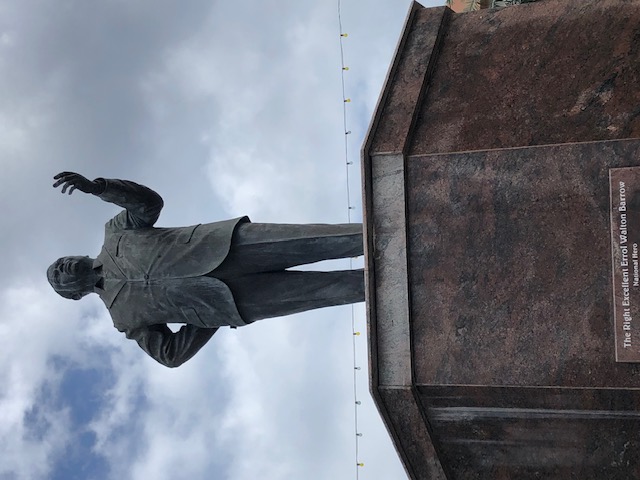
(Bronze statue of Errol Barrow erected in Bridgetown's Independence Square)
During the period that Barrow was Prime Minister, Barbados’ tourism industry experienced a growth spurt.
Barbados had long been recognized by the people of its suzerain, Britain, only as an island where one could make a fortune through sugar plantations. However, starting in around the beginning of the 20th century the island was also recognized as a tourist destination. However, at this time talk of overseas voyages by airplane were mere dreams, and thus the way to cross the Atlantic was by steamship. Only the wealthy top percent could afford to spend the money and time to reach Barbados in order to escape Britain’s cold winters.
Britain, at this point, was trying to stop its Caribbean colonies from becoming completely independent and to confine them to the status of “dominion”, which the British government was able to exercise a fair amount of control over (note 3). With this in mind, it makes sense that Barbados, where Britain’s influence was so strong that it was nicknamed “Little England”, and whose government was stable compared to other colonies in the region, was the first colony in the West Indies to become a self-ruling colony.
It was not until after the end of World War II that regular air routes began to increase to and from Seawell Airport (present-day Grantley Adams Airport), located 16 kilometers east of the capital Bridgetown. According to records from 1952, visitors by sea numbered 5,415, while visitors by air numbered 15,510. Cruises had not come into popularity at this time, explaining the overwhelming number of entries by air.
The opening of the Hilton Hotel at Needham’s Point at the southern end of Carlisle Bay in 1966, the same year of Barbados’ independence, was a symbolic event. After its opening, foreign resort hotel chains began to open up hotels on the island’s south and west coasts. The increase of relatively cheap vacation plans for European and American visitors also helped the country get on the track of establishing itself as a tourist destination. The declining sugar industry was replaced by the tourism industry, driving the island’s economy.
Alongside the increase in arrivals by air, the regular operation of large cruise ships traveling around the Caribbean attributed to the upsurge in visitors by sea. A contributing factor to Barbados becoming a major cruise hub in the Caribbean was the completion of Bridgetown’s “Deep Water Harbour” at the Port of Bridgetown in 1961 prior to its independence, allowing multiple large cruise ships and cargo ships to drop anchor.
The construction of Deep Water Harbour was one of Barbados Colonial Premier Grantley Adams’ achievements. Adams displayed sharp foresight in his decision to modernize the port to benefit the island’s economic development after its independence.
Grantley Adams, who made party politics take root while keeping in step with suzerain Britain’s agenda during the difficult period before Barbados’ independence, and who also expanded the leading role of citizens of African descent in self-government, is frequently honored as the “Father of Democracy”, whereas in comparison Errol Barrow is often referred to as the “Father of Independence”.
Barrow's Defeat
Barrow’s administration started to lose its momentum during the last half of his second term in the middle of the 1970’s, despite him having led Barbados to a soft landing immediately after its independence by leveraging policies with social democratic undertones emphasizing workers’ rights and support for the tourism industry.
The 1970’s was a period of economic stagnation in the Western countries with the overlapping of the currency crisis and oil crisis slowing growth. In particular, Barbados’ largest tourist and economic partner, its former suzerain Britain, had fallen into a serious social and economic slump labeled the “British disease”. The small country of Barbados was susceptible to outside influences. Its economy also fell into regression. Economic growth hit a plateau, causing the unemployment rate to rise. Barrow’s administration also became a bigger magnet to criticism for its policy regarding the amendment to the law on appointment of judges.
In the midst of these challenges, the Barrow-led Democratic Labour Party (DLP) was defeated by its rival the Barbados Labour Party (BLP) in the 1976 general election. The defeat ended Barrow’s ten-year administration beginning from Barbados’independence.
The second Prime Minister following Barrow was Grantley Adams’ son, Tom Adams.
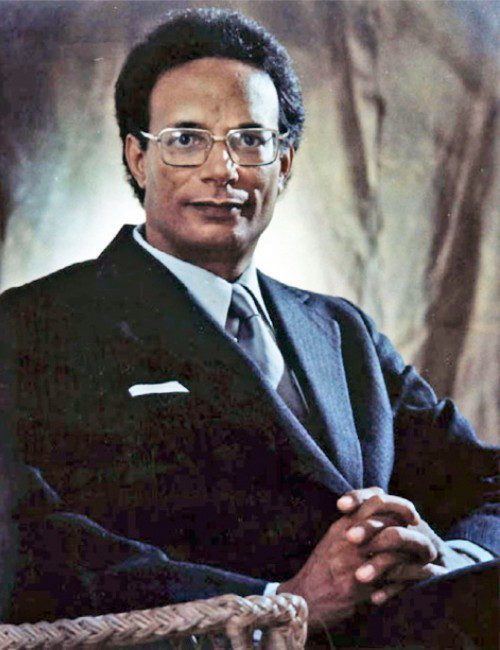
(2nd Prime Minister of Barbados, Tom Adams)
Tom Adams’ (1931-1985) full name was Jon Michael Geoffrey Manningham Adams. His childhood nickname Tom stuck with him to adulthood, and he was commonly known by this name throughout his political career.
Tom, the only son of father Grantley and mother Grace, followed in his father’s footsteps and graduated from the island’s prestigious Harrison College before going on to study at Oxford University in Britain, where he obtained his license to practice law. After working for the organizations including the BBC (British Broadcasting Cooperation), he returned to Barbados in 1962 at the age of 31. He immediately became a senior member of his father’s BLP. At that time- four years before Barbados’ independence- the BLP not only had lost power, but Grantley Adams was also out of an official position. It was under these circumstances that the young “blue blood” Tom had returned home and was devising ways to bolster the party’s strength.
Tom subsequently went on to win a seat in the House of Assembly in the general election of 1965. He took over the position of Leader of the opposition upon his father Grantley’s death in 1971, and became the second Prime Minister of Barbados after independence by upending Barrow’s DLP in the 1976 general election.
Looking back on these events, the process of Barbados’ independence could be seen as one in which the seasoned Grantley Adams spent many years carefully kneading and rolling the dough, only for Errol Barrow-a generation younger-to seize it just before it was ready and skillfully bake the bread himself. In this regard, it can be said that Tom took revenge for his father Grantley when he won back the seat of power from Barrow.
Invasion of Grenada
The Tom Adams-led BLP won against the DLP again in 1981, cementing his second term as Prime Minister.
It was during the Reagan years when Barbados dispatched troops overseas with military purposes, following America’s footsteps.
This was at the time during the Cold War when tensions between the Eastern and Western blocs were coming to a height, and Tom Adams’ administration in Barbados and some other English-speaking Caribbean countries sided with the Reagan Administration’s anti-communist and neoconservative foreign policy line. However, in Grenada, located to the south-west of Barbados, the political situation had been unable to stabilize since its independence in 1974, leading to a coup d’etat in 1979, placing the leftist Maurice Bishop as head of the People’s Revolutionary Government. His administration built a close relationship with Cuba and subsequently started receiving military support from Cuba.
America’s nightmare in the Caribbean was the appearance of “another Cuba”. In 1982 with America’s leadership, the Regional Security System (RSS) was established in the Caribbean, and Barbados joined this initiative along with four countries of the Organization of Eastern Caribbean States (OECS) (note 3): Antigua and Barbuda, Dominica, St. Lucia, and St. Vincent and the Grenadines. Obviously, the aim of the RSS in the beginning was to stop the spread of communism in the Caribbean, and Grenada’s political situation proved to be a direct opportunity.
In October 1983, America, which had been waiting for an opportunity for intervention in Grenada, invaded Grenada using the timing when the assassination of Bishop during a second coup d’etat by a pro-Soviet faction within the Grenadian government had led to domestic chaos. America justified the action as “protection of the safety of American citizens in Grenada”. After bombing Grenada, approximately 7,000 Marines landed onto the island whose population was less than 100,000, and proceeded to eradicate the pro-Soviet administration. The mission was planned by Vice President George H.W. Bush, who had previously been the Director of the CIA.
Even though the Grenada invasion was of a small scale, this was the first full-fledged instance of U.S. armed intervention in a foreign country since its defeat in the Vietnam War. Barbados, under the leadership of Tom Adams, along with Jamaica and OECS member countries showed their support to America by sending in troops to Grenada. Tom Adams, fearing the spread of communism in the Eastern Caribbean, passionately persuaded surrounding countries of the importance of cooperating with the American mission in Grenada.
In fact, Grenada was not Barbados’ first instance of sending troops overseas- it had also deployed a small number of armed forces to its western neighbor St. Vincent and the Grenadines (referred to St. Vincent hereafter) right after its independence in December 1979. Economic hardship and subsequent poverty on Union Island, one of the small islands which comprises the Grenadines, was a main factor of increased discontent among its residents. Some residents of Union Island were inspired by the coup d’état which established a leftist government in neighboring Grenada in March that year, and in December they staged an armed rebellion. In response, the Prime Minister of St. Vincent, Milton Cato, issued a state of emergency, requesting assistance from the U.S., Britain, and surrounding countries to help suppress the rebellion. Tom Adams of Barbados was the only leader who reacted to St. Vincent’s pleas, and deployed a small number of troops over to Union Island. The rebellion was quickly stifled and did not end up becoming a major problem. However, it did serve as a dangerous case of Grenada’s left-wing government’s influence easily crossing the border and affecting neighboring countries. America’s ground invasion of Grenada took place four years later.
In the case of the Grenada invasion, the actual number of troops that Barbados and other Caribbean countries sent to Grenada was only 300 men in total, a symbolic number. America needed only to create the appearance of a “multinational force” in order to dodge international criticism of sole military intervention in a foreign country by involving Caribbean countries, which were under its influence. Actually, the U.S. had no military need for the few hundred soldiers from the Caribbean countries.
Having that said, Barbados turned out to be very useful during the invasion for America, as it made the Grantley Adams International Airport the site of American bomber jet base, located 260 kilometers northeast of Grenada, while Deep Water Harbour was used as a base for naval vessels. This evokes memories of Barbados’ colonial era, when the British used the island as its base when capturing neighboring Eastern Caribbean islands.
Since the Grenada invasion, Barbados has never deployed troops abroad except in the cases of natural disaster support or the United Nations peace keeping operations. However, the Grenada invasion implies that there might be a future instance of Barbados being placed in a strategic position if a similar incident were to occur in the region.
Although the Grenadian forces, supported by Cuban troops stationed on the island as well as military advisers from the Soviet Union, East Germany, and North Korea, resisted the invasion by the U.S.-Caribbean coalition forces, the island was suppressed by U.S.-led forces within only a few days. A total of around 100 soldiers and private citizens were killed in the fighting (19 of whom were American), and over 500 people sustained injuries. The invasion led to the fall of Grenada’s pro-Soviet government, and in its place a pro-U.S. government was established. In the following 1984, President Reagan made a triumphant visit to the island.
After the short-lived invasion of Grenada, a dark mood temporarily enveloped the CARICOM as heated debates arose between the countries which had joined the U.S.-led operation, including Barbados and others, and those like Trinidad and Tobago, Guyana, the Bahamas, Belize, etc. who refrained from deploying military assistance out of respect for Grenada’s sovereignty.
The Death of Tom, the Comeback of Barrow, but…
Tom Adams, whose diplomatic and military policies had been Reagan-friendly, and who had domestically put in effort to improve Barbados’ infrastructure such as its highway network, died in his office from a heart attack on March 11th, 1985 at the end of his second term as Prime Minister. He passed away at the young age of 53. His sudden death, after appearing healthy and active until the day before, shocked the nation.
After his death, the Deputy Prime Minister Harold Bernard St. John succeeded Adams as Prime Minister. However, in the general election held the following year in 1986, the Adams-less BLP encountered a major loss to the DLP. The new Prime Minister was none other than Errol Barrow. Barrow made use of his time as the DLP leader while the BLP held power to prepare for his comeback to the Prime Minister’s seat ten years after his first stint as Prime Minister immediately after independence.
Barrow’s views differed from those of Tom Adams, condemning harshly the Grenada invasion as well as not being particularly fond of U.S. President Reagan. During the press conference upon his second time in office in ten years, he referred to President Reagan as “that cowboy in the White House”. It caused the U.S. Embassy in Barbados to file a complaint against Barrow (Barrow is reported to have sent a response to the U.S. Embassy that would have been seen as even less diplomatic than the original comment. . .).
Barrow was also dubious about the RSS (the Regional Security System) established with the guidance of the U.S. during Tom Adams’ administration, of which Barbados was one of the member states. Barrow stated the following with regard to the RSS’s frequent military exercises in Puerto Rico:
“My position remains unchanged that the Caribbean must be recognized and respected as a zone of peace…Puerto Rico has become a launching pad for neo-colonization of the region. We have seen it used as a base for a number of military exercises whose purpose is clear…I have said, and I repeat, that while I am Prime Minister of Barbados, our territory will not be used to intimidate any of our neighbours, be that neighbour Cuba or the United States.”
However, Barrow was in no way a communist sympathizer, but was a believer in parliamentary democracy and market economy. He was a “Caribbean nationalist with pride” who refused to be put under the thumb of any big power, no matter East or West.
Here is an excerpt from his speech in 1986 which demonstrates this point well.
“It is dehumanizing and false to view the Caribbean as potential American problems. We are people with an identity and a culture and a history – the parliament of Barbados will be 350 years old in 1989. We don’t need lessons in democracy from anyone. However severe the economic difficulties facing the Caribbean, we are viable, functioning societies, with intellectual and institutional resources to understand and grapple with our problems.”
Barrow essentially told the U.S., who was trying to use the Caribbean “as its backyard to protect its rights and interests”, to mind its own business and leave the Caribbean alone. His straight-forward attitude even towards Reagan reveals that Barrow held a strong non-alignment sentiment during the Cold War era.
However, from America’s point of view, compared to Barrow’s pro-America predecessor Tom Adams, it would not have been strange for the U.S. to consider Barrow a nuisance. If Barrow’s administration had lasted longer, Barbados’ international standing might have been different than it is today, putting aside whether good or bad.
The reason I wrote “If…” is because Barrow’s second term as Prime Minister was cut short only one year in office after his comeback. The cause of his death was reported as acute heart failure. He died a sudden death at the age of 67 on June 1st, 1987.
His ashes were scattered in the Caribbean Sea per his antemortem wishes. His birthday, January 21st, 1920, is celebrated every year as Errol Barrow Day, a national holiday of Barbados. He was also posthumously designated as one of Barbados’ National Heroes.
After his death, Barbados resumed its pro-American diplomacy.
Reason for Stability
The period immediately after Barbados’ independence came to an end with the death of “the Father of Democracy” Grantley Adams, followed by the death of his son Tom Adams and “the Father of Independence” Errol Barrow’s death within a year of each other. Since then, the BLP and the DLP have taken turns governing Barbados.
-1987 Loyd Erskine Sandiford of the DLP was appointed as Prime Minister following Errol Barrow’s death
-1991 The DLP maintained power with the results of the general election. Sandiford was re-appointed.
-1994 Sandiford dissolved Parliament after being defeated by a no-confidence vote. The BLP regained power in the general election, appointing Owen Arthur of the BLP as the new Prime Minister.
-1999 The BLP maintained its hold on power with the result of the general election, re-appointing Arthur as Prime Minister
-2003 The BLP again maintained its majority in the general election. Arthur’s third term as Prime Minister.
-2008 The DLP took back the seat of power in the general election. David Thompson of the DLP was appointed as Prime Minister.
-2010 Freundel Stuart of the DLP was appointed as Prime Minister after Thompson’s death
-2013 The DLP remained in power after the general election. Stuart was re-appointed as Prime Minister.
-2018 The BLP took back power in the general election. Mia Mottley of the BLP was appointed as Prime Minister.
-2021 Barbados shifted to a republic. Sandra Mason became the country’s first President.
-2022 Advanced general election was held following the transition to the republic. The BLP remained in power, and Prime Minister Mottley was re-appointed.
Looking at the above timeline, changes in power have generally occurred every two terms, or in other words once approximately every ten years. Unlike a certain self-proclaimed defender of democracy super power, the handover of political power in Barbados has always gone smoothly without any public cursing matches or lawsuits, and certainly no charging mob incidents. I witnessed two general elections (2018 and 2022) during my service in Barbados. It was quite impressive how orderly all elements including election campaign, voting results, and inauguration of the new cabinet progressed.
Reasons for a continual calm transfer of power in Barbados may lie in its parliamentary political traditions and the deeply rooted freedom of political activity and speech, which were fostered starting during its colonial era. Other reasons may include that the difference in political ideologies between the BLP and DLP have almost disappeared in recent years. The common pattern is that the public becomes tired of the party in power after a while, or they get tired with the current lineup, and the party which promises change wins the next election.
In addition, I personally think that another factor contributing to Barbados’ political stability is the country’s high ethnic homogeneity. This is in contrast to Trinidad and Tobago and Guyana, both of which belong to the English-speaking Caribbean states like Barbados, but whose populations are composed of about an equal number of people of African descent and Indian descent. The major political parties in these countries each speak for one of the populations, contributing to a constant state of political tension.
After the abolishment of slavery in the 19th century, Britain began bringing in Trinidad and Tobago and Guyana labor force of Indian, Arab, and Chinese descent from regions under its control in order to supplement the African labor force. In particular a large number of Indians immigrated to the island. On the other hand, only a handful of immigrants were needed to fill Barbados’ small labor market.
Barbados’ current population is approximately 95% African descent, and ethnic-based political conflict is non-existent. These days the word “diversity” has taken over the world, and Japan seems to be no exception. But would it be too inappropriate to say that “Barbados’ strength is its small and highly homogeneous population”?
Mia Mottley: Sending Strong Messages to the World
My post as Japanese Ambassador to Barbados began in October 2016, during DLP Freundel Stuart’s Administration. The Administration was in its second term, eight years out of ten. Exhaustion was evident from within the DLP government, and the its failure to implement timely measures to combat the 2008 global financial crisis had led to a trade deficit, and public debt had risen, leading to a decline in growth and employment rates. These factors resulted in a rapid decline of the DLP’s support.
Political power changed hands in May 2018. The BLP led by Mia Mottley won 73% of the votes in the general election, securing all 30 seats in the House of Assembly-an unprecedented landslide victory.
Mia Mottley, born in 1965, comes from a prestigious Barbadian family which boasts notable politicians and lawyers starting in her grandfather’s generation. Shortly after graduating from the London School of Economics, she entered the Barbadian political arena, and in 1994 at the young age of 29 she was appointed as Minister of Education in Owen Arthur’s BLP administration. She subsequently assumed important posts in the government and party, and when the BLP regained power in 2018, she became Barbados’ first female Prime Minister.
As soon as Prime Minister Mottley took office, she immediately set about rebuilding the economy. She started debt restructuring talks with the International Monetary Fund (IMF) and reached an agreement on an Extended Fund Facility (EFF), securing a long-term financing. Domestically, she implemented what may be considered a drastic economic reform program, including the streamlining of state-owned enterprises who continued to show deficits. I observed this development first-hand in Bridgetown, and was quite impressed to see how quickly the effects of her economic reforms became visible. A magic bullet works wonders in a small country.
However, just as Barbados’ economy was on the rise, the COVID-19 pandemic took the world by storm. It goes without saying that the tourism sector took a big hit. I sensed that Barbados would shut its borders to protect itself from a potential large-scale infection on the small island, and sadly resigned myself to the suspension of my home-leave vacation. Surrounding islands implemented strict travel protocol, practically closing off the country to the outside (Trinidad and Tobago did not even let its own citizens return to the country).
Barbados, on the other hand, took a different approach. Although Prime Minister Mottley put lockdown measures in place at the beginning of the pandemic, she acknowledged that “completely shutting Barbados’ doors, which depends on tourism to survive, would be a deadly move” and stubbornly refused to close Barbados’ borders completely. She requested that regular flights to/from Barbados continued, rather than ordering airlines to stop or limit flights in and out of the country.
What’s more, Mottley performed the feat of providing a shuttle bus service for thousands of multi-national cruise passengers and crew from Bridgetown’s Deep Water Harbour to the airport in order to send everyone home from cruise ships which Barbados accepted after they were denied entry into neighboring countries’ cruise ports due to the fear of inflow of COVID-19 cases. (This was also a strategic move to earn good will from cruise operators. Needless to say, it contributed greatly to the number of inbound tourists after the COVID-19 pandemic ended.)
Domestically, COVID-19 vaccines and other preventative measures were administered efficiently, helping to keep the outbreak under control. Prime Minister Mottley came up again with another excellent idea, this time focusing on the newly-popular “remote work” trend throughout the world. “If people work remotely anyway, why not do it from a sunny resort instead of a gloomy home office? And why not bring your family along?” she proposed. Based on this concept, Barbados launched the “Welcome Stamp”, a one-year remote work visa aimed at attracting affluent Westerners. There were other countries who implemented similar measures, but as far as I know Barbados was the first country to roll out such a program.
In September 2020, during the height of the COVID-19 pandemic, Barbados announced that it would begin a year-long transition from a constitutional monarchy-with Queen Elizabeth II as Head of State-to a republic. This announcement had me wondering “of all times to make such an announcement, will things turn out alright?” However, Mottley’s innate leadership skills brought together domestic public opinion, and on November 30th 2021, the 55th anniversary of Barbados’ independence, Barbados became the world’s newest Republic (as discussed in the first installment of this column). For me, it was a diplomat’s good fortune to be present to personally observe the change in national polity of a state in a peaceful and orderly manner.
Around this time, the diplomatic missions in Bridgetown started commenting that “maybe this Prime Minister Mottley is no ordinary politician?”
As expected, Mottley continued to stand on the international stage, launching new initiatives, and whose articulate language has brought attention to her as a new leader of the Global South.
As representative of small island nations vulnerable to the effects of climate change, Mottley’s remark during her speech at the COP26 in Glasgow, Scotland, in October 2021 that “a two-degree rise in global temperature would be a death sentence for island nations” made a profound impact. Mottley, who began drawing attention at every COP meeting, at the Dubai COP28 in 2023, touched upon the right of developing nations to pursue the responsibilities of the developed nations with respect to climate change.
In September 2022, Mottley called on the international community to support her “Bridgetown Initiative”. The “Bridgetown Initiative” is a plan to supply aid to countries which are vulnerable to climate change and natural disasters by creating a new fund mechanism. It involves leveraging Special Drawing Rights (SDR) of the International Monetary Fund (IMF) as part of broader reforms of the Multilateral Development Banks (MDBs), including the World Bank, to support the engagement of middle-income and vulnerable countries. Mottley’s initiative was one of the important topics of the June 2023 Paris Summit for a New Global Financing Pact.
Thanks to her international advocacy, Mottley was featured on the cover of the U.S. magazine “Time” as one of the “100 Most Influential People of 2022”, as well as selected as one of “25 Most Influential Women of 2022” by the British paper “Financial Times”. It can be said that this is a remarkable case for the Prime Minister of a small island country with a population of less than 300,000 people.
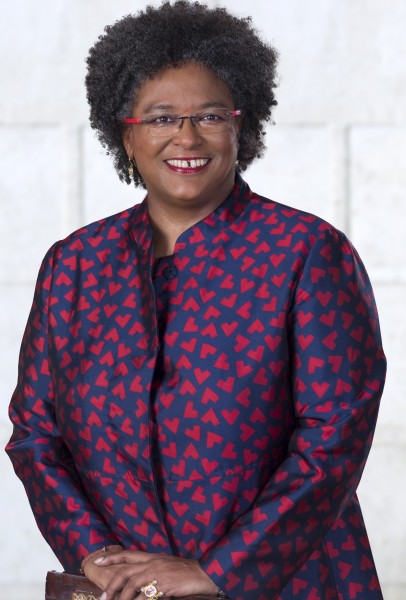
(Prime Minister Mia Amor Mottley)
At the September 2023 UN General Assembly, Prime Minister Mia Mottley stated “I hope that, in the same way we can take Ukraine seriously in the Security Council, we can talk climate change there, too. This is, in fact, a greater threat because more lives are at stake globally.” To me, her remarks- though framed through the example of climate change-seemed to be saying that “the countries of the west, or to put it bluntly, the white group of nations, are in an uproar over the unfortunate events taking place in Europe, but tragedies are taking place all over the world. There are more important things that we should be doing”.
Returning to the central theme of this column, -history-, since becoming Prime Minister in 2018, Mottley has repeatedly made powerful remarks regarding the problem surrounding reparations for the Atlantic Slave Trade.
Mottley has argued that “the former colonial nations that suffered from the transatlantic slave trade have not received anything other than ‘expressions of good will’ from the countries that have prospered from slavery”. In a speech in December 2023 at her alma mater the London School of Economics, she pointed out that Britain owed Barbados 4.9 trillion US dollars in reparations for the damages incurred during slavery (note 4).
Discussions about reparations for the damages caused by slavery has been a continuing topic in various settings. However, regardless if the amount is appropriate or not, this may be the first time a national political leader publicly mentioned a specific figure. In this speech, Prime Minister Mottley explained the links between the transatlantic slave trade and racism, poverty, and inequality in the present world, and went on to say:
“Conversations (on reparations) will be difficult and will take time. And we are not expecting that the reparatory damages will be paid in a year or two or five, because the extraction of wealth and the damage took over centuries. But we are demanding that we be seen, that we be heard, and that we be felt.
The silence is anchored not just in a conspiracy; it is a silence that is born out of shame. For many of our people, the shame is too great a burden to carry. The notion that persons could be treated as subhuman. The notion that you could have not just lashes on your back, but your nose would be slit and your face burnt. That was a legitimate penalty in the 1661 Slave Code, passed by the Parliament of Barbados. The Parliament that I now have the honour and privilege to lead.
We do not have the luxury of changing the course of history, but we do have the solemn obligation to right the wrongs and allow people to be able to breathe.”
After centuries of being subjected to the greed and arbitrariness of big nations, Barbados is now beginning to chart its own course.
END
**************************************************************************
(Note 1) The year 2019, prior to the global outbreak of COVID-19, was Barbados’ busiest year for inbound tourism. Approximately 700,000 visitors arrived by air, 850,000 by ship, totaling more than five times the island’s population (“Weekend Nation”, February 19th, 2021). In the same year, tourism accounted for 17.5% of Barbados’ GDP and 12% of total employment (World Bank).
(Note 2) By 1983, the following eight countries and one territory joined CARICOM: Antigua and Barbuda, Belize, Dominica, St. Kitts and Nevis, St. Lucia, St. Vincent and the Grenadines, Grenada, Bahamas, and the British overseas territory of Montserrat. Beyond the group of former British colonies with English as their official language, Surinam, the former Dutch colony, joined in1995, followed by Haiti, the former French colony in 2002. As of today, CARICOM comprises 14 member states and one territory. CARICOM’s headquarters is located in Georgetown, the capital of Guyana.
(Note 3) OECS (Organization of Eastern Caribbean States) was established in 1981 with the aim of strengthening regional cooperation among the nations in the Eastern Caribbean, acting as a subunit of CARICOM. Currently, in addition to six nations-Antigua and Barbuda, Grenada, Saint Kitts and Nevis, Saint Lucia, Saint Vincent and the Grenadines, and Dominica, the three British overseas territories-Anguilla, British Virgin Islands, and Montserrat- are also members of OECS. Its headquarters is located in Castries, the capital of St. Lucia.
(Note 4) Prime Minister Mottley’s reference to the amount owed for damages due to the Atlantic Slave Trade was based on estimates done by the American consulting company Brattle Group in 2023. Its calculations for the amount Britain owes the 14 affected countries including Barbados is 24 trillion US dollars in total. Additionally, the Brattle Group also estimated that Spain owes 17.1 trillion, France owes 9.2 trillion, the Netherlands 4.86 trillion US dollars to those countries.
(This column reflects the personal opinions of the author and not the opinions of the Ministry of Foreign Affairs of Japan)
*****************************************************************************
This is the final installment in the series “Barbados: A Walk Through History”, uploaded on the website of the Association for Promotion of International Cooperation (APIC). A total of 18 installments spanned two and a half years starting in December 2021.
“An Outline of Barbados History”, P.F.Campbell, 1974, COT Caribbean Graphics
“Barbados: A History from Amerindians to Independence”, F.A.Hoyos, 1978, Macmillan Education
“Military History of Barbados 1627-2007”, Major Michael Hartland, 2007, Miller Publishing Company
“A History of Barbados: From Amerindian Settlement to Caribbean Single Market”, Hilary McD. Beckles, 2007, Cambridge University Press
“Caribbean School Atlas for Social Studies, Geography and History”, 2007, Longman Group
“Island in the Sun: The Story of Tourism in Barbados”, Henry Fraser & Kerry Hall, 2013, Miller Publishing
“Westminster’s Jewel: The Barbados Story”, Olutoye Walrond, 2015
“In the Castle of My Skin”, George Lamming, 2016, Penguin Classics
“A to Z of Barbados Heritage”, C.M. Sean Carrington/Henry S.Fraser/John T.Gilmore/G.Addinton Forde, 2020, Miller Publishing
In addition to the above sources, reliable information on various web-sites, as well as historical articles from the Barbados newspapers “The Daily Nation” and “The Barbados Advocate” were referenced.
Lastly, I would like to express my deepest gratitude to all those involved with APIC, particularly the late former President Mr. Yoshiyasu Sato, who kindly allowed this column to be published, the current President Mr. Toshinori Shigeie, as well as Mr. Ken Shimanouchi, trustee of APIC and former Ambassador of Japan to Brazil, who first invited me to contribute to this column, and the former Executive Director Mr. Shoji Sato. I am also grateful to Director and Secretary General Mr. Megumi Araki, and Ms. Nami Kato of APIC for their dedicated efforts in editing and structuring the column, as well as Ms. Kyla Kosovac for the English translation.
Former Japanese Ambassador to Barbados, Teruhiko Shinada
WHAT'S NEW
- 2026.6.24 UPDATE
EVENTS
"429th Lecture Meeting Regarding Global Issues"
- 2026.5.27 UPDATE
EVENTS
"428th Lecture Meeting Regarding Global Issues"
- 2026.5.20 UPDATE
PROJECTS
"Pacific & Caribbean Student Invitation Program 2024 Participant Joins Osaka Expo 2025"
- 2026.5.20 UPDATE
SCHOLARSHIP
"10th Term Xavier & 3rd Term UWI Exchange Students Enter Sophia University"
- 2026.5.20 UPDATE
SCHOLARSHIP
"1st Term UWI Exchange Student Graduates Sophia University School (Interview)"
- 2026.5.20 UPDATE
SCHOLARSHIP
"APIC Exchange Students Attend Training in Tamba-Sasayama, Hyogo"
- 2026.5.20 UPDATE
SCHOLARSHIP
"Sixth Term Xavier Exchange Student Graduates Sophia University"
- 2026.5.13 UPDATE
PROJECTS
"Following Up on Janine Emmanuel, Participant of APIC’s Pacific & Caribbean Student Invitation Program"
- 2026.4.21 UPDATE
SCHOLARSHIP
"Welcoming 9th Term Xavier Exchange Students, 8th Term APIC-MCT Exchange Students, and 2nd Term UWI Exchange Students to Sophia University/Graduate School
"
- 2026.4.21 UPDATE
SCHOLARSHIP
"6th Term APIC-MCT Exchange Student Graduates Sophia University Graduate School"